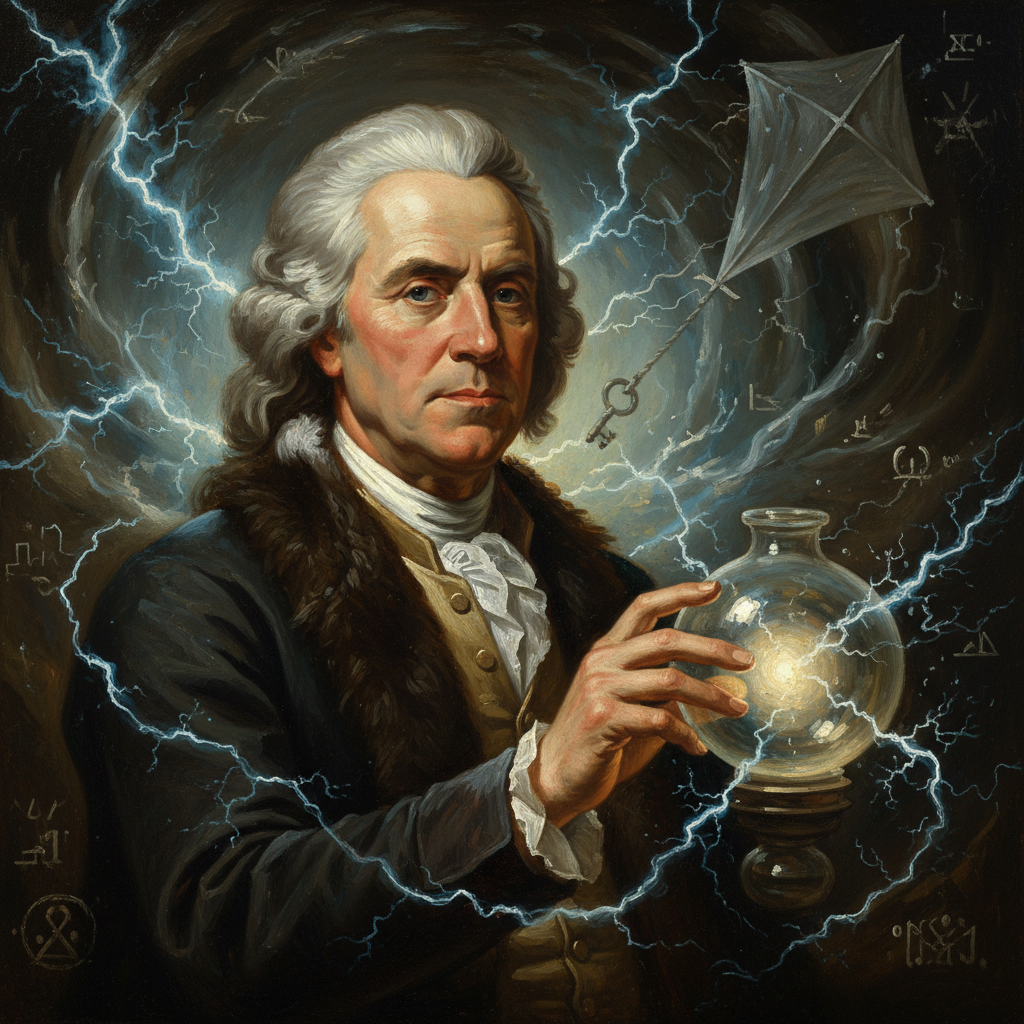
Benjamin Franklin — "There never was a good war or a bad peace."
There never was a good war or a bad peace.
There never was a good war or a bad peace.
Click any product to generate a realistic preview. Up to 3 at a time.
* Initial load can take up to 90 seconds — revising the preview in another color is nearly instant.
"Employ thy time well, if thou meanest to gain leisure."
"A penny saved is a penny earned."
"Who has deceived thee as often as thyself?"
"Little strokes fell great oaks."
"There are no gains without pains."
Polymath Founding Father, diplomat, and Poor Richard's Almanack author who helped draft the Declaration of Independence and the Constitution. Closely associated with John Adams (fellow Founder, Massachusetts statesman) and Thomas Jefferson (fellow Declaration drafter). For an intellectual contrast, see Thomas Hutchinson, last royal governor of colonial Massachusetts — Franklin leaked Hutchinson's loyalist correspondence to Boston in 1772 to inflame revolutionary sentiment — Hutchinson represented the colonial-aristocrat crown-loyalty that Franklin's revolution was organized to dismantle.
Found in 1 providers: deepseek
1 source checked
War, regardless of its stated justification or noble cause, carries inherent destruction, suffering, and cost that no victory can fully redeem. Peace, even an imperfect or uncomfortable one achieved through compromise, is preferable to armed conflict. The quote challenges the romanticization of warfare by insisting that the damage war inflicts on human lives and societies always outweighs whatever political or territorial gains motivated it.
Franklin negotiated the 1783 Treaty of Paris ending the Revolutionary War, experiencing diplomacy's life-saving power firsthand. Though he supported American independence, he spent decades in London seeking peaceful reconciliation before war became unavoidable. As a diplomat in France, he witnessed war's economic devastation. His Quaker-influenced Philadelphia upbringing and deep humanism made him skeptical of glorifying combat despite living through the founding conflict.
The 18th century was defined by near-constant European warfare — the Seven Years' War, War of Austrian Succession, and finally the American Revolution reshaped empires globally. Colonial populations bore enormous tax burdens and casualties funding distant conflicts. Enlightenment thinkers increasingly questioned whether dynastic ambitions justified mass death. Franklin wrote this in 1773, as tensions with Britain escalated, making his anti-war sentiment both courageous and politically pointed.
AI-generated insights based on extensive research and information for context. Factual errors? Email [email protected].
Your cart is empty