What it means
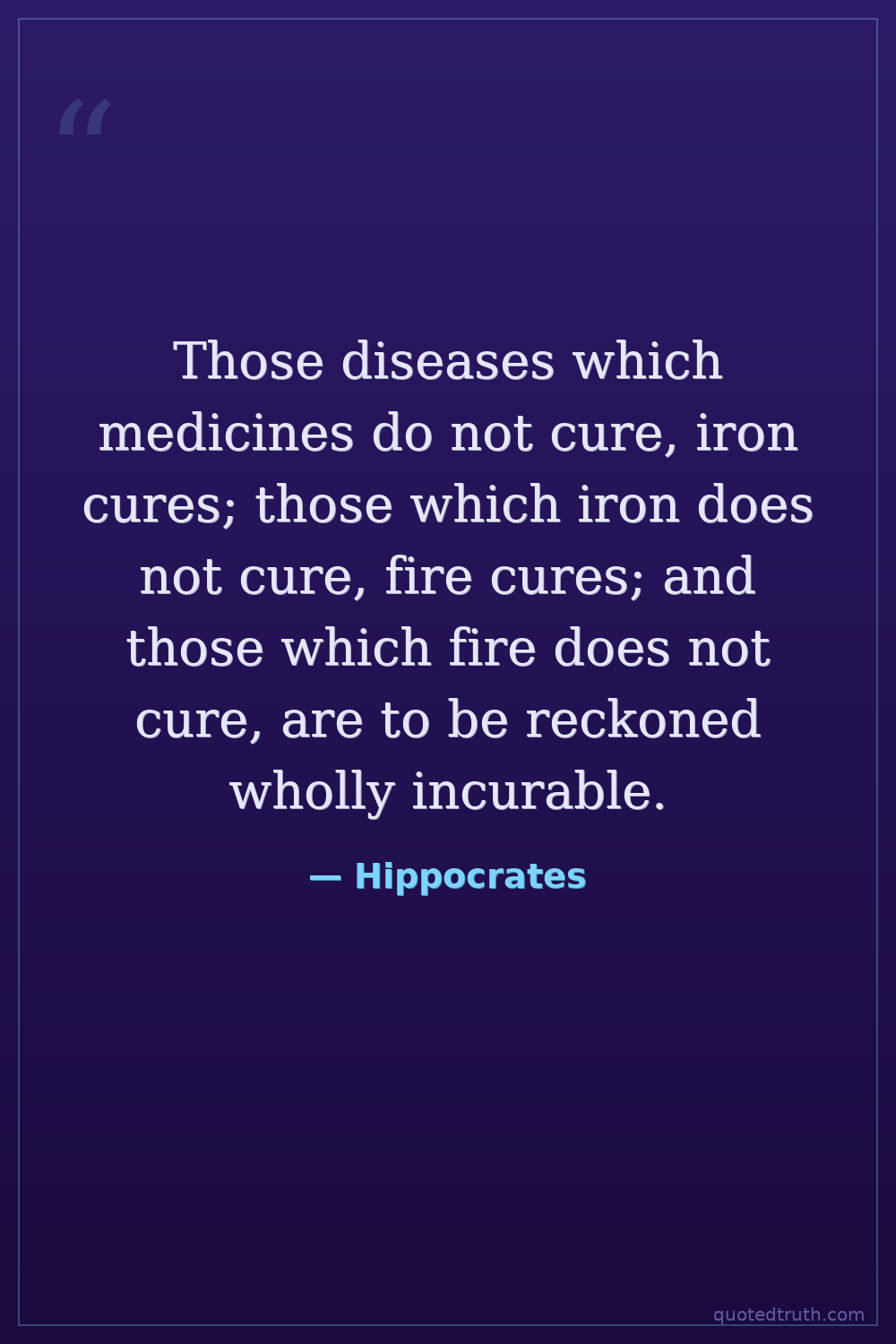
When drugs fail to heal a disease, surgery becomes necessary. When surgery fails, cauterization with heat is the final resort. And when even that cannot help, the condition is beyond any available treatment. This is a ranked hierarchy of medical interventions, moving from least to most aggressive, acknowledging that some diseases simply lie beyond human ability to cure.
Relevance to Hippocrates
Hippocrates spent his life systematically observing and treating disease on the island of Cos around 400 BCE. This quote reflects his clinical pragmatism: he catalogued remedies from herbal treatments to surgical cutting to cauterization, all documented in the Hippocratic Corpus. He rejected supernatural explanations and focused on what demonstrably worked, making this ranked treatment logic central to his naturalistic medical philosophy.
The era
In ancient Greece around 400 BCE, medicine was separating from religion and temple healing. Surgical iron instruments and cauterization with hot irons or fire were among the most advanced interventions available. Without anesthesia or antibiotics, physicians needed clear decision frameworks for when to escalate treatment. Hippocrates wrote amid a tradition of physician-priests, deliberately grounding medicine in observable outcomes rather than divine will.
AI-generated insights based on extensive research and information for context. Factual errors? Email [email protected].