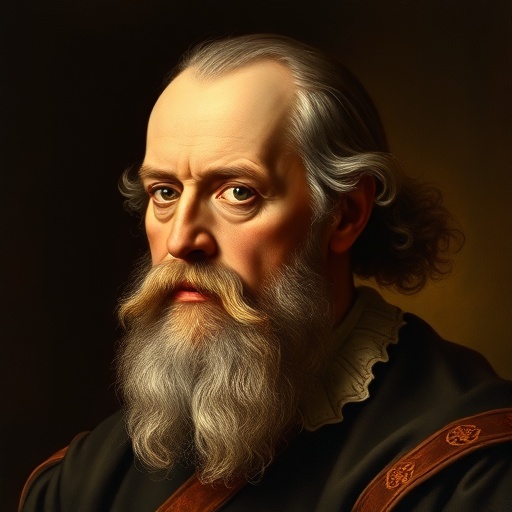
Galileo Galilei — "To deny the principles of philosophy is to reject reason itself."
To deny the principles of philosophy is to reject reason itself.
To deny the principles of philosophy is to reject reason itself.
Click any product to generate a realistic preview. Up to 3 at a time.
* Initial load can take up to 90 seconds — revising the preview in another color is nearly instant.
"The greatest wisdom is to know oneself."
"In questions of science, the authority of a thousand is not worth the humble reasoning of a single individual."
"I have loved the stars too fondly to be fearful of the night."
"The deeper we penetrate into the universe, the more we realize that it is written in the language of mathematics."
"It is a beautiful and admirable thing to search out the causes of natural phenomena."
Found in 1 providers: grok
1 source checked
Philosophical principles — logic, evidence, systematic reasoning — are the foundation of all rational thought. Rejecting them isn't mere stubbornness; it's discarding the very tools needed to understand reality. You cannot dismiss the rules of evidence and coherent argument while still claiming to think clearly. This is a declaration that reason isn't one option among many — it is the prerequisite for any honest engagement with truth.
Galileo built his career on natural philosophy — what we now call empirical science. He used telescopic observation to defend heliocentrism against Church dogma, and the Inquisition forced a formal recantation. He understood firsthand that institutions denying observational logic weren't merely wrong — they were abandoning rationality itself. This quote distills his lifelong conflict: capitulating to authority over evidence meant surrendering the very faculty that separates inquiry from blind obedience.
In early modern Europe, natural philosophy governed how the physical world was explained, but the Catholic Church controlled cosmological doctrine. Galileo lived at the heart of the Scientific Revolution, alongside Copernicus, Kepler, and Bacon, as empirical method began challenging centuries of Aristotelian and Ptolemaic consensus. Defending philosophical principles meant defying theological authority — a genuinely dangerous act in an era when the Inquisition could imprison thinkers for contradicting scripture with evidence.
AI-generated insights based on extensive research and information for context. Factual errors? Email [email protected].
Your cart is empty