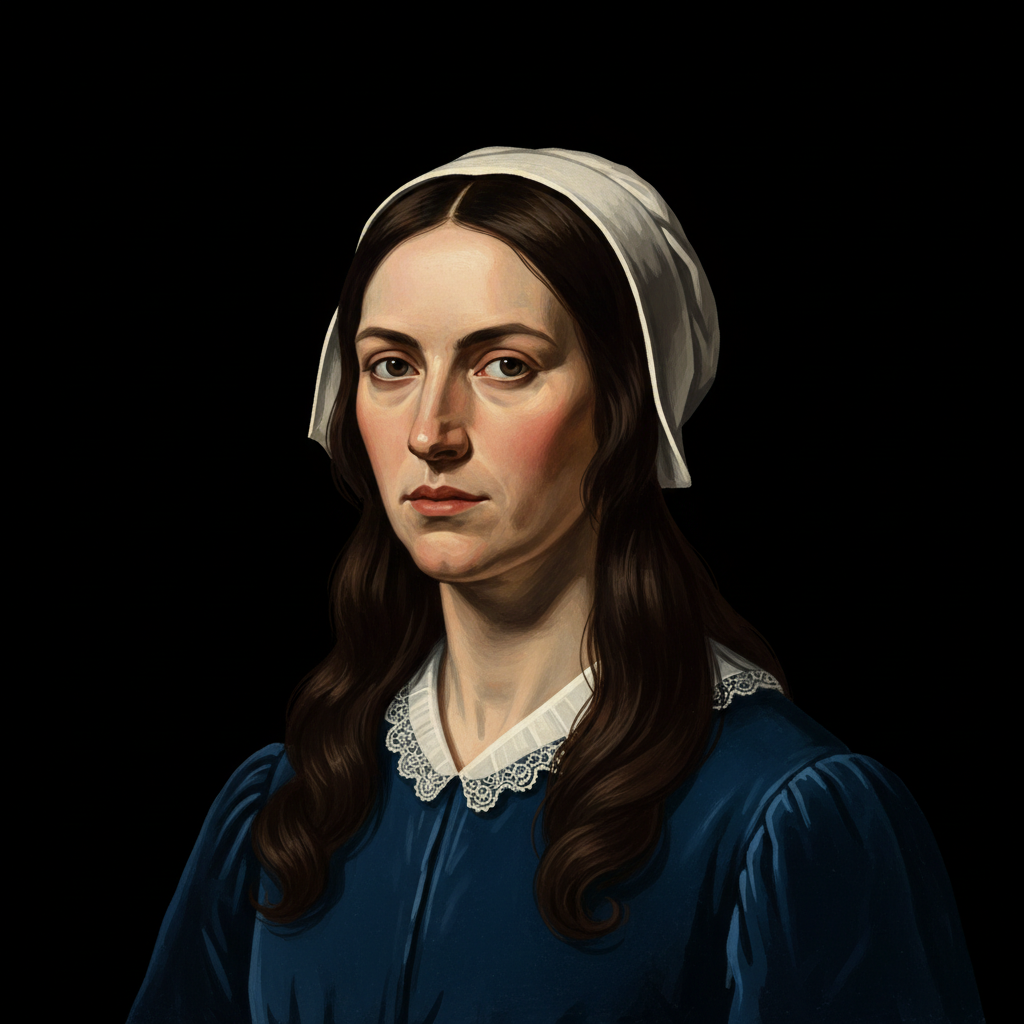
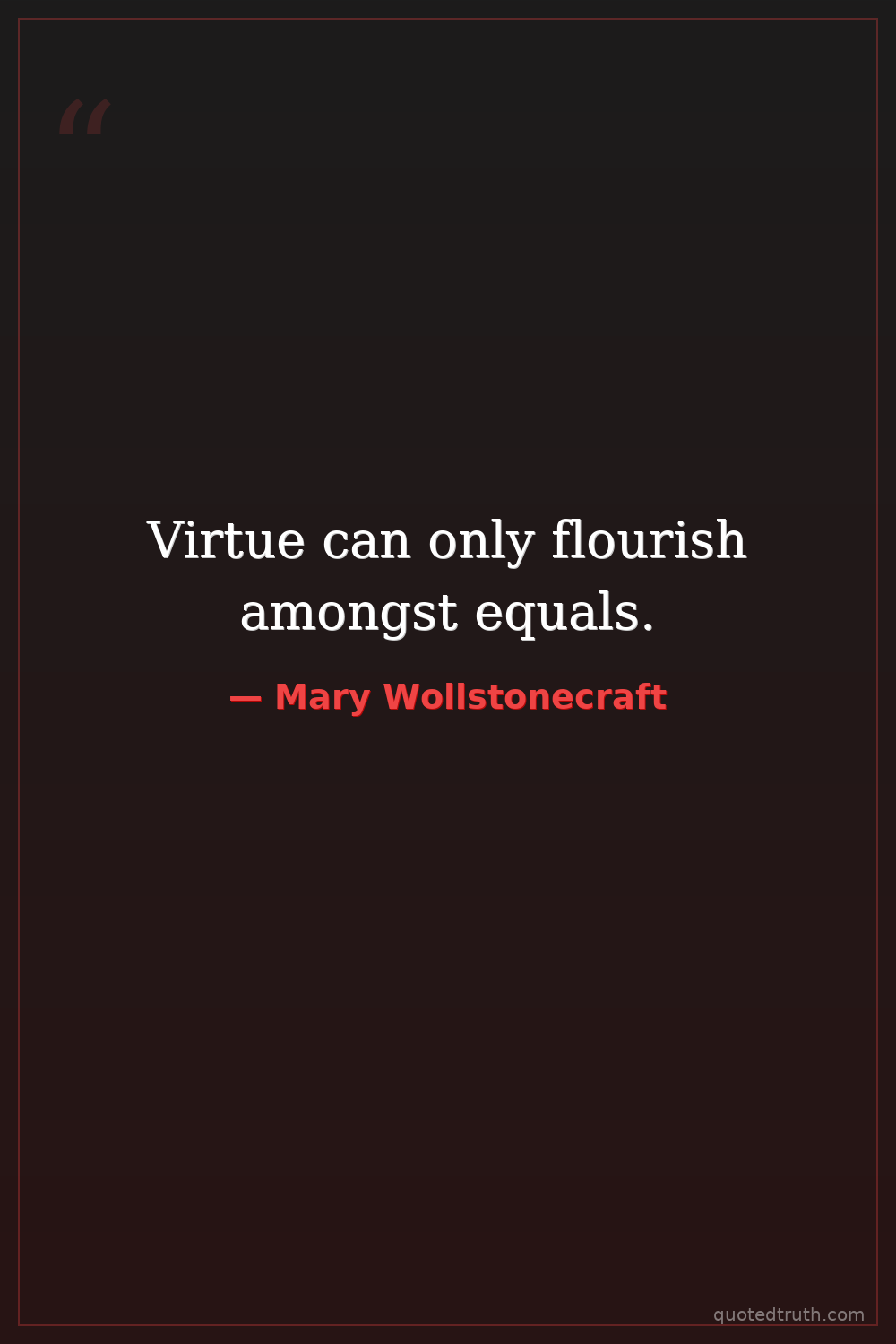
Mary Wollstonecraft — "Virtue can only flourish amongst equals."
Virtue can only flourish amongst equals.
Virtue can only flourish amongst equals.
Click any product to generate a realistic preview. Up to 3 at a time.
* Initial load can take up to 90 seconds — revising the preview in another color is nearly instant.
"I have been in love with a man of my own sex, and have found him as capricious as any of the other."
"The desire of being always in a crowd, of being always seen, always admired, is a sure mark of a little mind."
"No man chooses evil because it is evil; he only mistakes it for happiness, the good he seeks."
"The heart of man is not so much depraved by nature, as warped by custom."
"A great many women and men, too, make a point of never thinking about a subject without having taken a side first."
English writer and proto-feminist philosopher whose A Vindication of the Rights of Woman (1792) is the founding text of modern feminist theory. Closely associated with Thomas Paine (Rights of Man co-conspirator and revolutionary contemporary) and William Godwin (her husband and philosopher of anarchism). For an intellectual contrast, see Edmund Burke, Anglo-Irish conservative and parliamentarian — Burke's Reflections on the Revolution in France (1790) was the explicit target of Wollstonecraft's first book — A Vindication of the Rights of Men (1790), written in the weeks after Burke's appeared. She extended the argument to women in her second Vindication two years later. Burke's tradition-and-prescription conservatism is the worldview Wollstonecraft's career was structured against.
Found in 2 providers: deepseek,grok
2 sources checked
Your cart is empty