Jane Goodall — "We are all part of the web of life."
We are all part of the web of life.
We are all part of the web of life.
Click any product to generate a realistic preview. Up to 3 at a time.
* Initial load can take up to 90 seconds — revising the preview in another color is nearly instant.
"I can't imagine living without hope. It's what keeps me going."
"I'm not afraid of getting old. I'm afraid of not having enough time to do all the things I want to do."
"I believe that the more we understand about the natural world, the more we will want to protect it."
"We need to be voices for the voiceless, and advocates for those who cannot speak for themselves."
"I have hope for the future, but we have to work together to make it happen."
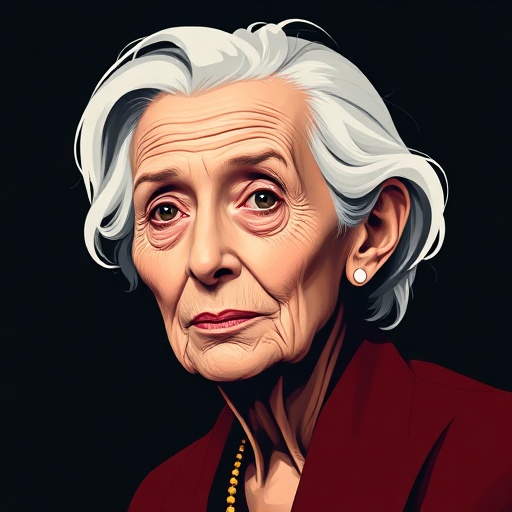
British primatologist who in 1960 began the longest-running wild primate study at Gombe Stream, transforming our understanding of chimpanzees. Closely associated with Dian Fossey (mountain-gorilla researcher) and Birutė Galdikas (orangutan researcher; together with Goodall and Fossey one of Louis Leakey's 'Trimates'). For an intellectual contrast, see Walter Palmer, American dentist who killed Cecil the Lion in Zimbabwe in 2015 — Palmer represents the trophy-hunting tradition Goodall's life's work has been organized against — the colonial-era hunter-naturalist worldview that treated primates and big game as specimens or trophies, which Goodall's Roots & Shoots and Jane Goodall Institute exist specifically to displace.
Found in 1 providers: grok
1 source checked
Every living thing — humans, animals, plants, microbes — exists in a network of mutual dependence. Disrupt one thread and the whole system weakens. This is not sentiment; it is ecology: food chains, nutrient cycles, and population dynamics are literally interconnected. The quote asks people to recognize that human well-being is not separate from nature's health but entirely contingent on it.
Goodall spent 60-plus years studying chimpanzees at Gombe, Tanzania, discovering they use tools, form complex social bonds, and grieve — proof the line between humans and animals is thinner than assumed. That insight drove her shift from scientist to conservationist. Through the Jane Goodall Institute and Roots and Shoots, she argues humans cannot flourish while destroying the biological networks sustaining them.
Goodall's career coincided with the modern environmental movement: Rachel Carson's Silent Spring exposed pesticide damage in 1962, Earth Day launched in 1970, and by the 1980s deforestation and species extinction were accelerating at industrial scale. African rainforests shrank visibly during her fieldwork years. Climate change consensus hardened through the 1990s, making ecological interconnectedness not philosophical abstraction but urgent, measurable reality.
AI-generated insights based on extensive research and information for context. Factual errors? Email [email protected].
Your cart is empty