What it means
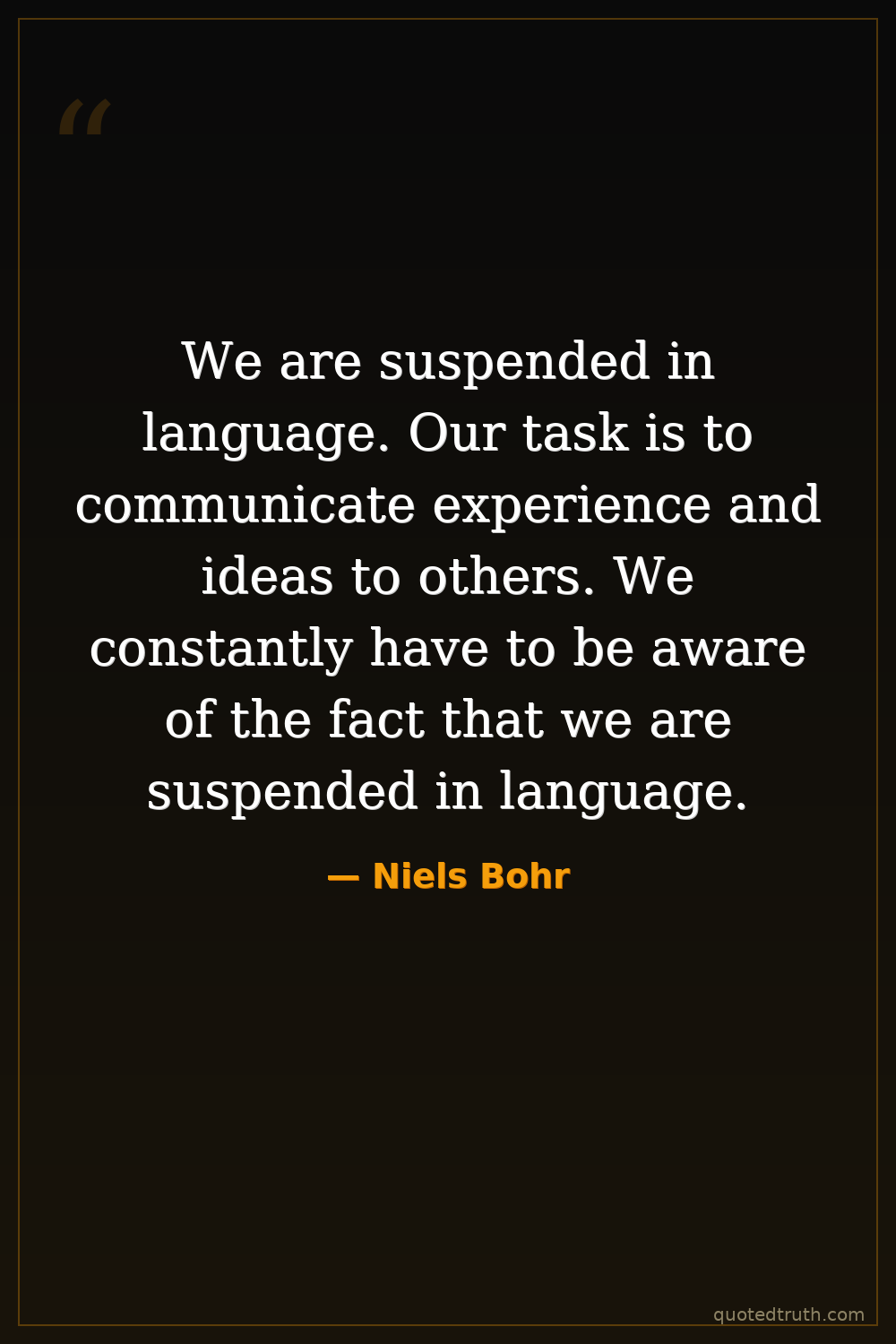
Language is not a neutral window onto reality; we are trapped inside it. Every idea, observation, or experience we try to share must pass through words that shape and limit what can be expressed. Bohr warns that we cannot step outside language to check whether our descriptions match the world directly. Communication always involves this constraint, and forgetting it leads us to mistake our verbal constructions for reality itself.
Relevance to Niels Bohr
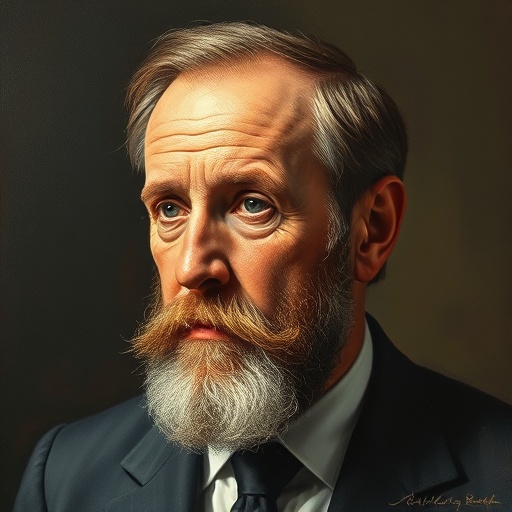
Bohr spent decades wrestling with how to describe quantum phenomena that defied classical vocabulary. His complementarity principle accepted that light was both wave and particle because no single word captured it. As founder of the Copenhagen interpretation, he insisted physicists report experiments in ordinary language even when describing atoms that obey no ordinary logic. This quote distills his lifelong conviction that physics is ultimately a human conversation, constrained by the words available to conduct it.
The era
In the early twentieth century, quantum mechanics shattered the assumption that scientific language mirrored an objective reality. Bohr, Heisenberg, and Schrodinger discovered particles that behaved paradoxically when measured. Simultaneously, Wittgenstein and the logical positivists were arguing that philosophical problems stemmed from language itself. Bohr's Copenhagen circle absorbed these currents, making the limits of description central to physics. The atom had outrun classical words, forcing scientists to confront their dependence on the very language they were trying to transcend.
AI-generated insights based on extensive research and information for context. Factual errors? Email [email protected].