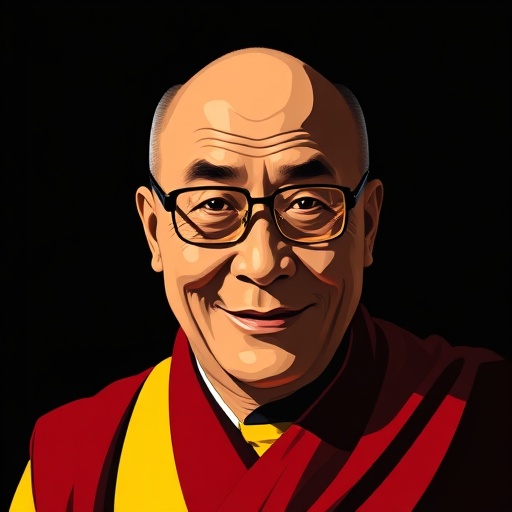
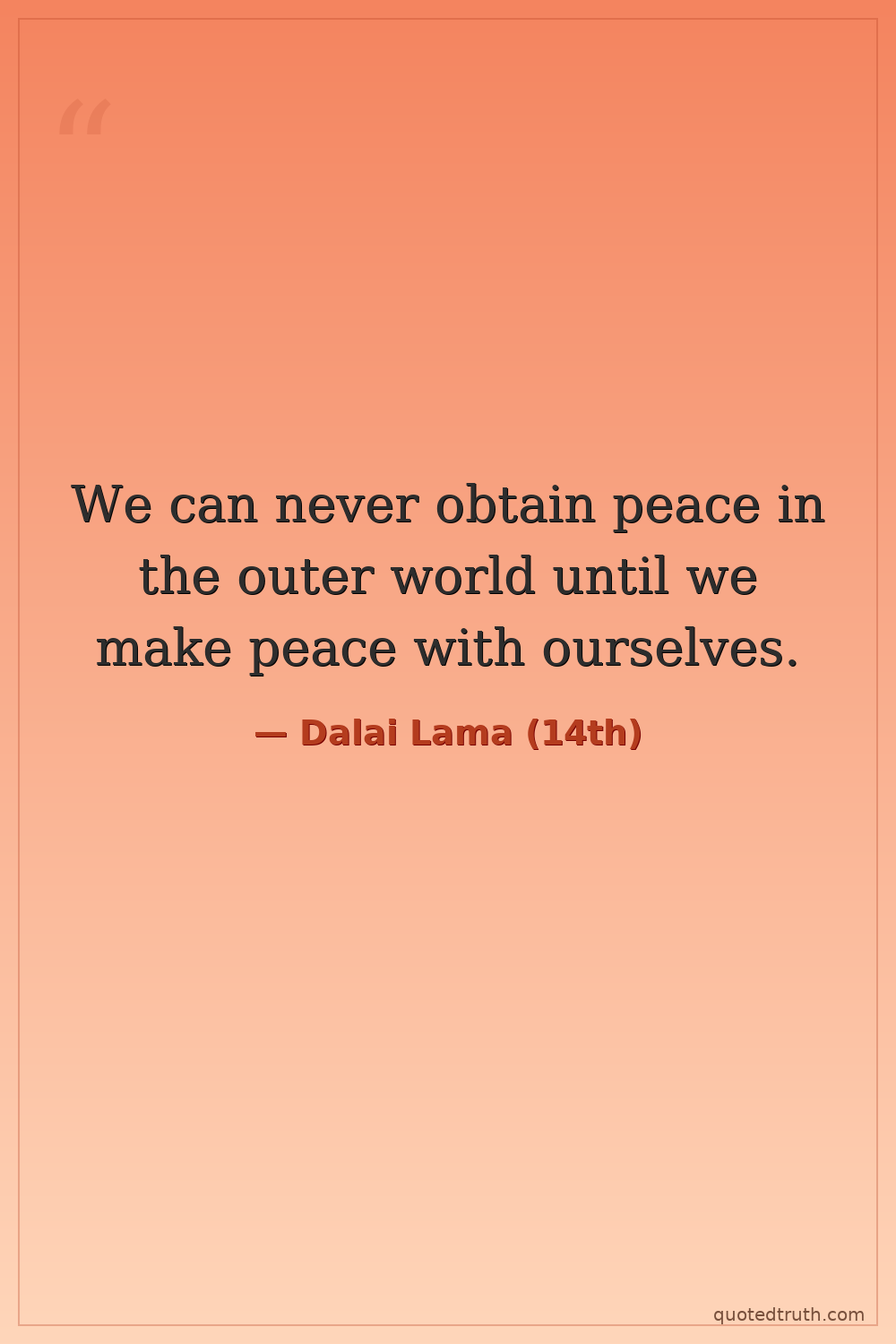
Dalai Lama (14th) — "We can never obtain peace in the outer world until we make peace with ourselves."
We can never obtain peace in the outer world until we make peace with ourselves.
We can never obtain peace in the outer world until we make peace with ourselves.
Click any product to generate a realistic preview. Up to 3 at a time.
* Initial load can take up to 90 seconds — revising the preview in another color is nearly instant.
"Sometimes one creates a dynamic impression by saying something, and sometimes one creates as significant an impression by remaining silent."
"I am just one human being. I am not special."
"Sometimes I think I am a little bit naughty, a little bit mischievous."
"I think the world needs more laughter. Laughter is the best medicine."
"The planet is our only home, and we must protect it."
Found in 1 providers: grok
1 source checked
External peace — between nations, communities, and individuals — is impossible unless each person first resolves their inner conflicts: anger, fear, ego, and resentment. You cannot build a peaceful world while carrying internal turmoil. The quote places responsibility for world peace squarely on personal inner work, not external politics alone. True harmony in relationships and society begins with self-awareness, emotional regulation, and genuine inner reconciliation with one's own fears and impulses.
Tenzin Gyatso, born 1935, has lived in exile since China's 1959 military takeover of Tibet. Despite losing his homeland, witnessing cultural destruction, and leading a stateless government, he consistently advocates nonviolence and compassion over anger. His Buddhist training in mind-transformation and meditation makes inner peace his literal daily practice. His 1989 Nobel Peace Prize recognized that his lifelong serenity under extreme persecution is itself a living demonstration of this principle.
The Dalai Lama has spoken through Cold War nuclear anxiety, decolonization conflicts, regional wars across Asia and the Middle East, and the post-9/11 War on Terror. World leaders pursued peace through military deterrence and political treaties, yet violence persisted. His message offered a radical counter-narrative: systemic peace requires individual inner transformation first. The parallel rise of Western mindfulness movements and neuroscience research on meditation gave his Buddhist framework unprecedented mainstream credibility and global reach.
AI-generated insights based on extensive research and information for context. Factual errors? Email [email protected].
Your cart is empty