What it means
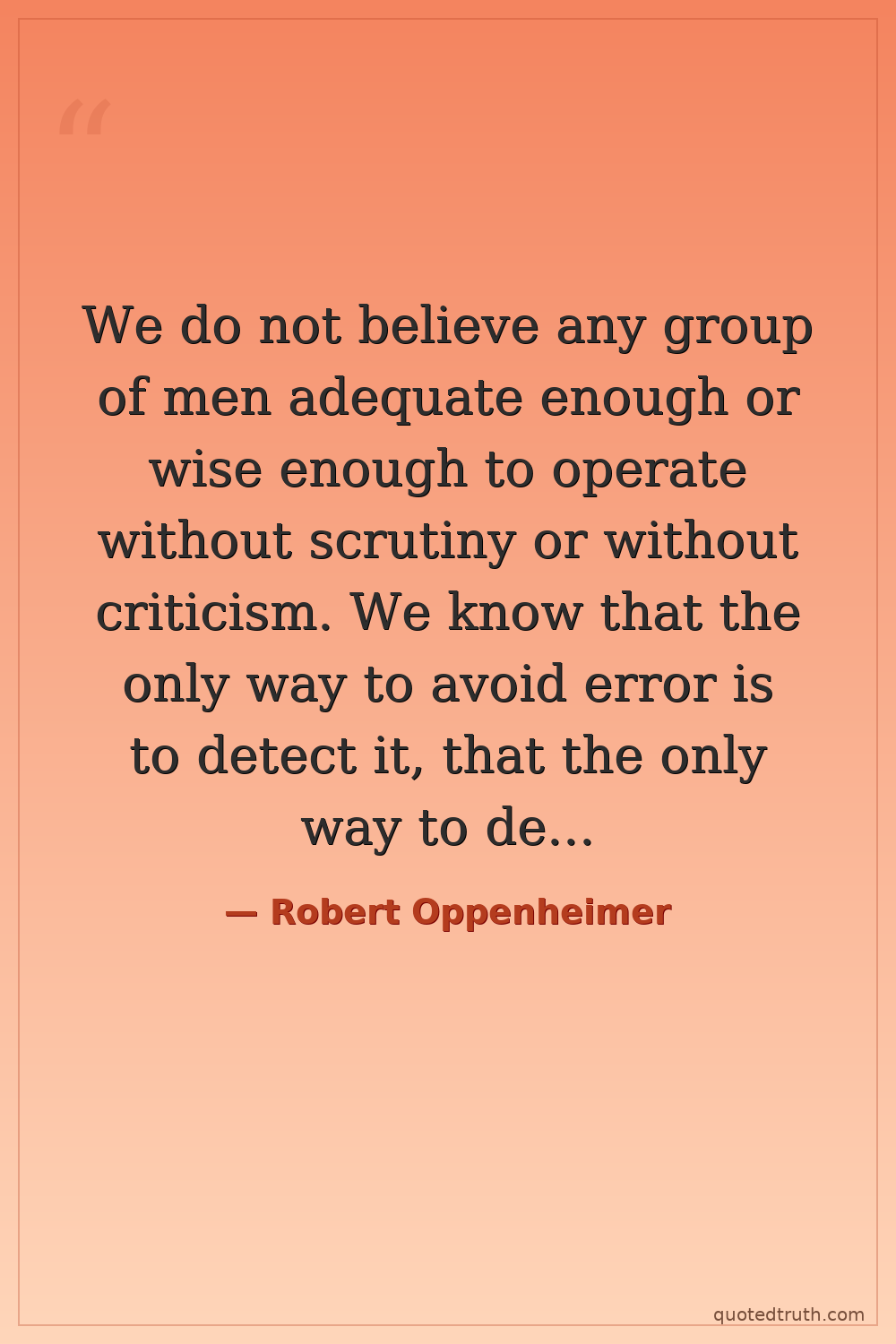
No group of people is wise or reliable enough to operate without accountability. Error thrives when left undetected, and detection requires the freedom to question and investigate openly. Secrecy doesn't protect institutions — it corrupts them by letting mistakes compound unchallenged. The antidote is transparency: open scrutiny, honest criticism, and the liberty to inquire. Without these checks, power and error both flourish in the dark.
Relevance to Robert Oppenheimer
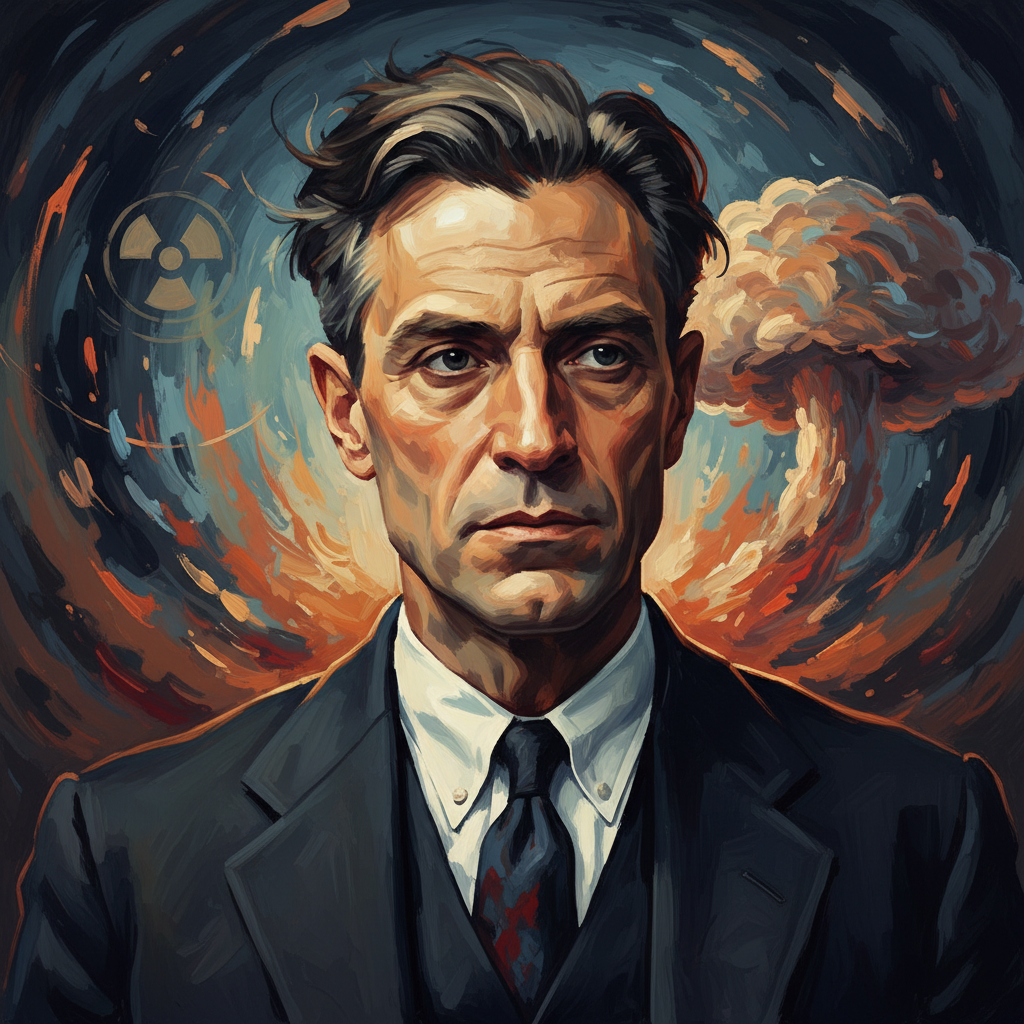
Oppenheimer directed the most secretive scientific project in history — the Manhattan Project — then paid the price for questioning unlimited secrecy. In 1954, he was stripped of his security clearance in closed hearings after advocating for international nuclear controls and civilian oversight. He believed scientists bore moral responsibility for their work's consequences. This quote reflects his hard-won conviction that unchecked power, even in service of national security, inevitably corrupts itself.
The era
The early Cold War defined by an arms race wrapped in government secrecy. McCarthyism and the Red Scare created a climate where loyalty oaths replaced open debate and classified programs operated without public oversight. The Atomic Energy Act created civilian nuclear governance, but military and intelligence agencies resisted scrutiny. Oppenheimer's own secret security hearings in 1954 exemplified the precise danger he warned against: power concealed, error compounded, judgment corrupted.
AI-generated insights based on extensive research and information for context. Factual errors? Email [email protected].