Pope Francis — "We have created new idols. The worship of the ancient golden calf has returned i…"

We have created new idols. The worship of the ancient golden calf has returned in a new and ruthless guise in the idolatry of money and the dictatorship of an impersonal economy lacking a truly human purpose.
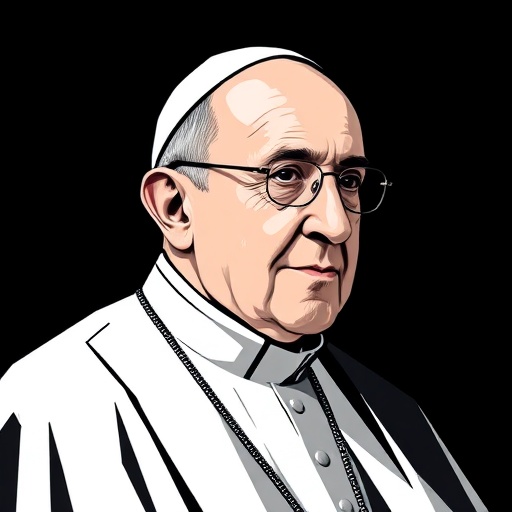
Pope Francis — Pope Francis Contemporary · Current Pope, reformist

Get This Quote & Author's Image Illustrated On:

Click any product to generate a realistic preview. Up to 3 at a time.
* Initial load can take up to 90 seconds — revising the preview in another color is nearly instant.

Kitchen

Apparel

Other

About Pope Francis (born 1936)

First Latin American and Jesuit pope (2013-), who has steered the Catholic Church toward pastoral inclusion on LGBTQ pastoral care, divorced Catholics, and climate. Closely associated with Pope John XXIII (the Vatican II reformer pope) and Cardinal Walter Kasper (his theological ally on pastoral reform). For an intellectual contrast, see Cardinal Raymond Burke, American traditionalist cardinal, former head of the Vatican Apostolic Signatura — Burke is the public face of Catholic traditionalism that views Francis's pastoral approach as doctrinally dangerous — he has formally challenged Amoris Laetitia and other Francis reforms.

Details

Evangelii Gaudium, Apostolic Exhortation

Date: 2013

Shocking

Verification

Unverifiable

Found in 1 providers: grok

1 source checked

Understanding this quote

What it means

Modern society has replaced old religious idols with new ones: money and economic systems that operate without moral compass or human welfare as their goal. People sacrifice everything for wealth accumulation and market forces, treating financial growth as sacred and unchallengeable, even when those systems crush the poor and vulnerable. The economy becomes a god unto itself.

Relevance to Pope Francis

As the first Jesuit pope from Argentina, Francis witnessed devastating poverty and inequality in Latin America firsthand. His Apostolic Exhortation Evangelii Gaudium (2013) formalized this critique. His Jesuit formation emphasizes social justice and service to the marginalized. He consistently challenged trickle-down economics and championed the dignity of the poor throughout his pontificate.

The era

Francis made this critique amid the aftermath of the 2008 global financial crisis, rising wealth inequality, austerity policies devastating ordinary people across Europe and the developing world, and the ascendancy of shareholder-primacy capitalism. The Occupy movement and growing anti-austerity protests reflected widespread frustration with financial systems that privatized gains while socializing losses.

AI-generated insights based on extensive research and information for context. Factual errors? Email [email protected].
Your Cart

Your cart is empty