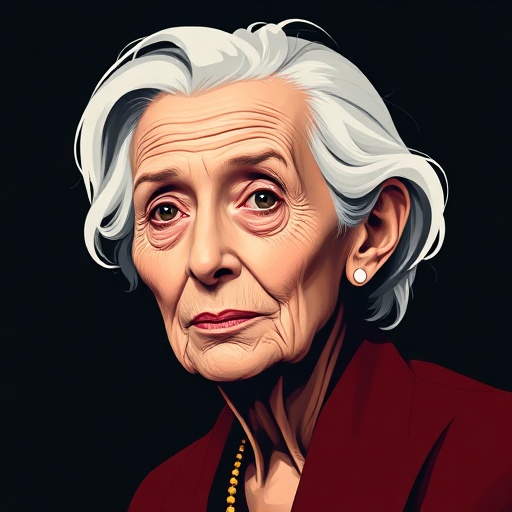
Jane Goodall — "We must never give up hope."
We must never give up hope.
We must never give up hope.
Click any product to generate a realistic preview. Up to 3 at a time.
* Initial load can take up to 90 seconds — revising the preview in another color is nearly instant.
"We need to inspire hope in young people, and empower them to create a better future."
"We have to learn to live in harmony with all living things, or we will perish."
"I think the most important thing is to keep active and to hope that your mind stays active."
"The only way to make sure that we don't destroy the future is to make sure that our children are educated in a way that they understand the interconnectedness of all life."
"We have to find a way to live in harmony with nature, or we will destroy ourselves."
British primatologist who in 1960 began the longest-running wild primate study at Gombe Stream, transforming our understanding of chimpanzees. Closely associated with Dian Fossey (mountain-gorilla researcher) and Birutė Galdikas (orangutan researcher; together with Goodall and Fossey one of Louis Leakey's 'Trimates'). For an intellectual contrast, see Walter Palmer, American dentist who killed Cecil the Lion in Zimbabwe in 2015 — Palmer represents the trophy-hunting tradition Goodall's life's work has been organized against — the colonial-era hunter-naturalist worldview that treated primates and big game as specimens or trophies, which Goodall's Roots & Shoots and Jane Goodall Institute exist specifically to displace.
Found in 1 providers: grok
1 source checked
Abandoning hope is the one guaranteed way to ensure nothing changes. Hope here isn't naive optimism but a necessary, active stance — the precondition for any effort toward improvement. When circumstances feel overwhelming or progress seems impossible, surrendering hope removes the very motivation to act. Keeping it alive, even when evidence is discouraging, is what makes sustained effort and eventual change possible.
Goodall spent decades watching chimpanzee populations decline and African forests vanish due to human activity. Rather than retreat into despair, she redirected her career from pure research to global activism, founding the Jane Goodall Institute and the Roots & Shoots youth program. Her conviction that young people and local communities can reverse environmental damage is rooted entirely in hope — without it, her entire conservation mission would be incoherent.
Goodall's career spans an era of escalating environmental alarm: mass extinction events, accelerating deforestation, and mounting climate science have bred widespread eco-anxiety and conservation fatigue. The late 20th and early 21st centuries produced increasingly dire IPCC assessments and public despair about reversibility of damage. Against this backdrop, her insistence on hope is a deliberate counter-narrative — a refusal to let scientific documentation of crisis become an excuse for inaction.
AI-generated insights based on extensive research and information for context. Factual errors? Email [email protected].
Your cart is empty