Erwin Schrodinger — "What is mind? No matter. What is matter? Never mind."
What is mind? No matter. What is matter? Never mind.
What is mind? No matter. What is matter? Never mind.
Click any product to generate a realistic preview. Up to 3 at a time.
* Initial load can take up to 90 seconds — revising the preview in another color is nearly instant.
"The world is a stage, and we are merely players."
"The most amazing thing about the world is that it is comprehensible."
"The world is a canvas, and we are the artists."
"The world is a book, and those who do not travel read only one page."
"The fact that the world is in a constant state of flux is the very reason why it can be understood."
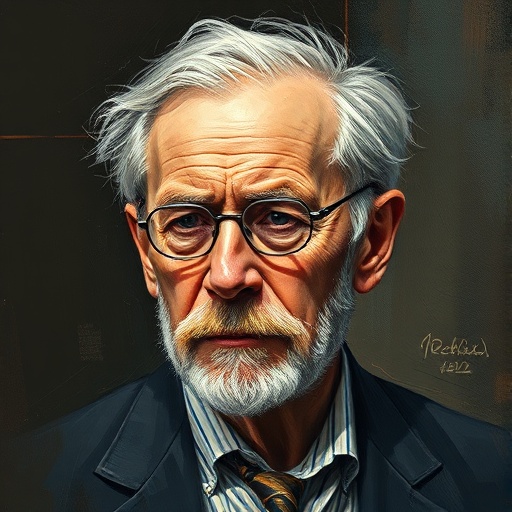
Austrian physicist who shared the 1933 Nobel for the wave equation that bears his name and the famous cat thought-experiment. Closely associated with Werner Heisenberg (matrix-mechanics rival who reached the same physics by different math) and Albert Einstein (his pen-pal on quantum interpretation). For an intellectual contrast, see Niels Bohr, Danish physicist and architect of the Copenhagen interpretation — Schrödinger's cat thought-experiment was specifically designed to ridicule Bohr's 'observer-dependent reality' reading of quantum mechanics — Schrödinger thought the Copenhagen interpretation was absurd; the cat was meant as reductio ad absurdum.
Attributed, a popular pun often associated with his philosophical inquiries.
Date: Unknown
WisdomFound in 1 providers: grok
1 source checked
A witty philosophical pun playing on dual meanings. No matter dismisses mind as immaterial while punning on the word matter as substance. Never mind dismisses matter as non-mental while punning on the phrase meaning forget it. Together they mock the ancient mind-body problem—how consciousness and physical substance relate—suggesting both questions cancel each other out. The joke lands because it uses casual English idioms to expose how slippery these foundational concepts truly are.
Schrödinger spent his career dismantling classical assumptions about matter—quantum wave mechanics proved physical substances are probabilistic, not solid. His 1944 book What is Life? extended this into biology and consciousness. He studied Vedantic philosophy seriously, believing mind and universe were deeply unified. The quote's playful agnosticism about both mind and matter perfectly mirrors his lifelong intellectual position: that our categories of physical and mental may be fundamentally inadequate for describing reality.
The early 20th century quantum revolution shattered classical physics certainty about what matter actually is—particles behaved as waves, observation affected outcomes, determinism collapsed. Simultaneously, Freud's psychoanalysis and emerging neuroscience were forcing equally uncomfortable questions about mind and consciousness. Philosophers like Russell and Wittgenstein were interrogating language itself. In this climate of radical uncertainty across physics, psychology, and philosophy, a joke mocking both matter and mind as unanswerable questions was intellectually charged, not merely clever.
AI-generated insights based on extensive research and information for context. Factual errors? Email [email protected].
Your cart is empty