What it means
Refusing to acknowledge our own capacity for evil doesn't purify us — it diminishes us. Self-awareness of our darker impulses is essential to moral agency. When we pretend we are incapable of harm, we lose the vocabulary and insight needed to recognize or resist it in others. Confronting our own shadow is not weakness; it is the only honest foundation from which we can act against wrongdoing in the world.
Relevance to Robert Oppenheimer
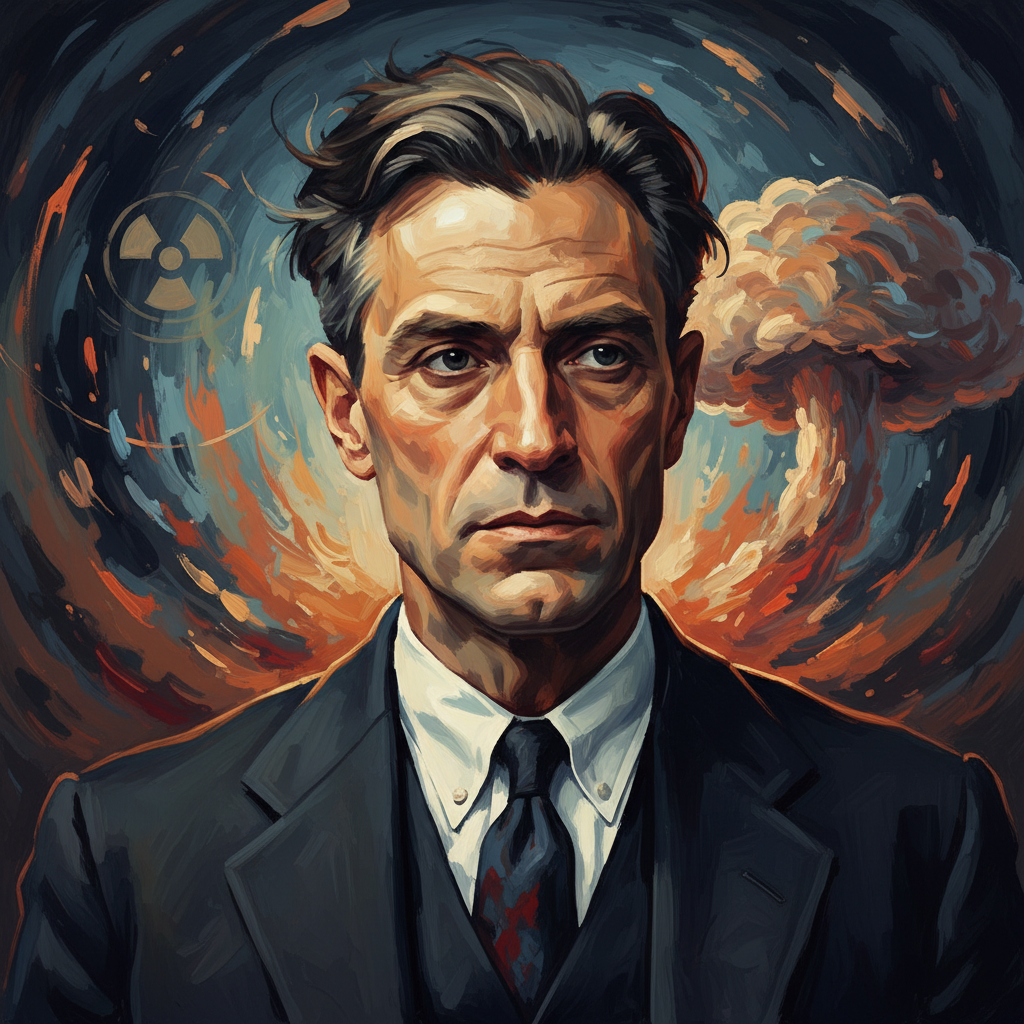
Oppenheimer led the Manhattan Project, which created the atomic bombs dropped on Hiroshima and Nagasaki. He reportedly quoted Hindu scripture afterward — 'Now I am become Death' — signaling his reckoning with the evil his genius enabled. He later opposed hydrogen bomb development and advocated arms control, demonstrating this very principle: only by owning his role in mass destruction could he meaningfully confront the nuclear threat he helped create.
The era
Oppenheimer's era was defined by collective moral denial — nations committing genocide and mass destruction while projecting evil onto enemies. The Holocaust revealed what happens when societies suppress acknowledgment of their own capacity for atrocity. The Cold War crystallized a world of binary good-versus-evil blocs, each denying its own shadow. His 1954 security hearing, where McCarthyite forces destroyed him while claiming to protect democracy, embodied exactly the danger he described.
AI-generated insights based on extensive research and information for context. Factual errors? Email [email protected].