What it means
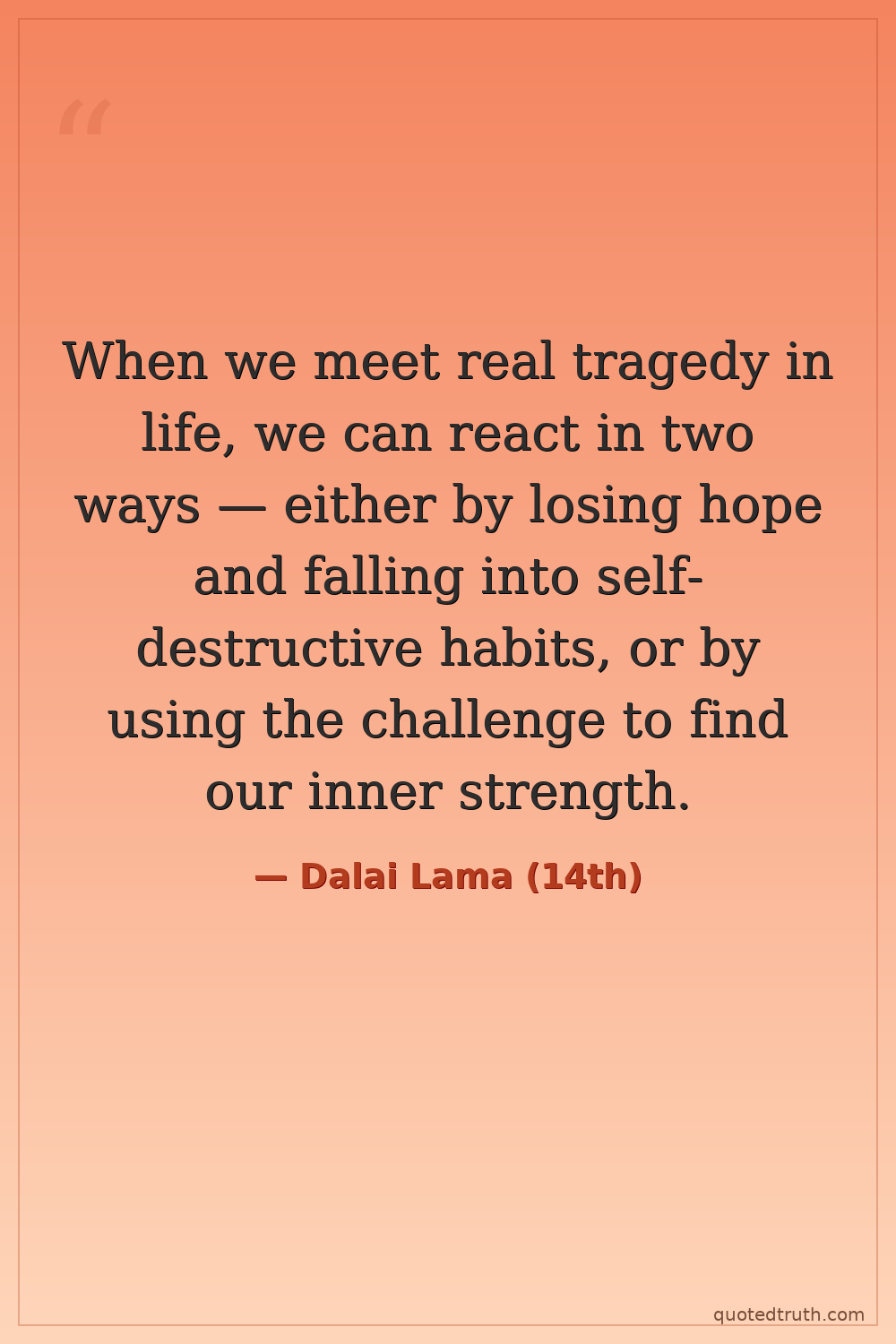
Tragedy forces a fork in the road: crumble into hopelessness and self-harm, or treat the hardship as raw material for growth. Inner strength isn't something you're born with — it's discovered under pressure. We have agency in how we respond to suffering. Choosing to look inward rather than collapse outward is itself the act that builds resilience.
Relevance to Dalai Lama (14th)
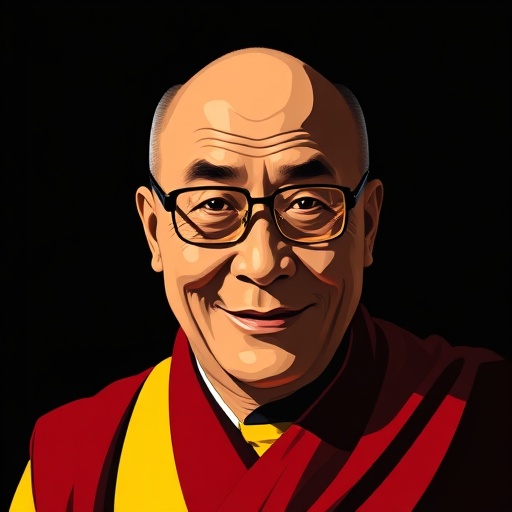
Tenzin Gyatso was forced into exile in 1959 after China's military crackdown on Tibet, losing his homeland and watching his people suffer occupation and cultural erasure. Rather than succumbing to bitterness, he dedicated decades to non-violent advocacy and Buddhist compassion. Winning the 1989 Nobel Peace Prize, he became a living example of the choice he describes — meeting catastrophic personal loss with inner cultivation, not despair.
The era
The late 20th and early 21st centuries have been defined by collective trauma — Cold War existential dread, Tiananmen Square, 9/11, mass displacement from regional conflicts, and the 2020 global pandemic. Mental health awareness grew alongside unprecedented refugee crises and political repression worldwide. In this climate, frameworks for processing suffering without collapse became urgently relevant, making the Dalai Lama's message of chosen resilience over despair widely resonant.
AI-generated insights based on extensive research and information for context. Factual errors? Email [email protected].