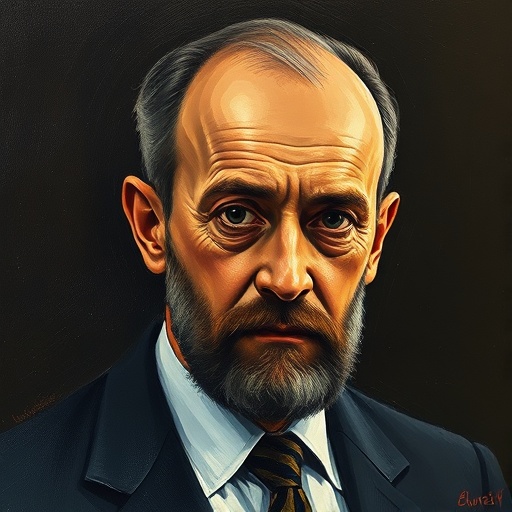
Enrico Fermi — "Where is everybody?"
Where is everybody?
Where is everybody?
Click any product to generate a realistic preview. Up to 3 at a time.
* Initial load can take up to 90 seconds — revising the preview in another color is nearly instant.
"Oh, anything with a probability of less than 20%."
"The more you know, the more you realize you don't know."
"I am an optimist, because I believe that man is capable of solving his problems."
"Don't ever tell anybody anything, or you'll never get anything done."
"I hope it won't take long."
Fermi Paradox, questioning the lack of evidence for extraterrestrial civilizations
Date: 1950
WisdomFound in 1 providers: deepseek
1 source checked
This question crystallizes what's now called the Fermi Paradox: given the universe's vast size and age, statistically speaking, intelligent life should exist elsewhere—yet we've found no trace of it. Where are the signals, the visitors, the evidence? It forces us to confront that either life is extraordinarily rare, civilizations destroy themselves, or something else explains the silence. Deceptively simple words carrying enormous scientific implications.
Fermi was legendary for 'Fermi estimation'—deriving accurate answers from minimal data through pure logic. He built the world's first nuclear reactor in 1942 and was central to the Manhattan Project. This spontaneous 1950 remark at a Los Alamos lunch shows his mind never stopped calculating. He reportedly estimated how many alien civilizations should exist, then asked why none had appeared—turning a casual observation into a foundational question of astrobiology that still bears his name.
In 1950, humanity had just split the atom and was entering the Cold War. The space age hadn't begun—Sputnik was seven years away. Yet nuclear technology and early computing were advancing rapidly, making advanced civilizations elsewhere feel suddenly imaginable. Fermi's question arrived during a moment of technological awakening and existential anxiety, when scientists were grappling with what powerful intelligence could build—and destroy. The silence of the cosmos felt newly significant against that backdrop.
AI-generated insights based on extensive research and information for context. Factual errors? Email [email protected].
Your cart is empty