What it means
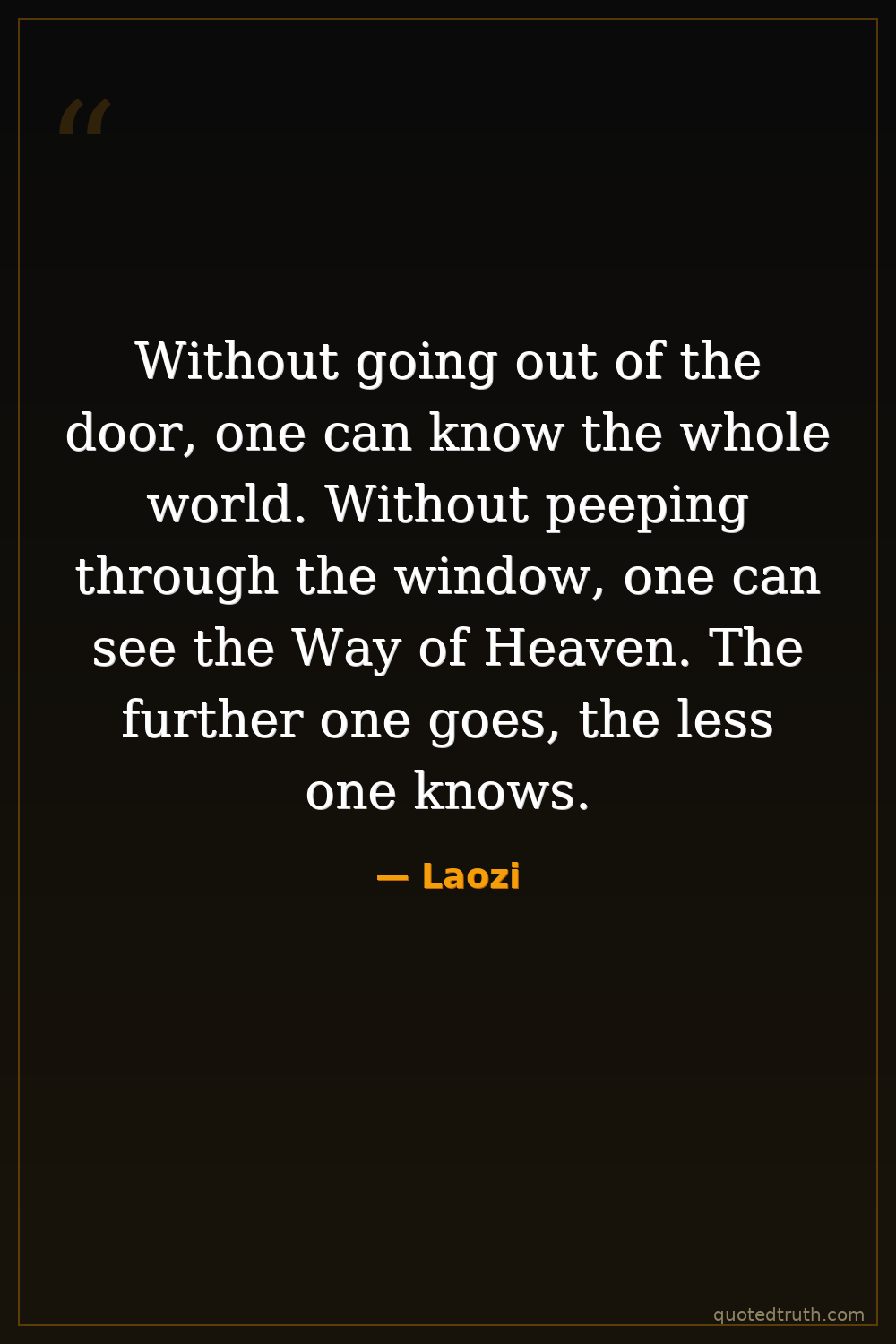
True understanding comes from inward reflection, not outward searching. You grasp universal patterns and principles by quieting yourself and observing your own nature, because those same patterns operate everywhere. Chasing knowledge through constant travel, data gathering, or sensory experience actually scatters your attention and obscures the deeper reality. The more you accumulate externally, the more distracted you become from what genuine wisdom requires: stillness, reflection, and recognition of universal principles within yourself.
Relevance to Laozi
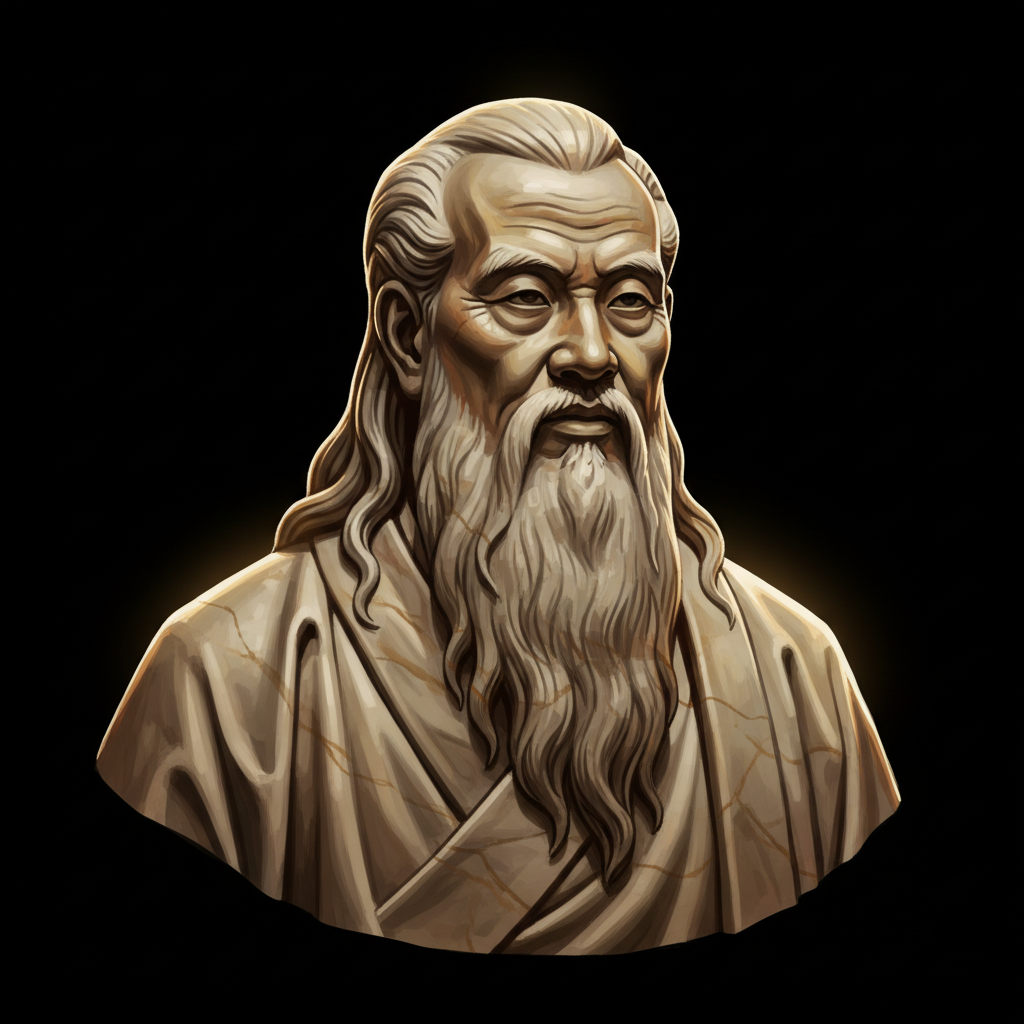
Laozi, the semi-legendary founder of Taoism and reputed keeper of the Zhou royal archives, championed wu wei (effortless action) and inner cultivation over scholarly striving. Legend says he left society by riding west on an ox, composing the Tao Te Ching at a border guard's request. This saying embodies his core teaching that the Tao is known through inward alignment, not external accumulation—reflecting his withdrawal from court politics and rejection of Confucian knowledge-collection as the path to wisdom.
The era
Laozi lived during the late Zhou dynasty (roughly 6th century BCE), an era of political fragmentation, warring states, and competing philosophical schools known as the Hundred Schools of Thought. Confucians pushed ritual learning, study, and social engagement; Legalists pushed strict law. Taoism emerged as a counter-current urging retreat, simplicity, and harmony with nature. In a chaotic age where rulers chased knowledge and conquest, Laozi's message that truth is found within was genuinely radical.
AI-generated insights based on extensive research and information for context. Factual errors? Email [email protected].