What it means
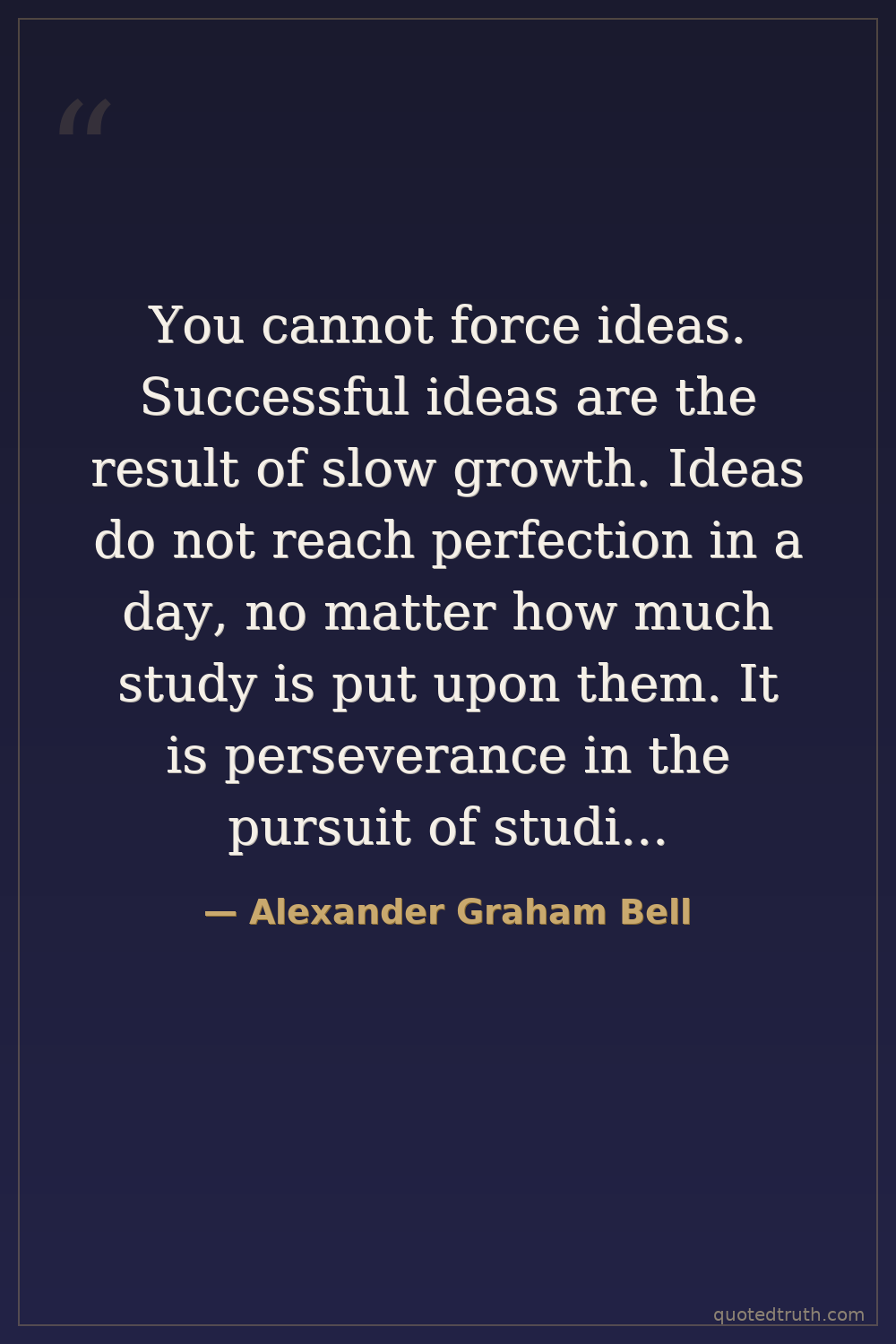
Good ideas cannot be rushed or manufactured on demand. They mature gradually through sustained effort and reflection. Even intensive short-term study cannot substitute for the patient, persistent pursuit of a problem over time. Real intellectual breakthroughs require commitment measured in months or years, not hours.
Relevance to Alexander Graham Bell
Bell spent over a decade refining acoustic and telegraph research before the telephone emerged in 1876. His work on the harmonic telegraph, speech transmission, and human hearing involved years of iterative experiments and failed prototypes. He embodied slow-growth thinking: his later inventions in aviation, hydrofoils, and photophone all required prolonged, disciplined investigation.
The era
Bell lived through the Second Industrial Revolution, when rapid invention was glorified and inventors like Edison cultivated images of prolific output. Against that backdrop, Bell's insistence on patient study was countercultural. The era rewarded patents and speed-to-market, yet Bell recognized that durable innovations — electricity, telephony, flight — demanded sustained intellectual commitment, not frantic sprints.
AI-generated insights based on extensive research and information for context. Factual errors? Email [email protected].