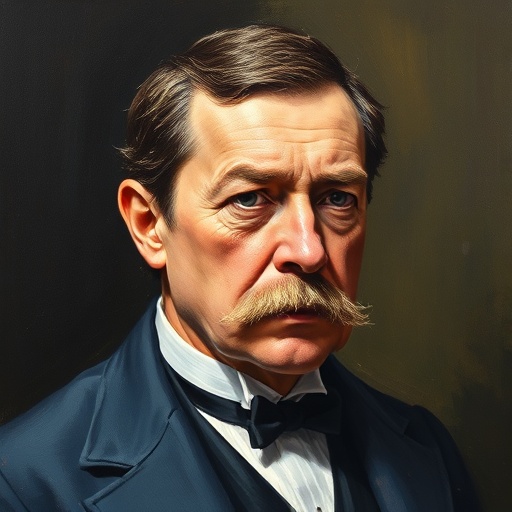
Arthur Conan Doyle — "You see, but you do not observe. The distinction is clear."
You see, but you do not observe. The distinction is clear.
You see, but you do not observe. The distinction is clear.
Click any product to generate a realistic preview. Up to 3 at a time.
* Initial load can take up to 90 seconds — revising the preview in another color is nearly instant.
"The greatest evil is indifference."
"The little things are infinitely the most important."
"It is not my intention to be fulsome, but I confess that I feel the most profound respect for the man for whom no mystery is too abstruse, and no problem too intricate."
"For strange effects and extraordinary combinations we must go to life itself, which is always far more daring than any effort of the imagination."
"The emotional qualities are antagonistic to clear reasoning."
Scottish physician and author whose Sherlock Holmes (created 1887) became the most-portrayed literary character in film and television history. Closely associated with G.K. Chesterton (Father Brown detective creator and Edwardian contemporary) and Wilkie Collins (earlier detective-fiction predecessor (The Moonstone)). For an intellectual contrast, see Harry Houdini, American escape artist and skeptic — Houdini publicly debunked the spiritualist mediums Doyle endorsed; Doyle insisted Houdini was secretly using real psychic powers. Their 1920s friendship-then-feud is the cleanest 'magician's debunking vs Sherlock-Holmes-author's credulity' irony in cultural history — the rationalist's creator believed the impossible.
Your cart is empty