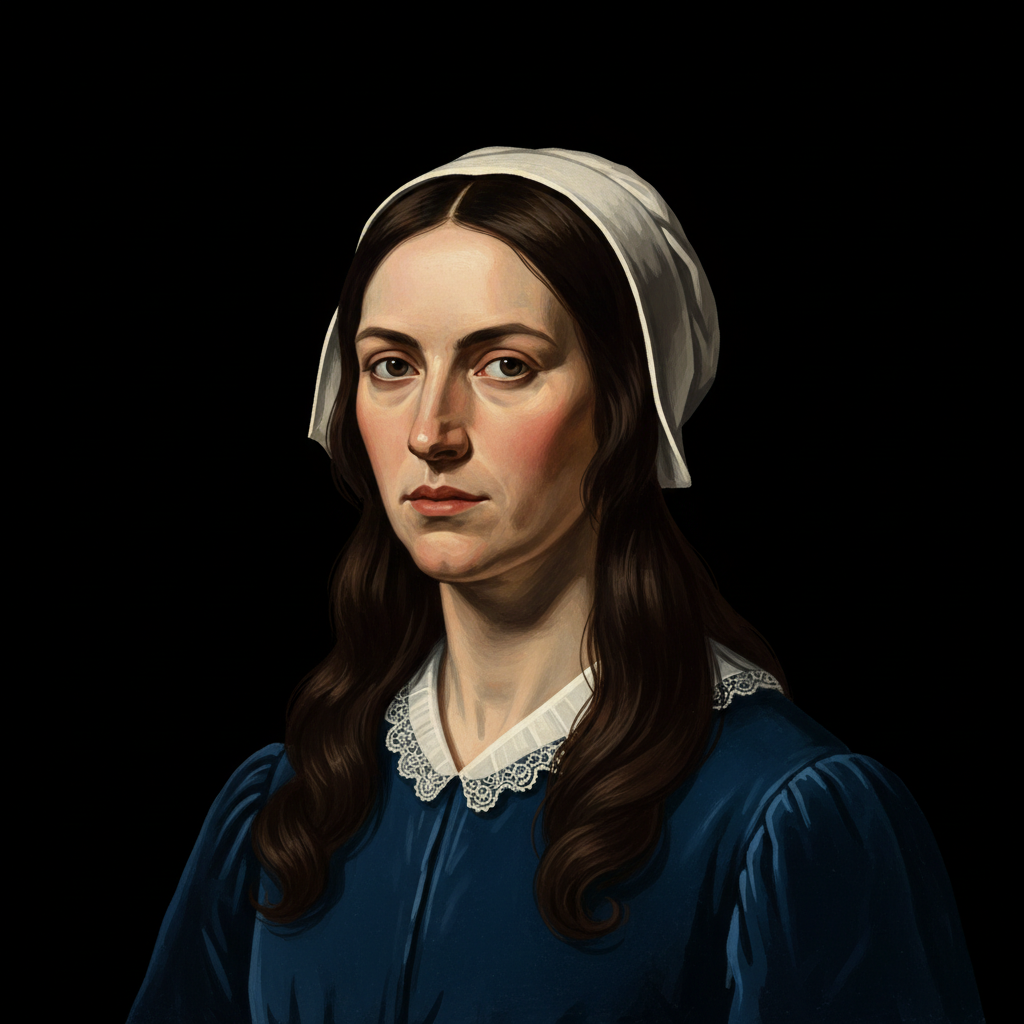
Mary Wollstonecraft — "I am a child of nature, who has been taught to think; and I will not resign my b…"
I am a child of nature, who has been taught to think; and I will not resign my birthright for a mess of pottage.
I am a child of nature, who has been taught to think; and I will not resign my birthright for a mess of pottage.
Click any product to generate a realistic preview. Up to 3 at a time.
* Initial load can take up to 90 seconds — revising the preview in another color is nearly instant.
"I have a soul that is too proud to stoop to any meanness."
"Surely something resides in this heart that is not perishable—and life is more than a dream."
"The woman who has only been taught to please will soon find that her power is of short duration."
"It is a melancholy truth that among the higher classes, the only system of education adopted is calculated to make women more dependent and helpless."
"The grand source of female folly and vice has ever appeared to me to arise from a mistaken estimate of sexual character."
English writer and proto-feminist philosopher whose A Vindication of the Rights of Woman (1792) is the founding text of modern feminist theory. Closely associated with Thomas Paine (Rights of Man co-conspirator and revolutionary contemporary) and William Godwin (her husband and philosopher of anarchism). For an intellectual contrast, see Edmund Burke, Anglo-Irish conservative and parliamentarian — Burke's Reflections on the Revolution in France (1790) was the explicit target of Wollstonecraft's first book — A Vindication of the Rights of Men (1790), written in the weeks after Burke's appeared. She extended the argument to women in her second Vindication two years later. Burke's tradition-and-prescription conservatism is the worldview Wollstonecraft's career was structured against.
Found in 1 providers: grok
1 source checked
Your cart is empty