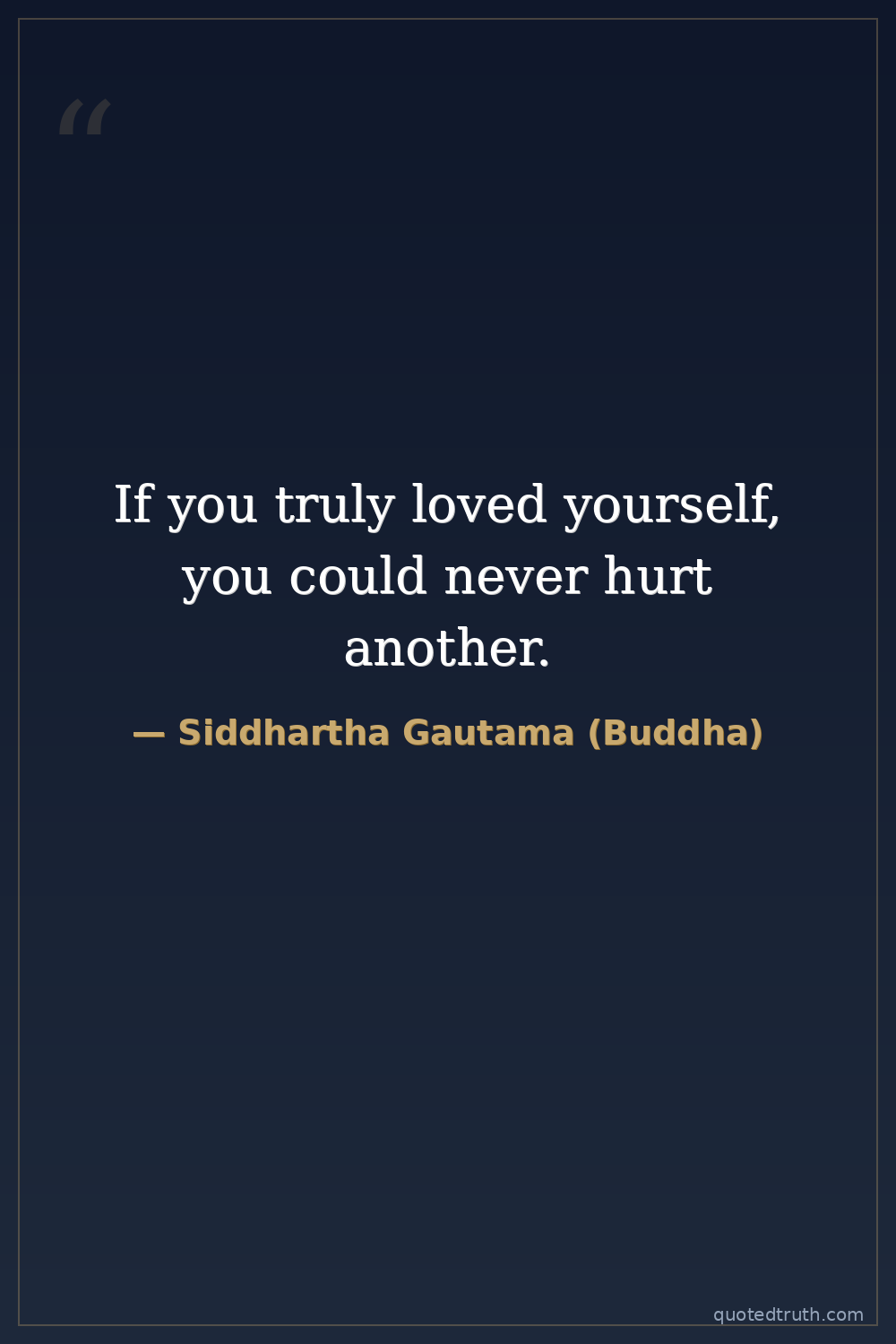
Siddhartha Gautama (Buddha) — "If you truly loved yourself, you could never hurt another."
If you truly loved yourself, you could never hurt another.
If you truly loved yourself, you could never hurt another.
Click any product to generate a realistic preview. Up to 3 at a time.
* Initial load can take up to 90 seconds — revising the preview in another color is nearly instant.
"Long is the night to him who is awake; long is a mile to him who is tired; long is life to the foolish who do not know the true law."
"The greatest prayer is patience."
"Health is the greatest gift, contentment the greatest wealth, faithfulness the best relationship."
"If you find no one to support you on the spiritual path, walk alone. There is no companionship with the immature."
"One day, in the morning, having put on his undergarment and taken his outer robe and bowl, the Blessed One entered Sāvatthī for alms."
A popular modern sentiment, reflecting Buddhist ideals but not a direct quote.
Date: c. 5th century BCE
RelationshipsFound in 1 providers: grok
1 source checked
Genuine self-love isn't vanity or selfishness but a deep acceptance and inner peace. When you're truly at ease with yourself, you have no need to lash out, demean, or harm others. Most cruelty comes from unresolved pain, insecurity, or self-hatred projected outward. A person who has healed their own wounds and cultivated genuine compassion toward themselves naturally extends that same kindness to everyone they encounter.
The Buddha taught that suffering stems from craving, aversion, and ignorance rooted in a misunderstood self. After abandoning royal life and years of extreme asceticism, he discovered the Middle Way and awakened under the Bodhi tree. He emphasized metta (loving-kindness) beginning with oneself before radiating outward to all beings. This saying reflects his core insight that inner liberation and outward compassion are inseparable aspects of the same awakened mind.
In 5th-century BCE northern India, the Vedic caste system dictated worth by birth, and harsh ascetic traditions taught self-mortification as the path to liberation. Warfare between small kingdoms was common, and ritual animal sacrifice was widespread. The Buddha's teaching that kindness toward oneself and others mattered more than ritual purity or caste was radical, offering a psychological and ethical path accessible to everyone regardless of social standing.
AI-generated insights based on extensive research and information for context. Factual errors? Email [email protected].
Your cart is empty