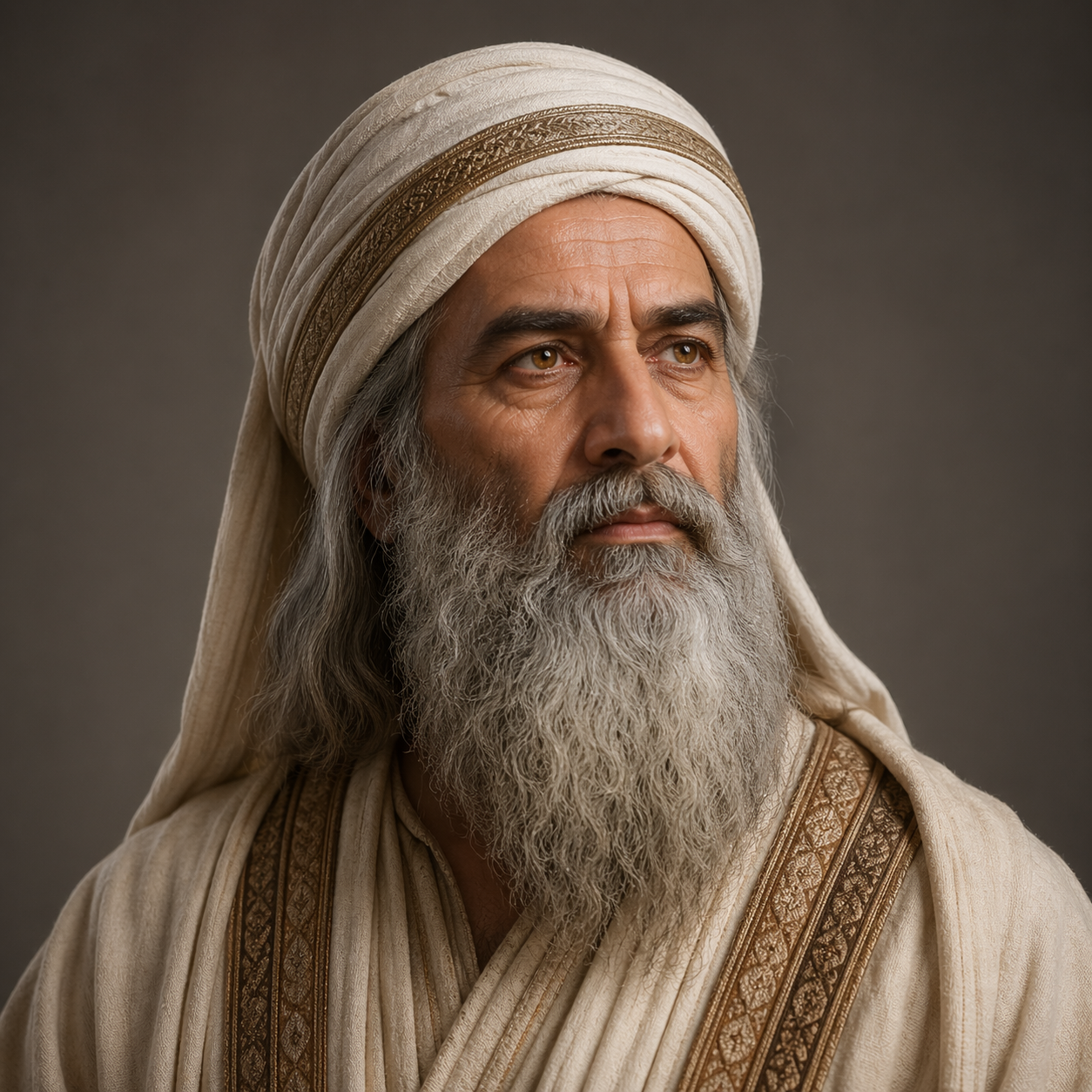
Zoroaster — "May the divine light guide us in all our thoughts, words, and deeds."
May the divine light guide us in all our thoughts, words, and deeds.
May the divine light guide us in all our thoughts, words, and deeds.
Click any product to generate a realistic preview. Up to 3 at a time.
* Initial load can take up to 90 seconds — revising the preview in another color is nearly instant.
"The lie-follower is an evil doer, but the truth-follower is a good doer."
"A knife of the keenest steel requires the whetstone, and the wisest man needs advice."
"In the beginning, these two spiritualities, which are twins, were perceived in a vision by the righteous. The better and the bad have been said to be thought, word, and deed, and between these two the…"
"The path of the righteous is straight, the path of the wicked is crooked."
"Be kind to all beings. Especially those who bring you food."
Iranian prophet who founded Zoroastrianism, the first major religion of cosmic dualism between good (Ahura Mazda) and evil (Angra Mainyu). Closely associated with The Buddha (near-contemporary Eastern moral-cosmological revolutionary). For an intellectual contrast, see Friedrich Nietzsche, German philosopher of 'beyond good and evil' — Nietzsche appropriated Zarathustra's name for Thus Spoke Zarathustra (1883) precisely to invert the original's moral cosmology — the historical Zoroaster founded the good-versus-evil framework Nietzsche's character announces the end of.
Found in 1 providers: gemini
1 source checked
This saying asks for a higher, radiant wisdom to steer every part of human life: the private workings of the mind, the words spoken to others, and the actions that follow. It treats light as a moral compass rather than mere illumination, suggesting that a person who aligns inner intention, speech, and behavior under one guiding principle lives rightly. It is essentially a prayer for integrity across thought, communication, and conduct.
This reflects Zoroaster's foundational teaching of Humata, Hukhta, Hvarshta, 'good thoughts, good words, good deeds,' the ethical triad at the heart of Zoroastrianism. As a priestly reformer who received visions of Ahura Mazda, the Wise Lord symbolized by fire and light, Zoroaster taught that cosmic order depends on individual moral choice. His life's work was turning worship away from ritual appeasement toward personal righteousness guided by divine illumination.
Zoroaster lived in ancient Iran, likely somewhere between 1500 and 1000 BCE, amid pastoral Indo-Iranian tribes worshipping many nature deities through elaborate sacrifices. Cattle raiding, warrior cults, and intoxicant-fueled rites dominated religious life. Against this backdrop, his monotheistic reform, framing existence as a struggle between truth (asha) and the lie (druj), was radical. It later shaped Achaemenid Persian governance and influenced Jewish, Christian, and Islamic concepts of heaven, judgment, and a cosmic moral order.
AI-generated insights based on extensive research and information for context. Factual errors? Email [email protected].
Your cart is empty