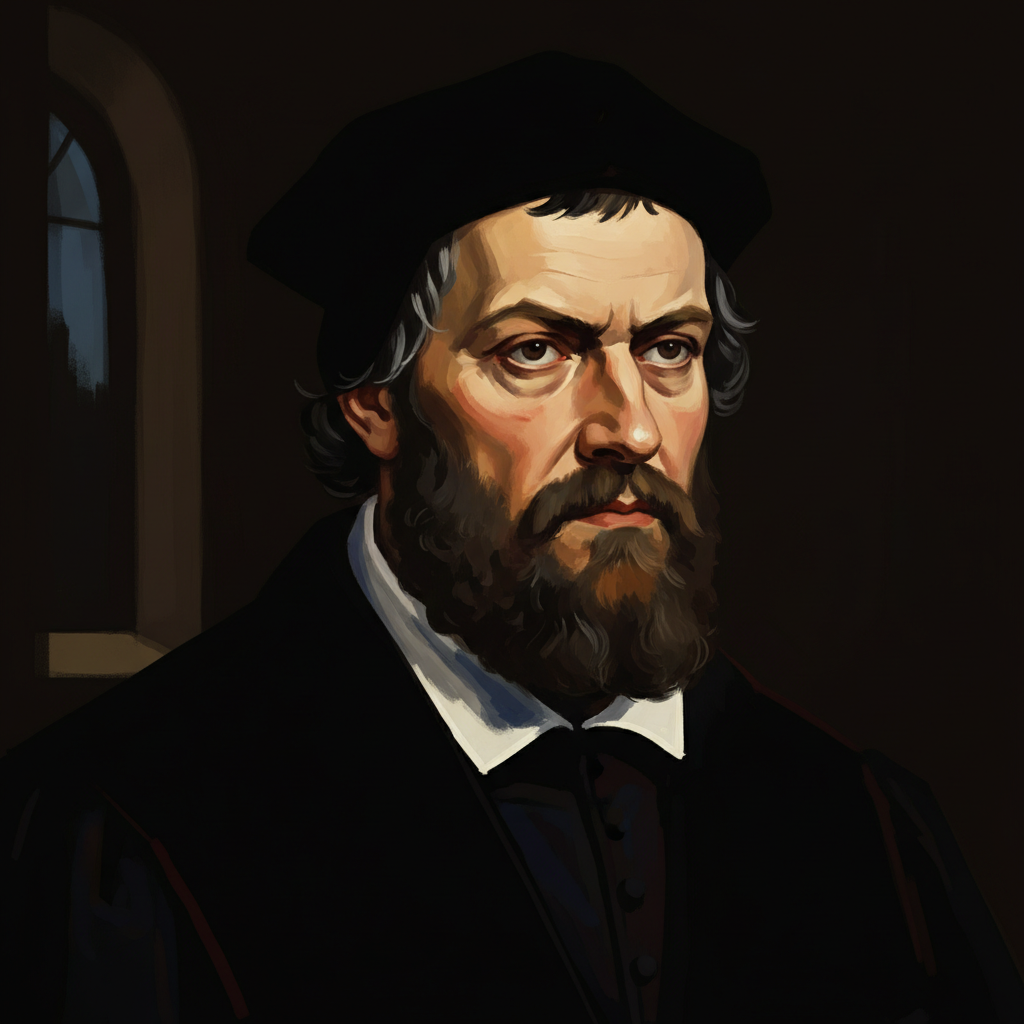
Martin Luther — "A dog is a dog, and a cat is a cat, but a man is a man."
A dog is a dog, and a cat is a cat, but a man is a man.
A dog is a dog, and a cat is a cat, but a man is a man.
Click any product to generate a realistic preview. Up to 3 at a time.
* Initial load can take up to 90 seconds — revising the preview in another color is nearly instant.
"Heretics are not to be disputed with, but to be condemned unheard, and whilst they perish by fire, the faithful ought to pursue the evil to its source, and bathe their heads in the blood of the Cathol…"
"Faith is permitting ourselves to be seized by the things we do not see."
"Burn down their synagogues, forbid all that I enumerated earlier, force them to work, and deal with them with utmost severity, as Moses did in the wilderness, when he slew three thousand... for if we …"
"Devil, if you want to eat me, start from behind."
"The more one reads the Bible, the more one loves it."
German theologian whose 95 Theses (1517) launched the Protestant Reformation and broke the Catholic Church's monopoly on Western Christianity. Closely associated with Philipp Melanchthon (Lutheran systematizer) and John Calvin (later Reformer who built on Luther's break). For an intellectual contrast, see Pope Leo X, Renaissance pope (1513-1521) — Leo X's indulgence sales triggered Luther's break and Leo excommunicated him in 1521 — Luther's entire Reformation is structured as a direct answer to the indulgence-funded Vatican Leo represented.
Found in 1 providers: grok
1 source checked
Each creature or person has a fixed nature that cannot be denied or changed. A dog behaves like a dog, a cat like a cat, and a human is bound to act according to human nature. The saying insists on accepting what something truly is rather than pretending it is something else. It is a blunt reminder that identity and essence matter, and wishful thinking cannot overrule reality.
Luther constantly wrestled with human nature, teaching that people are fallen sinners who cannot save themselves by works or pretense. As an Augustinian monk turned reformer, he rejected the idea that rituals could transform a person's essence, insisting only grace through faith could. This plainspoken line fits his earthy, peasant-friendly rhetoric in German tracts and Table Talk, where he mocked illusions and demanded honest reckoning with what humans actually are.
In early sixteenth-century Europe, the Reformation shattered medieval Christendom. The Church sold indulgences promising spiritual transformation, while humanists debated human dignity and perfectibility. Luther's 1517 Ninety-Five Theses ignited decades of theological and political upheaval, printing presses spread pamphlets across German lands, and peasants, princes, and popes clashed over authority. Against this backdrop of elaborate religious performance and shifting identities, a blunt statement that things simply are what they are carried sharp polemical weight.
AI-generated insights based on extensive research and information for context. Factual errors? Email [email protected].
Your cart is empty