Carl Linnaeus — "A natural arrangement is one which is based on all parts of the plant."
A natural arrangement is one which is based on all parts of the plant.
A natural arrangement is one which is based on all parts of the plant.
Click any product to generate a realistic preview. Up to 3 at a time.
* Initial load can take up to 90 seconds — revising the preview in another color is nearly instant.
"A world without names is a world without knowledge."
"The stone grows, the plant grows and lives, the animal grows, lives and feels."
"In natural science the principles of truth ought to be confirmed by observation."
"I saw a monster today: a two-headed calf. It lived for only an hour, but I dissected it to see if God had given it two souls."
"I have spent my life in the company of plants, and they have taught me more than men."
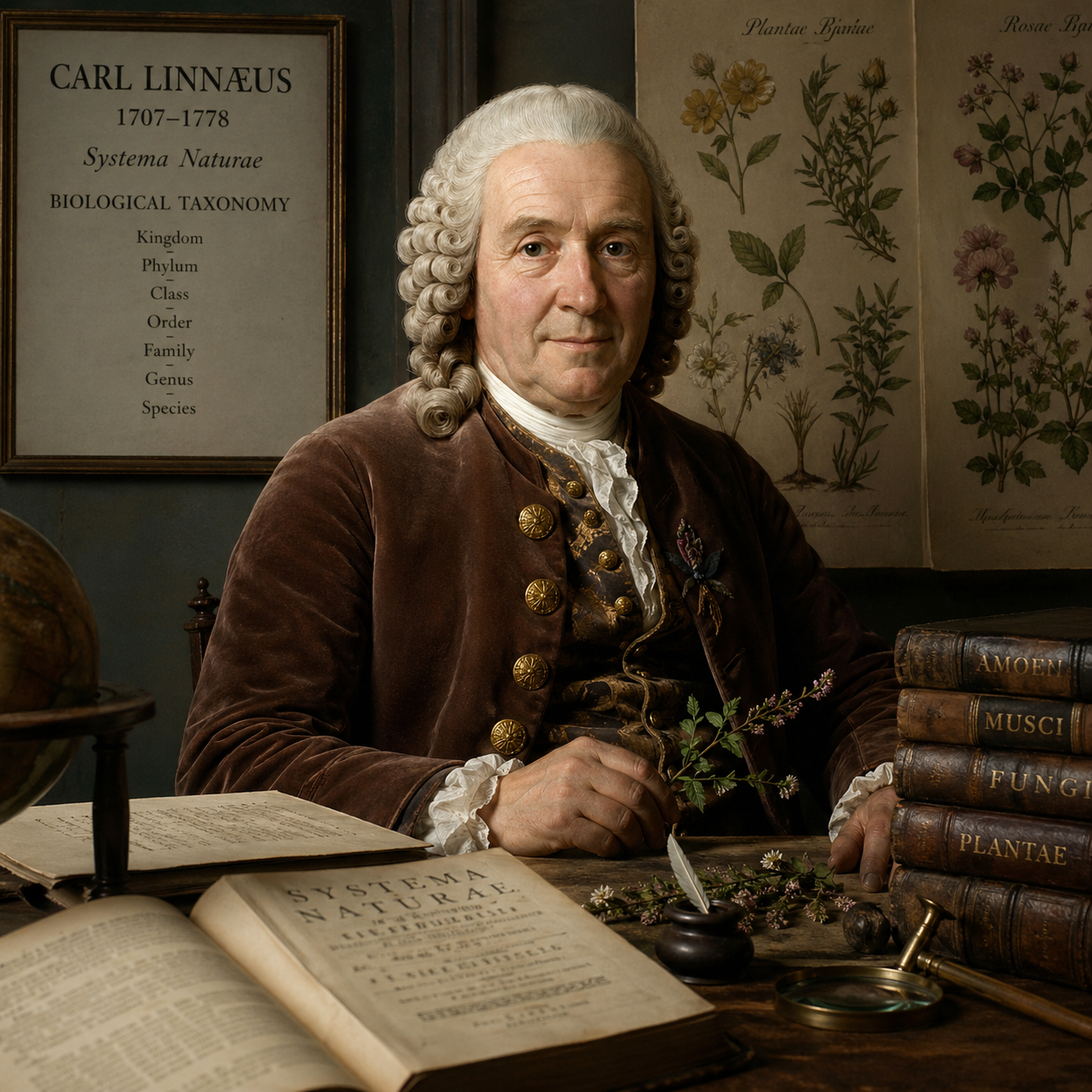
Swedish botanist and the father of modern taxonomy whose Systema Naturae (1735) introduced binomial nomenclature for naming all species. Closely associated with Joseph Banks (British naturalist who carried Linnaean classification on Cook's voyages). For an intellectual contrast, see Comte de Buffon, French naturalist and Histoire Naturelle author (1749-1788) — Buffon explicitly attacked Linnaean fixed-categories taxonomy as artificial and rejected the binomial system; his gradualist, environment-shaped natural history was the explicit alternative. Anticipates the fixed-species-vs-evolution debate Darwin would later resolve.
A methodological statement on the principles of natural classification.
Date: c. 1730s-1770s
WisdomFound in 1 providers: gemini
1 source checked
True plant classification must draw on every structural part — roots, stems, leaves, flowers, fruits, seeds — rather than one convenient trait. Basing a system on a single feature produces artificial groupings that mislead rather than reveal genuine relationships. A natural system reflects the organism's full biological reality, ensuring that plants that truly belong together are grouped together, and those that differ are kept apart.
Linnaeus built his fame on the sexual system of plant classification — grouping plants by stamen and pistil counts — which he openly called artificial. He privately believed a deeper natural method was the true goal of botany. Systema Naturae (1735) and Species Plantarum (1753) reflect his lifelong tension between practical utility and philosophical truth. This quote captures his conviction that God's natural order, not human convenience, should ultimately govern taxonomy.
The 18th-century Enlightenment drove naturalists to impose rational order on nature as European expeditions flooded herbaria with thousands of newly discovered species from the Americas, Asia, and Africa. The central debate was whether classification should be artificial — based on one convenient trait for quick identification — or natural, reflecting true relationships. Buffon and others challenged Linnaeus directly. A workable natural system remained botany's grand unsolved problem throughout his lifetime.
AI-generated insights based on extensive research and information for context. Factual errors? Email [email protected].
Your cart is empty