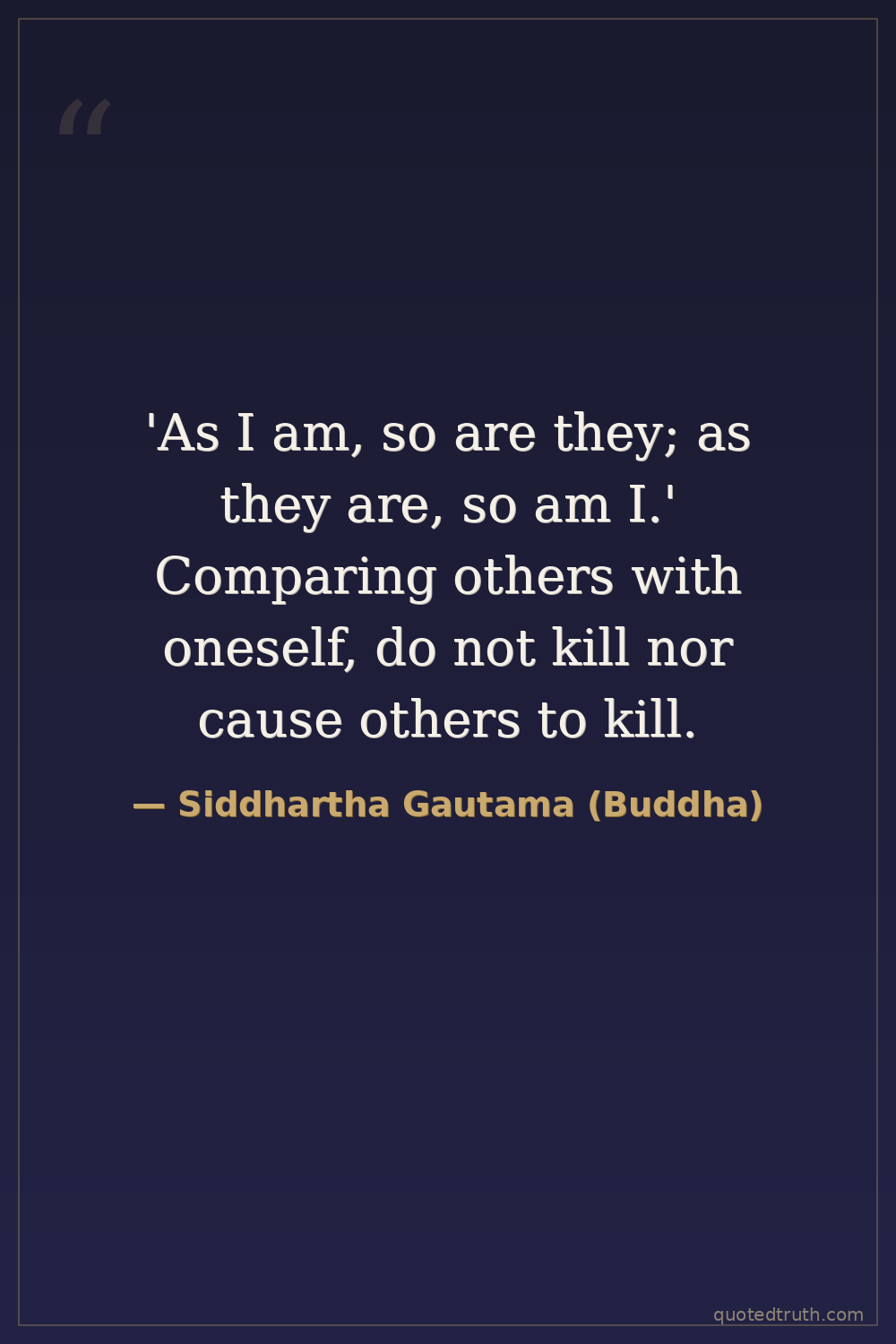
Siddhartha Gautama (Buddha) — "'As I am, so are they; as they are, so am I.' Comparing others with oneself, do …"
'As I am, so are they; as they are, so am I.' Comparing others with oneself, do not kill nor cause others to kill.
'As I am, so are they; as they are, so am I.' Comparing others with oneself, do not kill nor cause others to kill.
Click any product to generate a realistic preview. Up to 3 at a time.
* Initial load can take up to 90 seconds — revising the preview in another color is nearly instant.
"Long is the night to him who is awake; long is a mile to him who is tired; long is life to the foolish who do not know the true law."
"Do not believe anything simply because you have heard it. Do not believe in traditions because they have been handed down for many generations. Do not believe anything because it is spoken and rumored…"
"We are but guests visiting this world, though most do not know this."
"Whatever a monk keeps pursuing with his thinking and pondering, that becomes the inclination of his awareness."
"Conquer the angry one by love. Conquer the evil one by good. Conquer the stingy one by generosity. Conquer the liar by truth."
Found in 1 providers: gemini
1 source checked
Recognize that other beings experience life, fear, and suffering just as you do. Since you value your own existence and safety, extend that same regard to everyone else. Do not harm others directly, and do not push or encourage anyone else to harm them either. The principle rests on empathy through identification: your sameness with others makes violence against them irrational and morally wrong.
Siddhartha abandoned royal privilege after seeing suffering firsthand, shaping his conviction that all sentient beings share the same craving for life and freedom from pain. Nonviolence (ahimsa) became a pillar of his Eightfold Path, and the First Precept forbids killing any living creature. His teachings on compassion (karuna) and loving-kindness (metta) flow directly from this identification-based ethic, which he modeled by refusing animal sacrifice and protecting even insects.
In 5th-century BCE northern India, Vedic Brahmanism relied heavily on ritual animal sacrifice, and warring kingdoms like Magadha and Kosala normalized conquest and caste-based violence. The Buddha emerged alongside Mahavira and other shramana reformers challenging these bloody rites and rigid hierarchies. His nonviolence teaching directly confronted priestly sacrifice culture and offered commoners, including outcastes, an ethical path independent of birth, ritual slaughter, or state-sanctioned warfare.
AI-generated insights based on extensive research and information for context. Factual errors? Email [email protected].
Your cart is empty