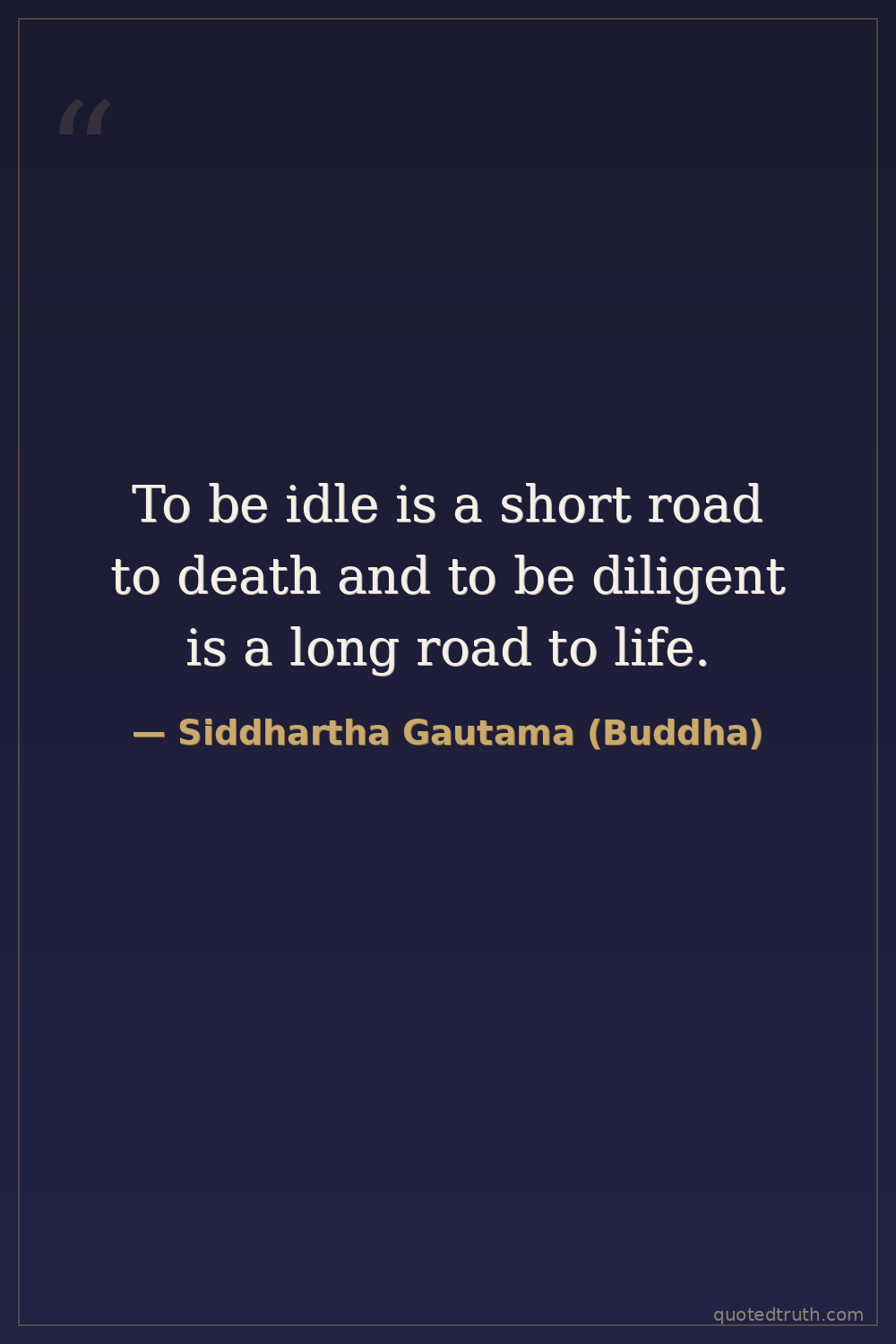
Siddhartha Gautama (Buddha) — "To be idle is a short road to death and to be diligent is a long road to life."
To be idle is a short road to death and to be diligent is a long road to life.
To be idle is a short road to death and to be diligent is a long road to life.
Click any product to generate a realistic preview. Up to 3 at a time.
* Initial load can take up to 90 seconds — revising the preview in another color is nearly instant.
"If you truly loved yourself, you could never hurt another."
"There is no path to happiness: happiness is the path."
"The thoughtless man, even if he can recite a large portion of the law, but is not a doer of it, has no share in the priesthood, but is like a cowherd counting the cows of others."
"Virtue is persecuted more by the wicked than it is loved by the good."
"It is better to travel well than to arrive."
From the Dhammapada (Verse 21), a teaching on diligence
Date: c. 5th-6th Century BCE
PhilosophicalFound in 1 providers: gemini
1 source checked
Laziness and inaction drain life of purpose and shorten it, while consistent effort and mindful work extend and enrich your existence. The saying treats idleness not as harmless rest but as a slow surrender, and diligence not as grinding labor but as the steady engagement that keeps a person vital, growing, and meaningfully alive over the long term.
The Buddha taught Right Effort as a pillar of the Eightfold Path, urging disciples to cultivate wholesome states and abandon unwholesome ones through persistent practice. After abandoning palace luxury, he spent six years in rigorous seeking and decades walking northern India teaching daily. His final recorded words urged monks to 'strive on with diligence,' making this saying a direct echo of his lived discipline and core instruction.
In 5th-century BCE northern India, the Shramana movement challenged Vedic ritualism with ascetic self-discipline, while caste-bound society often reduced lives to inherited roles. Rival teachers like the Jains preached extreme austerity, and fatalist schools denied effort mattered at all. The Buddha's emphasis on diligent personal practice offered a middle path, insisting each person could shape their liberation through sustained effort rather than birth, sacrifice, or passive fate.
AI-generated insights based on extensive research and information for context. Factual errors? Email [email protected].
Your cart is empty