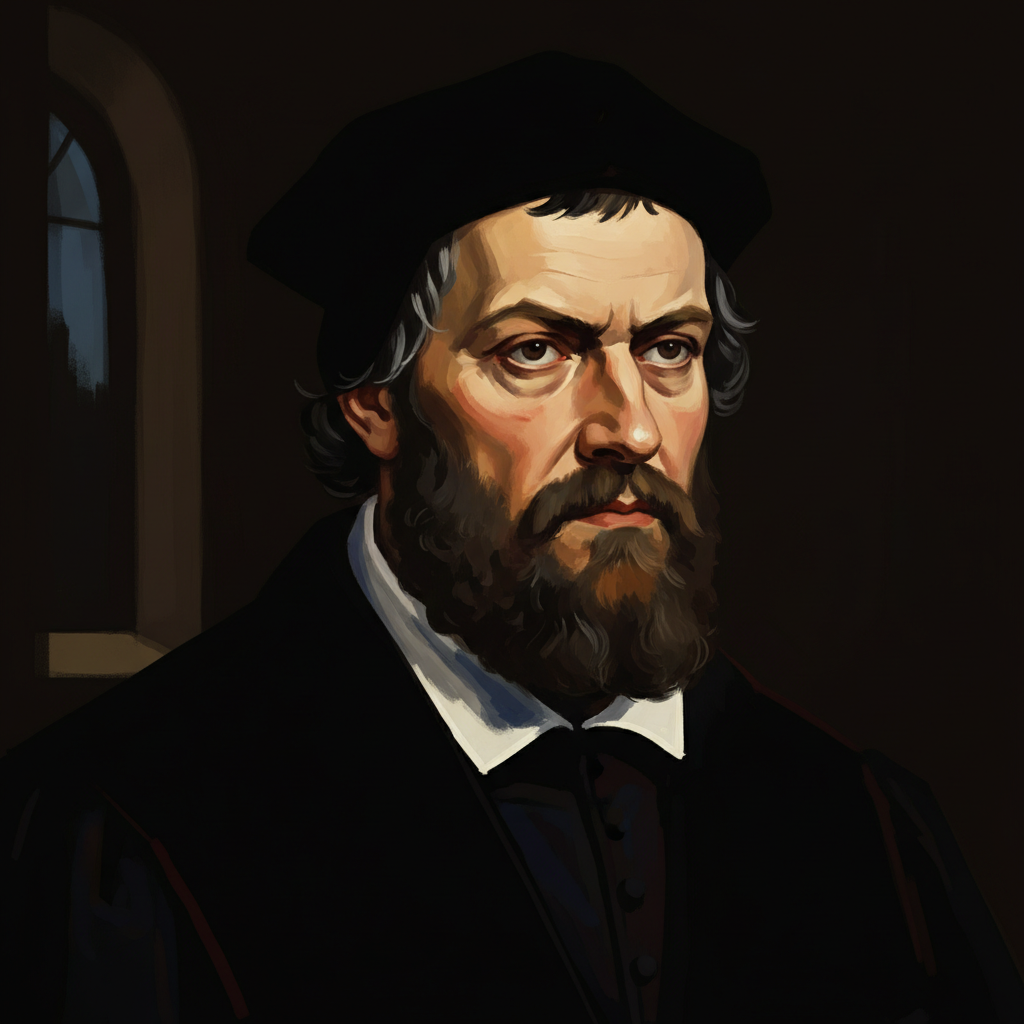
Martin Luther — "Be a sinner and SIN BOLDLY, but believe more boldly still."
Be a sinner and SIN BOLDLY, but believe more boldly still.
Be a sinner and SIN BOLDLY, but believe more boldly still.
Click any product to generate a realistic preview. Up to 3 at a time.
* Initial load can take up to 90 seconds — revising the preview in another color is nearly instant.
"The fewer the words, the better the prayer."
"God hides in order not to be found where humans want to find God. But God also hides in order to be found where God wills to be found."
"It is not the business of the government to preach the gospel."
"I am nothing but a poor, stinking bag of worms."
"If they can bear to live among us Christians and Jews, then they should be forced to work like women in childbirth."
German theologian whose 95 Theses (1517) launched the Protestant Reformation and broke the Catholic Church's monopoly on Western Christianity. Closely associated with Philipp Melanchthon (Lutheran systematizer) and John Calvin (later Reformer who built on Luther's break). For an intellectual contrast, see Pope Leo X, Renaissance pope (1513-1521) — Leo X's indulgence sales triggered Luther's break and Leo excommunicated him in 1521 — Luther's entire Reformation is structured as a direct answer to the indulgence-funded Vatican Leo represented.
Found in 1 providers: gemini
1 source checked
Stop obsessing over every moral slip and trying to earn purity through flawless behavior. You are going to fail and sin anyway, so don't hide it or half-live out of fear. Act decisively, own your mistakes openly, and place even stronger trust in grace and forgiveness than you do in your own wrongdoing. Confidence in mercy, not in personal perfection, is what actually frees a person to live.
Luther wrote this line in a 1521 letter to Philip Melanchthon, distilling his core doctrine of justification by faith alone. As an Augustinian friar tormented by scrupulosity, he had concluded no amount of confession, penance, or monastic discipline could make him righteous. Only Christ's imputed righteousness could. The phrase captures his pastoral style: blunt, paradoxical, earthy, aimed at crushing religious anxiety rather than licensing vice.
In early modern Europe, the late medieval Church sold indulgences, mandated auricular confession, and taught salvation through sacraments and meritorious works. Anxiety over purgatory drove mass religious commerce. Luther's 1517 Ninety-Five Theses had already ignited the Reformation, and by 1521 he was an excommunicated outlaw hiding at Wartburg Castle after the Diet of Worms. Print culture was spreading his tracts across German-speaking lands, shattering Rome's monopoly on defining sin, grace, and Christian conscience.
AI-generated insights based on extensive research and information for context. Factual errors? Email [email protected].
Your cart is empty