John Wesley — "Cleanliness is indeed next to godliness."
Cleanliness is indeed next to godliness.
Cleanliness is indeed next to godliness.
Click any product to generate a realistic preview. Up to 3 at a time.
* Initial load can take up to 90 seconds — revising the preview in another color is nearly instant.
"And are we not to use our reason? Unquestionably. But no more than we are to use our hands or feet. We are to use it as a servant, not as a master."
"I have often thought, that if I were to choose a profession, it should be that of a physician."
"Give me one hundred preachers who fear nothing but sin, and desire nothing but God, and I care not a straw whether they be clergymen or laymen; such alone will shake the gates of hell and set up the k…"
"Beware of that smooth, plausible, pleasing voice, 'You may be saved, though you keep your sins.'"
"I have often thought, that if I were to choose a book to read, it should be the Bible."
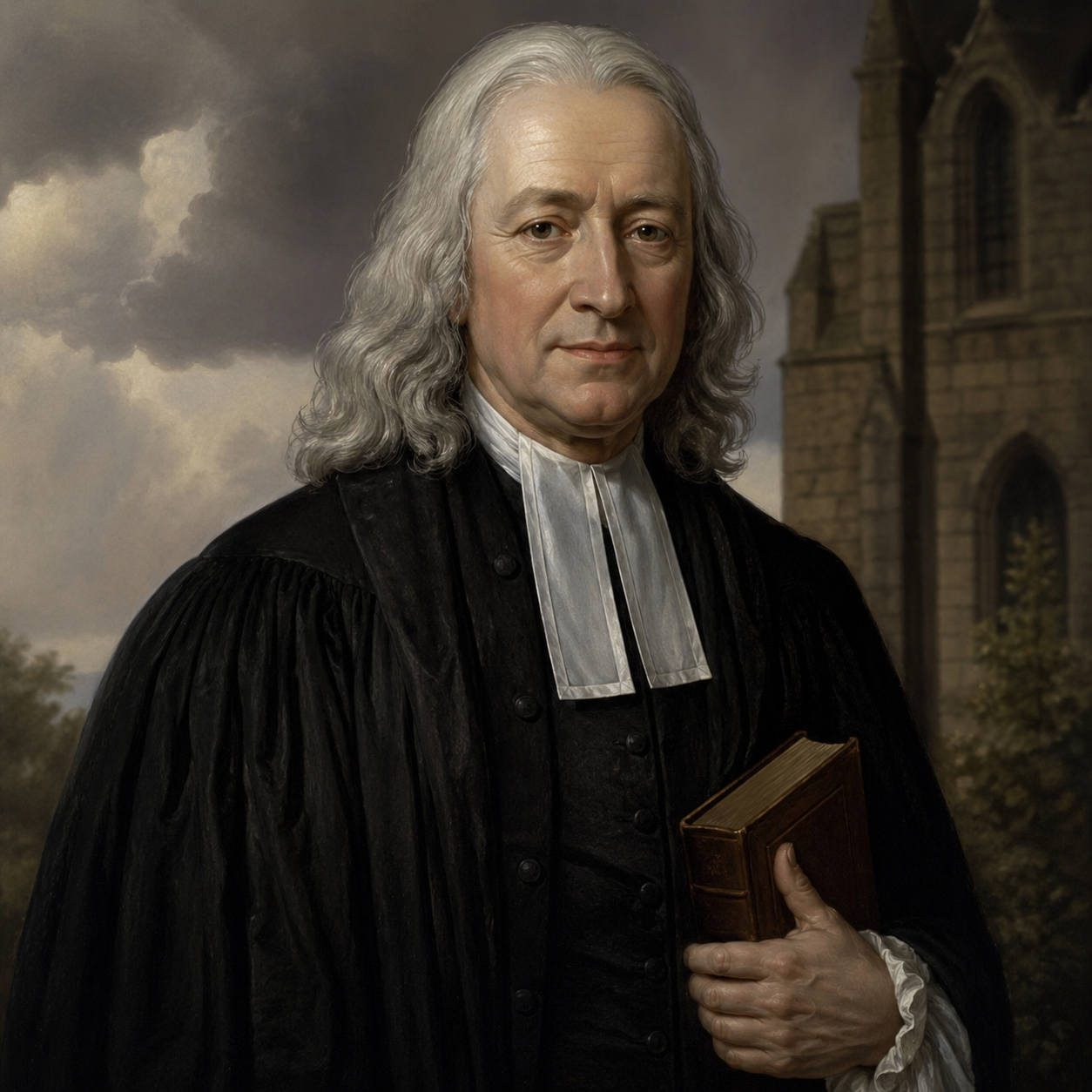
English Anglican cleric and founder of Methodism, whose open-air preaching and class-meeting structure created the largest 18th-century evangelical revival. Closely associated with Charles Wesley (his hymn-writing brother) and George Whitefield (early co-revivalist, later doctrinal opponent). For an intellectual contrast, see George Whitefield, Calvinist evangelical revivalist — Whitefield's predestinarian Calvinism vs Wesley's free-grace Arminian theology split the early Methodist movement permanently in the 1739-41 break. The founding evangelical Calvinist-Arminian schism — the two parallel evangelical traditions American Christianity descends from.
Found in 2 providers: deepseek,grok
2 sources checked
Personal hygiene and physical cleanliness reflect moral discipline and inner virtue. Keeping yourself clean isn't trivial vanity — it signals self-respect, orderliness, and a mind oriented toward what is good and pure. Neglecting the body signals neglect of character. Cleanliness becomes a visible, daily practice of the same intentionality that spiritual devotion demands.
Wesley preached that faith required active discipline in every dimension of life — not just prayer but conduct, appearance, and habit. He founded Methodist 'societies' emphasizing structured, methodical holy living. For Wesley, bodily cleanliness was an extension of sanctification: the ongoing process of becoming holy. His own rigorous daily routine and itinerant ministry modeled the disciplined life he demanded of followers.
18th-century England was marked by urban squalor, gin epidemics, and grinding poverty among the working class Wesley evangelized. Sanitation was poor, disease rampant, and cleanliness genuinely rare among the poor. Wesley's equation of hygiene with godliness was countercultural — it dignified the bodies of the poor, challenged fatalistic acceptance of filth, and connected physical self-care to Protestant values of discipline and moral seriousness.
AI-generated insights based on extensive research and information for context. Factual errors? Email [email protected].
Your cart is empty