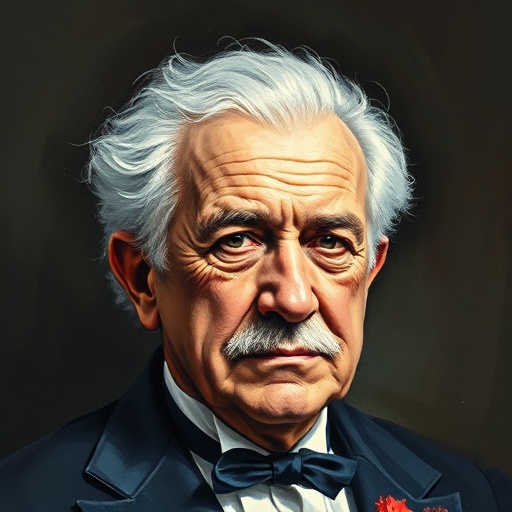
Thomas Edison — "Genius is one percent inspiration and ninety-nine percent perspiration."
Genius is one percent inspiration and ninety-nine percent perspiration.
Genius is one percent inspiration and ninety-nine percent perspiration.
Click any product to generate a realistic preview. Up to 3 at a time.
* Initial load can take up to 90 seconds — revising the preview in another color is nearly instant.
"I am not a spiritualist, but I am a firm believer in the fact that we can communicate with the beyond."
"My main purpose in life is to make money so that I can afford to carry on more experiments."
"I never did anything worth doing by accident, nor did any of my inventions come by accident; they came by work."
"I am long on ideas, but short on time. I expect to live to be only about a hundred."
"Anything that won't sell, I don't want to invent."
Found in 2 providers: deepseek,grok
2 sources checked
Brilliant results don't come from sudden flashes of insight — they come from sustained, unglamorous hard work. The rare moment of inspiration is nearly worthless without the relentless effort to test, fail, refine, and execute. True achievement demands grinding through obstacles long after initial excitement fades. Showing up consistently and doing the difficult work matters far more than raw talent or a bright idea.
Edison embodied this philosophy completely. He ran the Menlo Park laboratory as an invention factory, employing teams working around the clock on iterative experiments. Developing a practical incandescent bulb required testing thousands of filament materials over years of failures. He filed 1,093 patents — a volume only possible through relentless daily effort, not inspiration. His entire career was a deliberate, methodical assault on problems rather than a wait for brilliance.
Edison worked during the Second Industrial Revolution of the late 1800s, when inventors were celebrated as near-mythical geniuses struck by divine inspiration. The Romantic era had elevated the lone-genius myth. Edison's quote directly challenged that cultural narrative. Industrialization was reshaping society, making systematic effort the engine of progress. His Menlo Park invention-factory model was itself a statement: breakthroughs are manufactured through organized labor, not awaited as lightning bolts.
AI-generated insights based on extensive research and information for context. Factual errors? Email [email protected].
Your cart is empty