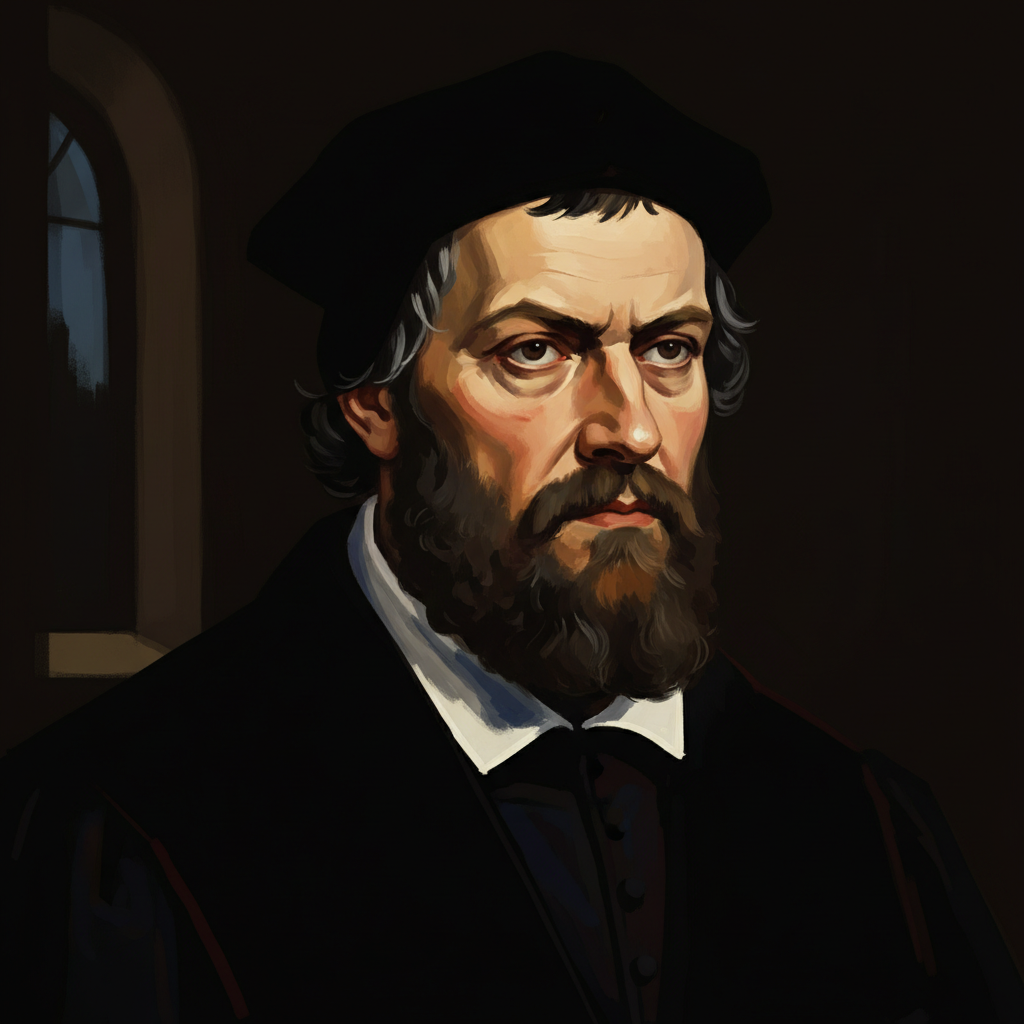
Martin Luther — "God does not need our good works, but our neighbor does."
God does not need our good works, but our neighbor does.
God does not need our good works, but our neighbor does.
Click any product to generate a realistic preview. Up to 3 at a time.
* Initial load can take up to 90 seconds — revising the preview in another color is nearly instant.
"The papacy is the kingdom of the devil, and the pope is the Antichrist."
"Tomorrow I have to lecture on the drunkenness of Noah [Gen. 9:20-27], so I should drink enough this evening to be able to talk about that wickedness as one who knows by experience."
"Nor let ministers cease studying until they have discovered and are sure that they have taught the devil to death and have become more learned than God himself and all His saints."
"you popes are desperate thorough arch rascals murderers traitors liars the very scum this is number 10 of all the most evil people on earth you're full of all the worst devils in hell full full and so…"
"I am nothing but a poor, stinking bag of worms."
German theologian whose 95 Theses (1517) launched the Protestant Reformation and broke the Catholic Church's monopoly on Western Christianity. Closely associated with Philipp Melanchthon (Lutheran systematizer) and John Calvin (later Reformer who built on Luther's break). For an intellectual contrast, see Pope Leo X, Renaissance pope (1513-1521) — Leo X's indulgence sales triggered Luther's break and Leo excommunicated him in 1521 — Luther's entire Reformation is structured as a direct answer to the indulgence-funded Vatican Leo represented.
Found in 2 providers: gemini,grok
2 sources checked
Doing good things will not earn you points with God or buy you salvation, because God already has everything and needs nothing from you. But the people around you, your neighbors, genuinely benefit when you help them. Redirect your energy outward instead of trying to impress heaven. The purpose of helping others is the help itself, not personal spiritual credit. Serve people because they need it, not because it advances your standing.
Luther's central breakthrough was that salvation comes by faith alone, not by accumulating religious merit through good works, pilgrimages, or indulgences. This quote captures that pivot without discarding ethics: works are stripped of transactional value toward God and re-anchored toward neighbors. As a monk turned reformer who rejected monastic self-focus, Luther insisted Christian vocation meant ordinary service, including marriage, labor, and civic life, as genuine holy callings.
In early sixteenth-century Europe, the Catholic Church sold indulgences, promising reduced purgatory time for payments, and taught that pilgrimages, relics, and monastic works earned divine favor. Peasants funded cathedrals while neighbors starved. Luther's 1517 Ninety-Five Theses ignited the Reformation by attacking this works-for-salvation economy. The printing press spread his ideas across German-speaking lands, fracturing Christendom and redirecting religious devotion from purchasing celestial credit toward tangible community responsibility during massive social upheaval.
AI-generated insights based on extensive research and information for context. Factual errors? Email [email protected].
Your cart is empty