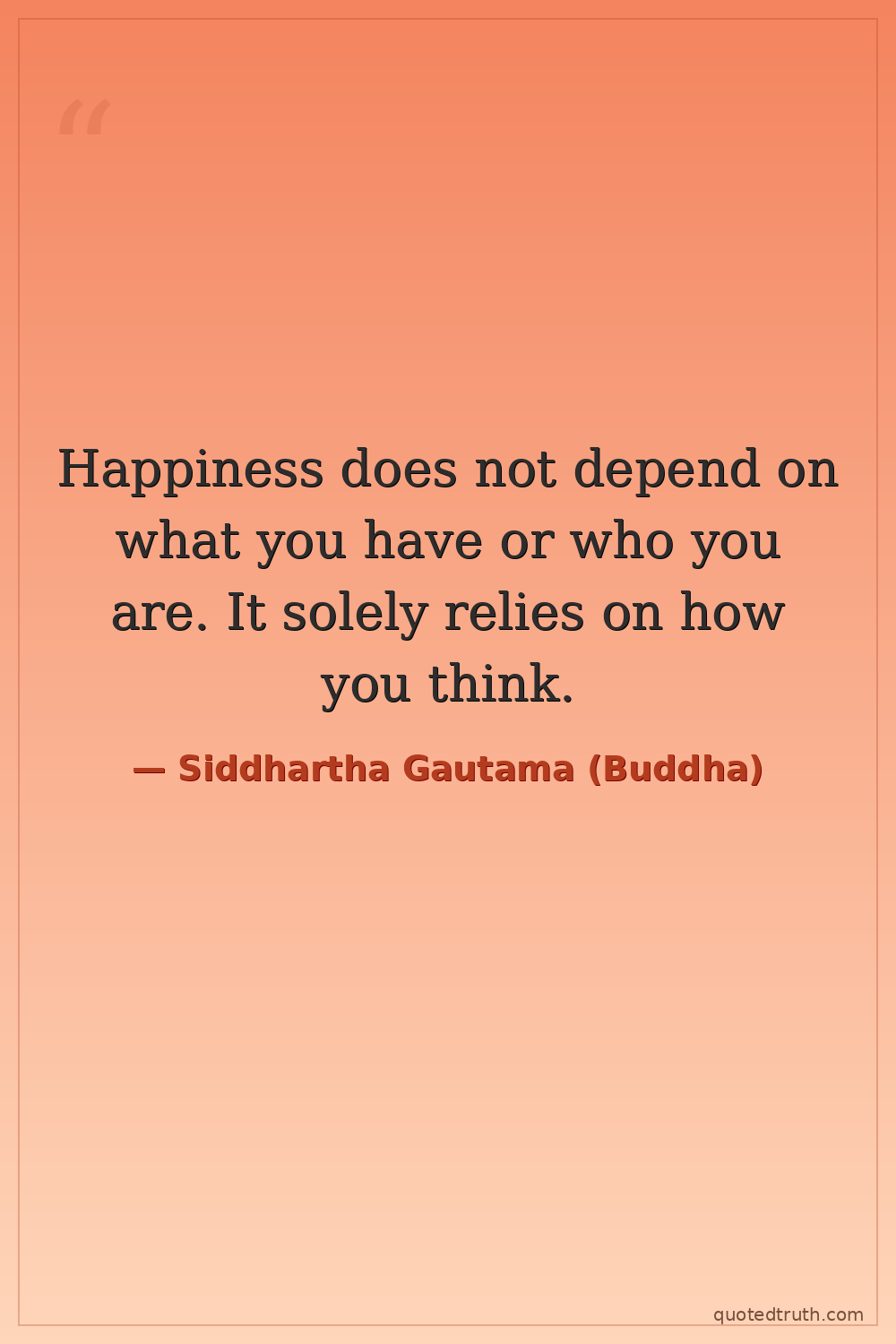
Siddhartha Gautama (Buddha) — "Happiness does not depend on what you have or who you are. It solely relies on h…"
Happiness does not depend on what you have or who you are. It solely relies on how you think.
Happiness does not depend on what you have or who you are. It solely relies on how you think.
Click any product to generate a realistic preview. Up to 3 at a time.
* Initial load can take up to 90 seconds — revising the preview in another color is nearly instant.
"What we think, we become."
"May all beings be happy and safe, and may their hearts be filled with joy."
"A man is not called wise because he talks and talks again; but if he is peaceful, loving and fearless then he is in truth called wise."
"The greatest wealth is health."
"It is during our darkest moments that we must focus to see the light."
A modern distillation, but reflects core Buddhist principles about the mind.
Date: c. 5th century BCE
GeneralFound in 1 providers: grok
1 source checked
Your sense of well-being is not determined by your possessions, status, job, or identity. It comes entirely from the quality and direction of your thoughts. Two people in identical circumstances can feel completely different because their mental habits differ. Change what you focus on, how you interpret events, and what you tell yourself, and your experience of life shifts. External conditions set the stage, but the mind writes the script.
The Buddha was born Prince Siddhartha into wealth and luxury, yet found no contentment there. After encountering suffering, he abandoned his palace, family, and inheritance to seek inner peace through ascetic practice and meditation. His awakening under the Bodhi tree taught that craving and ignorance, not circumstances, cause suffering. The entire Eightfold Path centers on Right Thought, Right Mindfulness, and Right Concentration, training the mind as the true source of liberation and lasting happiness.
In 5th-century BCE northern India, the Vedic caste system tied identity, worth, and spiritual access to birth and ritual purity. Brahmin priests monopolized salvation through sacrifices and possessions offered to gods. The Buddha emerged during the Sramana movement, a wave of wandering ascetics challenging this order. By teaching that liberation depended on inner transformation rather than caste, wealth, or ritual, he offered a radical democratization of spiritual freedom accessible to anyone willing to discipline their mind.
AI-generated insights based on extensive research and information for context. Factual errors? Email [email protected].
Your cart is empty