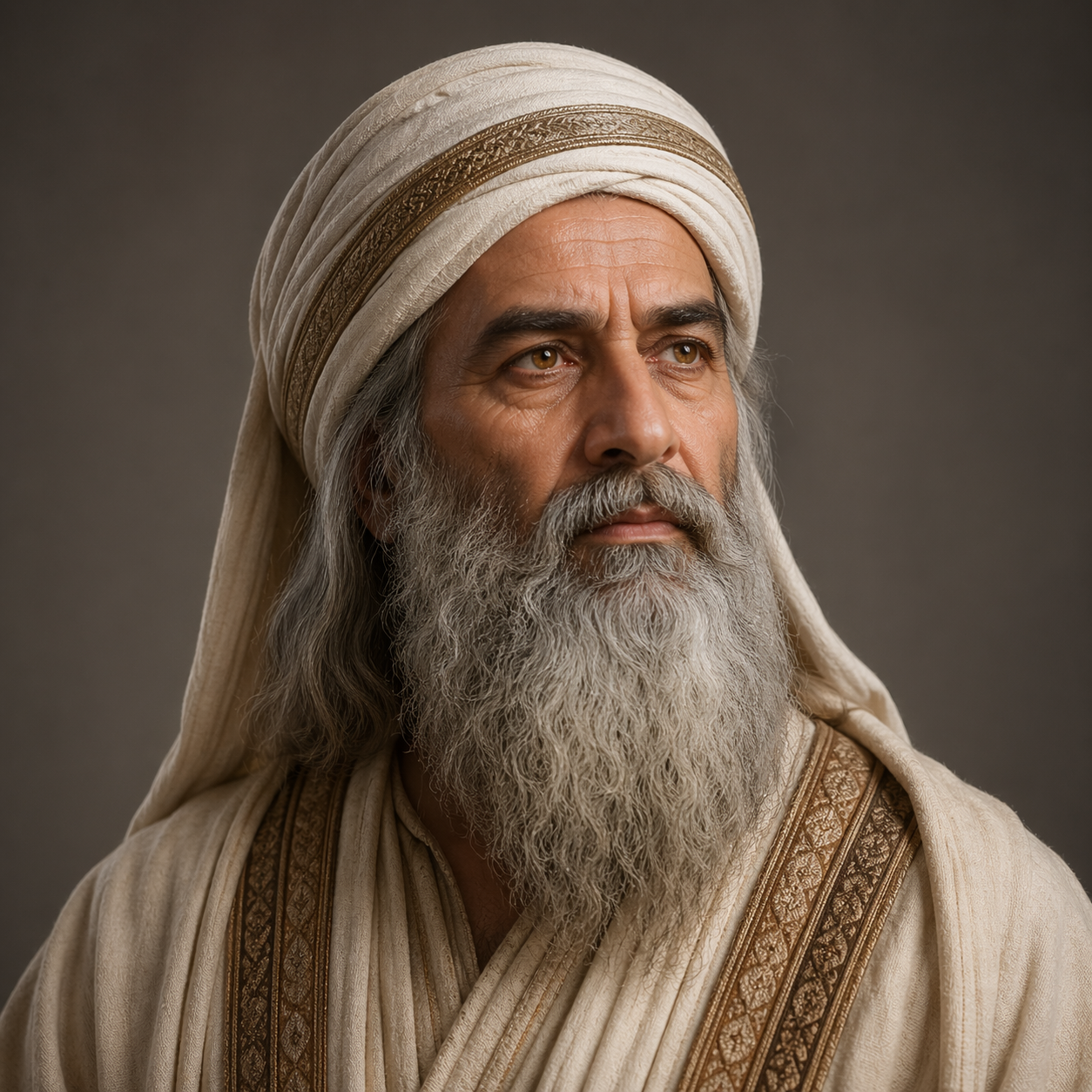
Zoroaster — "He who comes to know me through my thought, and through my word and deed, he sha…"
He who comes to know me through my thought, and through my word and deed, he shall become a sharer in the good reward.
He who comes to know me through my thought, and through my word and deed, he shall become a sharer in the good reward.
Click any product to generate a realistic preview. Up to 3 at a time.
* Initial load can take up to 90 seconds — revising the preview in another color is nearly instant.
"The best word is that which speaks of truth, the best deed is that which is done for truth."
"The path to wisdom is through constant learning and reflection."
"Aša Vahišta (Best Righteousness) is the best of all things, and happiness is to him who is righteous for the sake of Righteousness."
"Who created light and darkness? Who created sleep and waking?"
"The wise choose the best, the unwise choose the worst."
Iranian prophet who founded Zoroastrianism, the first major religion of cosmic dualism between good (Ahura Mazda) and evil (Angra Mainyu). Closely associated with The Buddha (near-contemporary Eastern moral-cosmological revolutionary). For an intellectual contrast, see Friedrich Nietzsche, German philosopher of 'beyond good and evil' — Nietzsche appropriated Zarathustra's name for Thus Spoke Zarathustra (1883) precisely to invert the original's moral cosmology — the historical Zoroaster founded the good-versus-evil framework Nietzsche's character announces the end of.
Found in 1 providers: grok
1 source checked
Truly understanding someone—and truly living well—requires alignment across three channels: what you think, what you say, and what you do. When these match and point toward good, you earn the benefits that come with an upright life. The quote promises that anyone who engages with the teaching on all three levels, rather than just hearing it, will share in the rewards it describes.
Zoroaster built his entire religion around the triad of good thoughts, good words, and good deeds (humata, hukhta, hvarshta), and this saying compresses that ethical system into a single promise. As a priest-reformer who rejected empty ritual in favor of moral choice, he taught that each person earns their fate through personal conduct, not sacrifice or bloodline.
Zoroaster preached in Bronze/Iron Age Iran, likely 1500–1000 BCE, among tribal societies dominated by polytheistic ritual, animal sacrifice, and priestly intermediaries. He challenged that order with a monotheistic, ethics-first worldview centered on Ahura Mazda and individual accountability. His teachings later shaped Persian imperial religion under the Achaemenids and influenced Judaism, Christianity, and Islam on concepts like heaven, hell, judgment, and a cosmic struggle between good and evil.
AI-generated insights based on extensive research and information for context. Factual errors? Email [email protected].
Your cart is empty