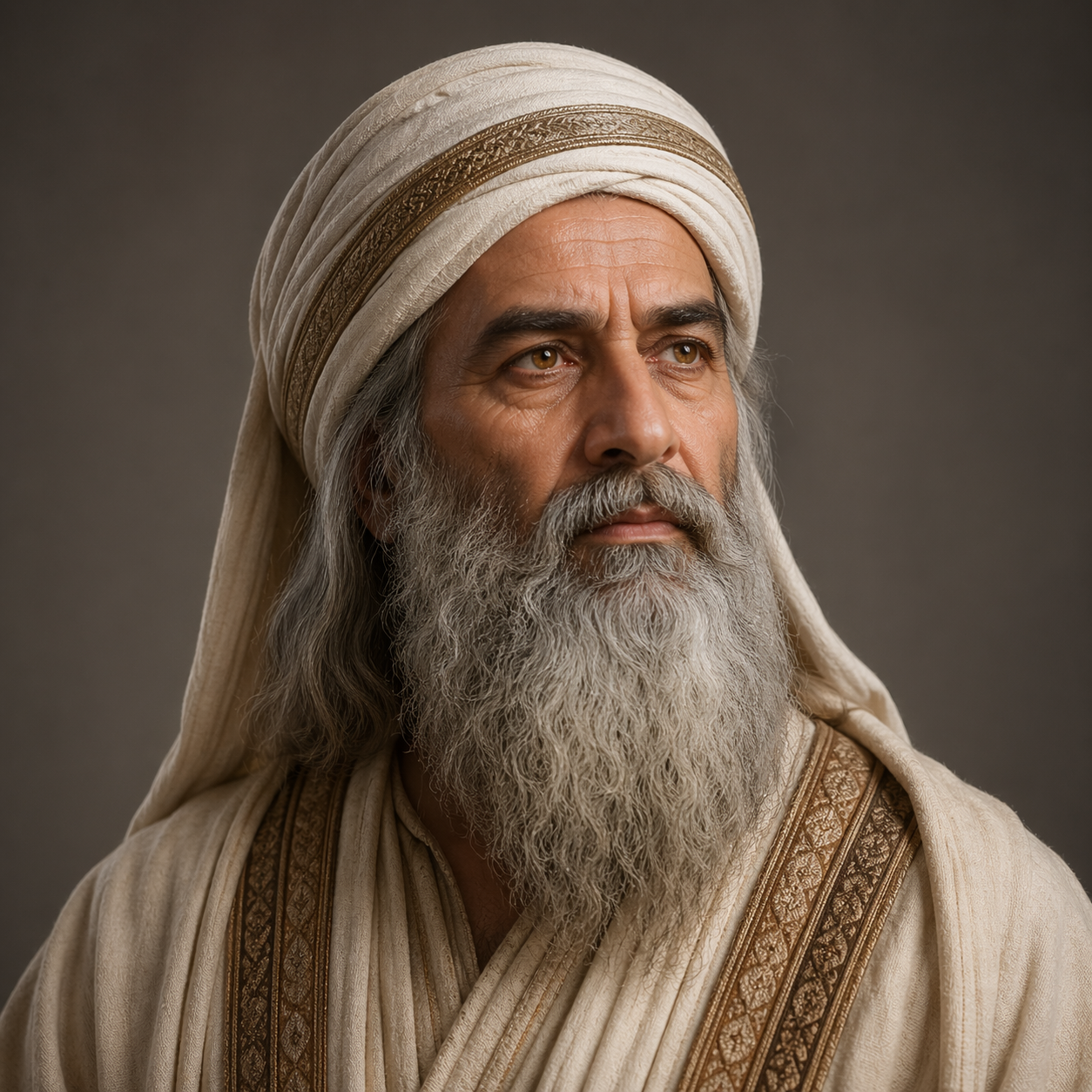
Zoroaster — "He who seeks wisdom, him Ahura Mazda will enlighten."
He who seeks wisdom, him Ahura Mazda will enlighten.
He who seeks wisdom, him Ahura Mazda will enlighten.
Click any product to generate a realistic preview. Up to 3 at a time.
* Initial load can take up to 90 seconds — revising the preview in another color is nearly instant.
"The universe is a battleground between the forces of good and evil, and each human being must choose a side."
"Suffer no anxiety, for he who is a sufferer of anxiety becomes regardless of enjoyment of the world and the spirit, and contraction happens to his body and soul."
"I know, O Wise One, that I am powerless; I have few cattle and few men."
"The greatest weapon against evil is righteousness."
"The reward of the righteous is the radiant existence, the punishment of the wicked is the long darkness."
Iranian prophet who founded Zoroastrianism, the first major religion of cosmic dualism between good (Ahura Mazda) and evil (Angra Mainyu). Closely associated with The Buddha (near-contemporary Eastern moral-cosmological revolutionary). For an intellectual contrast, see Friedrich Nietzsche, German philosopher of 'beyond good and evil' — Nietzsche appropriated Zarathustra's name for Thus Spoke Zarathustra (1883) precisely to invert the original's moral cosmology — the historical Zoroaster founded the good-versus-evil framework Nietzsche's character announces the end of.
Found in 1 providers: grok
1 source checked
Anyone who actively pursues understanding and truth will receive clarity from the divine source of wisdom. The saying frames enlightenment as a partnership: the seeker does the work of asking, studying, and reflecting, and in return a higher intelligence opens the mind. Knowledge is not handed to the passive; it is earned by those who genuinely want it, and the reward is insight that goes beyond ordinary human effort.
Zoroaster founded a religion centered on Ahura Mazda, the 'Wise Lord,' whose very name means wisdom. As a priest and reformer, he rejected ritualism in favor of personal moral reasoning and 'good thoughts, good words, good deeds.' His Gathas repeatedly portray himself as a seeker questioning Ahura Mazda directly. This saying mirrors his own prophetic path: asking, listening, and receiving revelation through disciplined inquiry rather than inherited priestly authority.
Zoroaster lived in Bronze Age Iran, likely around 1500–1200 BCE, among tribal societies dominated by polytheistic nature-worship, animal sacrifice, and warrior cults. Priestly castes guarded ritual knowledge, and commoners had little access to theological reasoning. By elevating a single wise deity and inviting individuals to seek understanding personally, Zoroaster's teaching was radical: it shifted spiritual authority from hereditary ritualists to any thoughtful person, planting ideas that later shaped Judaism, Christianity, and Greek philosophy.
AI-generated insights based on extensive research and information for context. Factual errors? Email [email protected].
Your cart is empty