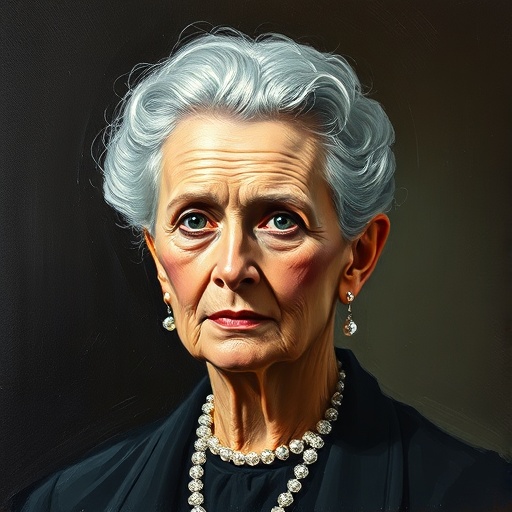
Marie Curie — "I am a dreamer. I am a scientist. I am a woman. I am a human being. I am all of …"
I am a dreamer. I am a scientist. I am a woman. I am a human being. I am all of these things. And I am proud of it.
I am a dreamer. I am a scientist. I am a woman. I am a human being. I am all of these things. And I am proud of it.
Click any product to generate a realistic preview. Up to 3 at a time.
* Initial load can take up to 90 seconds — revising the preview in another color is nearly instant.
"You must never be fearful about what you are doing when it is right."
"Humanity needs practical men, who get the most out of their work, and, without forgetting the general good, safeguard their own interests. But humanity also needs dreamers, for whom the disinterested …"
"The older one gets, the more one feels that the only thing that matters is to do one's duty."
"I was very much absorbed in the study of physics and chemistry."
"I am a Polish woman, and I am proud of it. And I am proud of my work. And I am proud of my discoveries. And I am proud of my contributions to humanity."
Found in 1 providers: grok
1 source checked
The speaker affirms that a person can hold many identities at once without contradiction. Being imaginative, analytical, female, and simply human are not competing labels but overlapping truths that together make up a whole self. Rather than letting society pick one role to define her, she claims all of them openly and refuses to feel shame or smallness about any single piece.
Marie Curie lived every label in this quote. She dreamed up research into invisible rays, did the rigorous lab work that isolated polonium and radium, and navigated a male-dominated physics world as the first woman to win a Nobel and the only person to win in two sciences. Widowed young, raising two daughters while running a lab, she refused to let any one role cancel another.
In late 19th and early 20th century Europe, women were largely barred from universities, laboratories, and professional societies. French institutions rejected Curie for the Academy of Sciences despite two Nobels, and the press attacked her personal life more than her work. Declaring oneself dreamer, scientist, woman, and human in one breath pushed back against an era that insisted a respectable woman could be only one narrow thing.
AI-generated insights based on extensive research and information for context. Factual errors? Email [email protected].
Your cart is empty