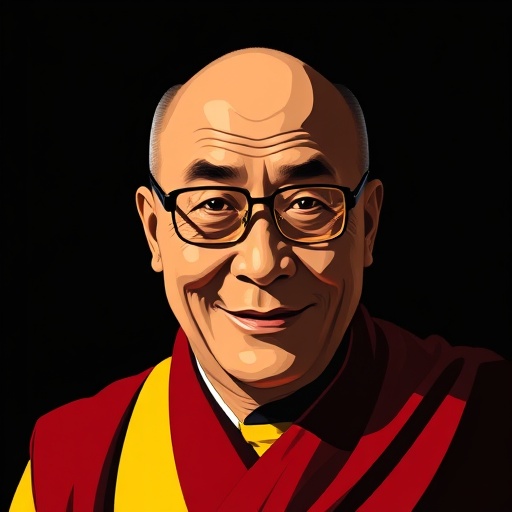
Dalai Lama (14th) — "I am a simple person. I don't have many possessions. I just have my robes and my…"
I am a simple person. I don't have many possessions. I just have my robes and my beads.
I am a simple person. I don't have many possessions. I just have my robes and my beads.
Click any product to generate a realistic preview. Up to 3 at a time.
* Initial load can take up to 90 seconds — revising the preview in another color is nearly instant.
"I have no special talent. I am only passionately curious."
"It is under the greatest adversity that there is the greatest potential for doing good, both for oneself and others."
"The ultimate source of happiness is not money and power, but warm-heartedness."
"We need to learn to live together in peace and harmony, and not just tolerate each other."
"Remember that sometimes not getting what you want is a wonderful stroke of luck."
Found in 1 providers: grok
1 source checked
A person needs very little to live well. Happiness and identity don't depend on owning things. Two items — robes and prayer beads — represent everything necessary for a purposeful life. This directly challenges consumer culture's assumption that more possessions equal more fulfillment. Real contentment comes from inner discipline and clarity, not from accumulating wealth or material comfort.
Tenzin Gyatso has lived as a Buddhist monk since being recognized as the Dalai Lama at age two. He fled Tibet in 1959 with nothing, settling in Dharamsala, India, where he still lives modestly. Despite meeting world leaders, winning the Nobel Peace Prize in 1989, and commanding global spiritual authority, he consistently wears the same maroon robes and carries prayer beads — practicing exactly the simplicity he preaches.
The Dalai Lama has lived through history's greatest explosion of consumer culture — the post-WWII boom, globalization, and the digital age's endless marketplace. His exile after China's annexation of Tibet in 1959 physically stripped him of wealth and institutional power. As inequality widens, overconsumption accelerates climate change, and material anxiety defines modern life, his declaration of sufficiency with two possessions carries unusual moral weight.
AI-generated insights based on extensive research and information for context. Factual errors? Email [email protected].
Your cart is empty