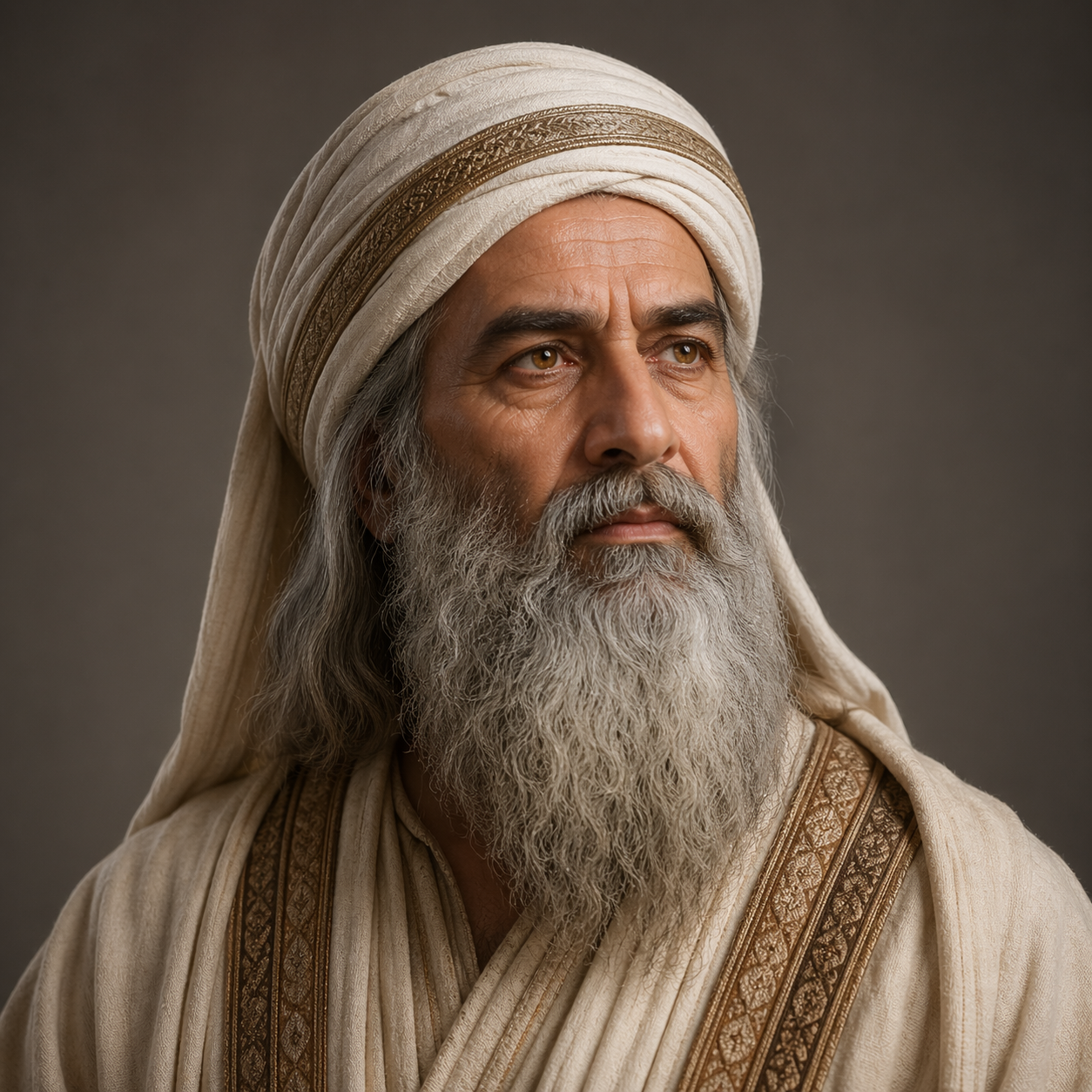
Zoroaster — "I am the one who seeks to establish the kingdom of Ahura Mazda on Earth."
I am the one who seeks to establish the kingdom of Ahura Mazda on Earth.
I am the one who seeks to establish the kingdom of Ahura Mazda on Earth.
Click any product to generate a realistic preview. Up to 3 at a time.
* Initial load can take up to 90 seconds — revising the preview in another color is nearly instant.
"Satisfaction linked with dishonor or with harm to others is a prison for the seeker."
"Whoso follows the teachings of Ahura Mazda, him Ahura Mazda will guide."
"May we be among those who make the world progress."
"He who comes to know me through my thought, and through my word and deed, he shall become a sharer in the good reward."
"The soul of the righteous shall go to the Best Existence, the soul of the wicked to the Worst Existence."
Iranian prophet who founded Zoroastrianism, the first major religion of cosmic dualism between good (Ahura Mazda) and evil (Angra Mainyu). Closely associated with The Buddha (near-contemporary Eastern moral-cosmological revolutionary). For an intellectual contrast, see Friedrich Nietzsche, German philosopher of 'beyond good and evil' — Nietzsche appropriated Zarathustra's name for Thus Spoke Zarathustra (1883) precisely to invert the original's moral cosmology — the historical Zoroaster founded the good-versus-evil framework Nietzsche's character announces the end of.
Found in 1 providers: grok
1 source checked
The speaker commits to building a world aligned with the highest good, making divine order a lived reality rather than a distant hope. It frames personal purpose as active participation in shaping society according to truth, justice, and righteousness. Rather than waiting for paradise after death, the individual takes responsibility now, treating Earth as the stage where goodness must be chosen, defended, and organized into daily life.
Zoroaster preached that humans are co-workers with Ahura Mazda, the wise lord of light, in the cosmic struggle against Angra Mainyu and the lie. His reform rejected older polytheistic rituals and demanded ethical action through good thoughts, good words, and good deeds. Declaring himself an agent of Mazda's kingdom fits his prophetic role: he saw himself not as a detached mystic but as a missionary reformer commissioned to reshape Iranian society around truth, asha.
Zoroaster lived in Bronze Age eastern Iran, likely between 1500 and 1000 BCE, among pastoral tribes worshipping many daevas through blood sacrifice and intoxicant rituals led by a priestly caste. Cattle raids, tribal warfare, and moral chaos shaped daily life. His monotheistic, ethics-centered message clashed sharply with this order, earning persecution before finding a royal protector in Vishtaspa, whose court helped spread the new faith across the Iranian plateau.
AI-generated insights based on extensive research and information for context. Factual errors? Email [email protected].
Your cart is empty