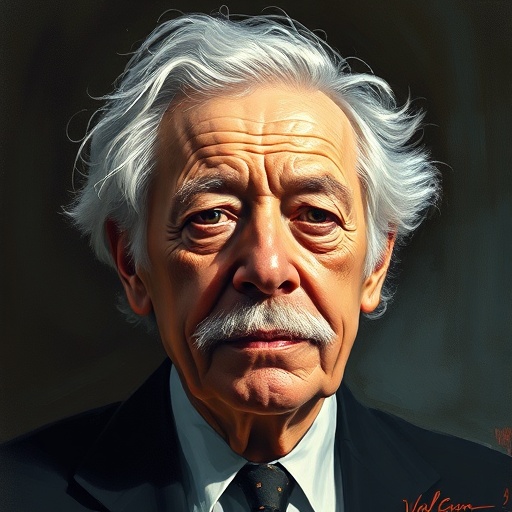
Linus Pauling — "I believe that the scientist has a special responsibility. He has a special resp…"
I believe that the scientist has a special responsibility. He has a special responsibility to use his knowledge for the benefit of mankind.
I believe that the scientist has a special responsibility. He has a special responsibility to use his knowledge for the benefit of mankind.
Click any product to generate a realistic preview. Up to 3 at a time.
* Initial load can take up to 90 seconds — revising the preview in another color is nearly instant.
"I believe that every problem has a solution, and that we should never give up on finding it."
"I like people. I like animals, too—whales and quail, dinosaurs and dodos. But I like human beings especially, and I am unhappy that the pool of human germ plasm, which determines the nature of the hum…"
"The best way to predict the future is to create it."
"The structure of DNA is a beautiful thing."
"Well, I thought, that's nice of the old guy to say that, but I'm a little skeptical myself. And as the years went by, I thought, I don't do the sort of work for which Nobel Prizes are given."
Found in 1 providers: grok
1 source checked
Scientists hold a unique moral obligation beyond their research: they must actively direct their discoveries toward improving human welfare. Knowledge without ethical application is insufficient. A scientist who uncovers powerful truths about the world carries the burden of ensuring those truths serve humanity rather than harm it, making scientific expertise inseparable from social responsibility.
Pauling lived this belief completely. He revolutionized chemistry by explaining molecular bonds, then channeled that same intellectual force into anti-nuclear activism. After winning the Nobel Prize in Chemistry, he won the Nobel Peace Prize for campaigning against nuclear weapons testing—directly applying scientific understanding to prevent the mass destruction his era's weapons made possible.
Pauling spoke during the Cold War, when atomic science had produced weapons capable of civilizational destruction. Scientists who split the atom watched their work become geopolitical terror. The Manhattan Project haunted many researchers with questions of complicity. This context made the ethics of scientific knowledge urgently concrete, not theoretical—a scientist's choice could literally determine human survival.
AI-generated insights based on extensive research and information for context. Factual errors? Email [email protected].
Your cart is empty