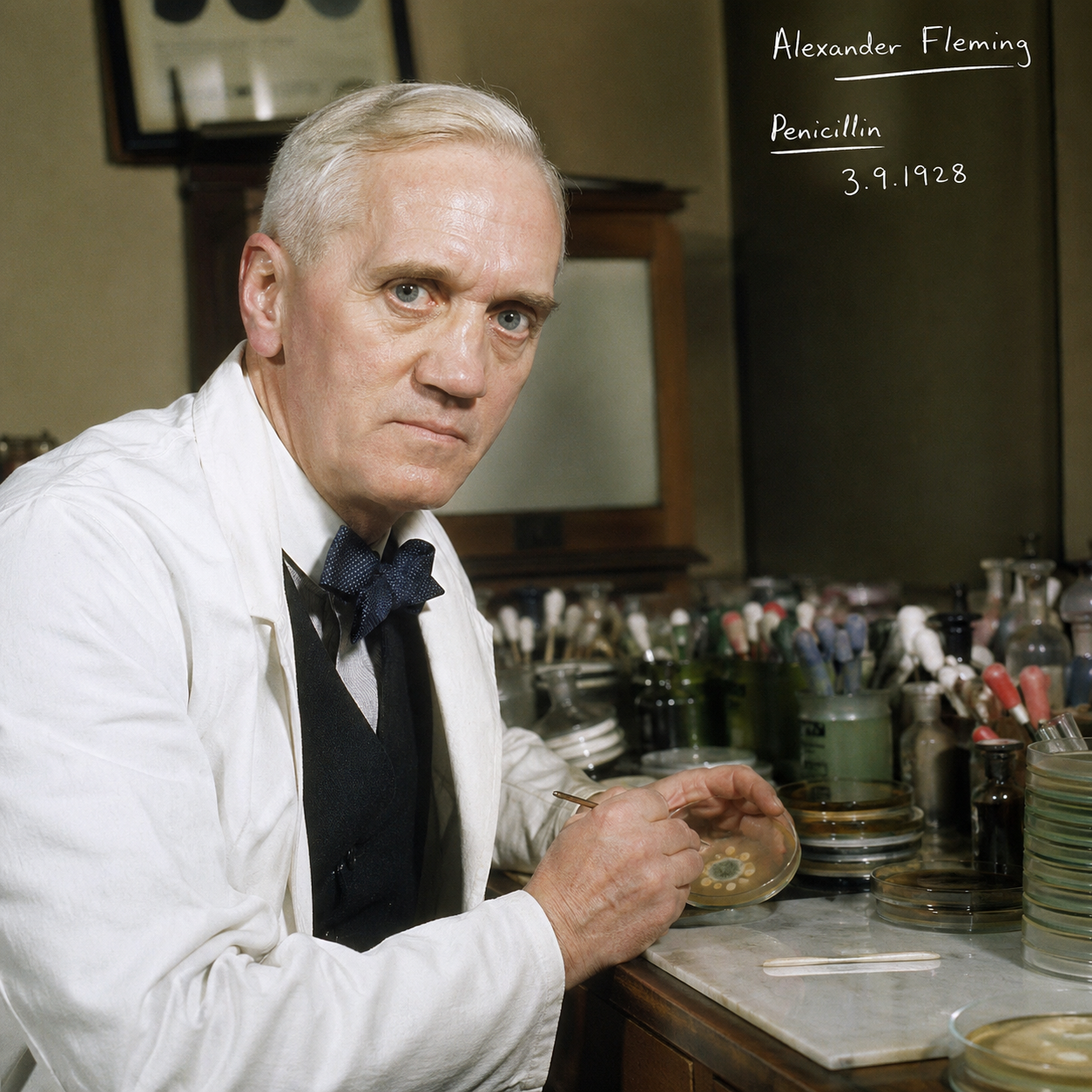
Alexander Fleming — "I can only warn. It is up to others to heed the warning."
I can only warn. It is up to others to heed the warning.
I can only warn. It is up to others to heed the warning.
Click any product to generate a realistic preview. Up to 3 at a time.
* Initial load can take up to 90 seconds — revising the preview in another color is nearly instant.
"The public will not understand the dangers of using penicillin indiscriminately."
"The public looks for miracles. We scientists look for facts."
"The purification of penicillin was a major triumph of chemistry."
"I often wonder how many other useful molds have been thrown away by bacteriologists."
"I have been asked to say a few words about the discovery of penicillin. I must confess that I have been asked to do this so often that I am beginning to be a little tired of it."
Found in 1 providers: grok
1 source checked
The quote captures the boundary between individual responsibility and collective action. A person who sees danger can speak up but cannot force others to respond. Knowledge and expertise give you the power to warn — nothing beyond that. Whether people listen, change their behavior, or ignore the alarm is entirely beyond your control. Responsibility ends at the act of warning; what happens next belongs to those who receive it.
Fleming's 1945 Nobel Prize speech is the defining example. He explicitly warned that careless penicillin use — insufficient doses, abbreviated courses — would breed resistant bacteria, predicting the antibiotic resistance crisis with striking precision. Yet mass-market antibiotics flooded medicine and agriculture for decades. Resistant superbugs now kill hundreds of thousands annually. Fleming did exactly what this quote describes: warned loudly and clearly. Whether the world heeded him was never within his power.
Fleming worked during the post-WWII scientific boom when penicillin was celebrated as a near-miraculous breakthrough. Antibiotics became widely available — sometimes over-the-counter — and were added freely to livestock feed to accelerate growth. The cultural mood was triumphant optimism; medicine had seemingly conquered infectious disease. Warnings about bacterial resistance sounded like pessimism in an age of breakthroughs. Scientific caution was hard to amplify when the drug was visibly saving millions of lives.
AI-generated insights based on extensive research and information for context. Factual errors? Email [email protected].
Your cart is empty