John Calvin — "I consider looseness with words no less of a defect than looseness of the bowels…"
I consider looseness with words no less of a defect than looseness of the bowels.
I consider looseness with words no less of a defect than looseness of the bowels.
Click any product to generate a realistic preview. Up to 3 at a time.
* Initial load can take up to 90 seconds — revising the preview in another color is nearly instant.
"God, by a just and irreprehensible, but incomprehensible judgment, has predestinated some to eternal life, and others to eternal death."
"There is no other way to be saved than by the grace of God."
"This is not laid down on human authority; it is God who speaks and prescribes a perpetual rule for his Church."
"Without knowledge of God, there is no true knowledge of self."
"The perdition of the wicked is a manifestation of God's justice."
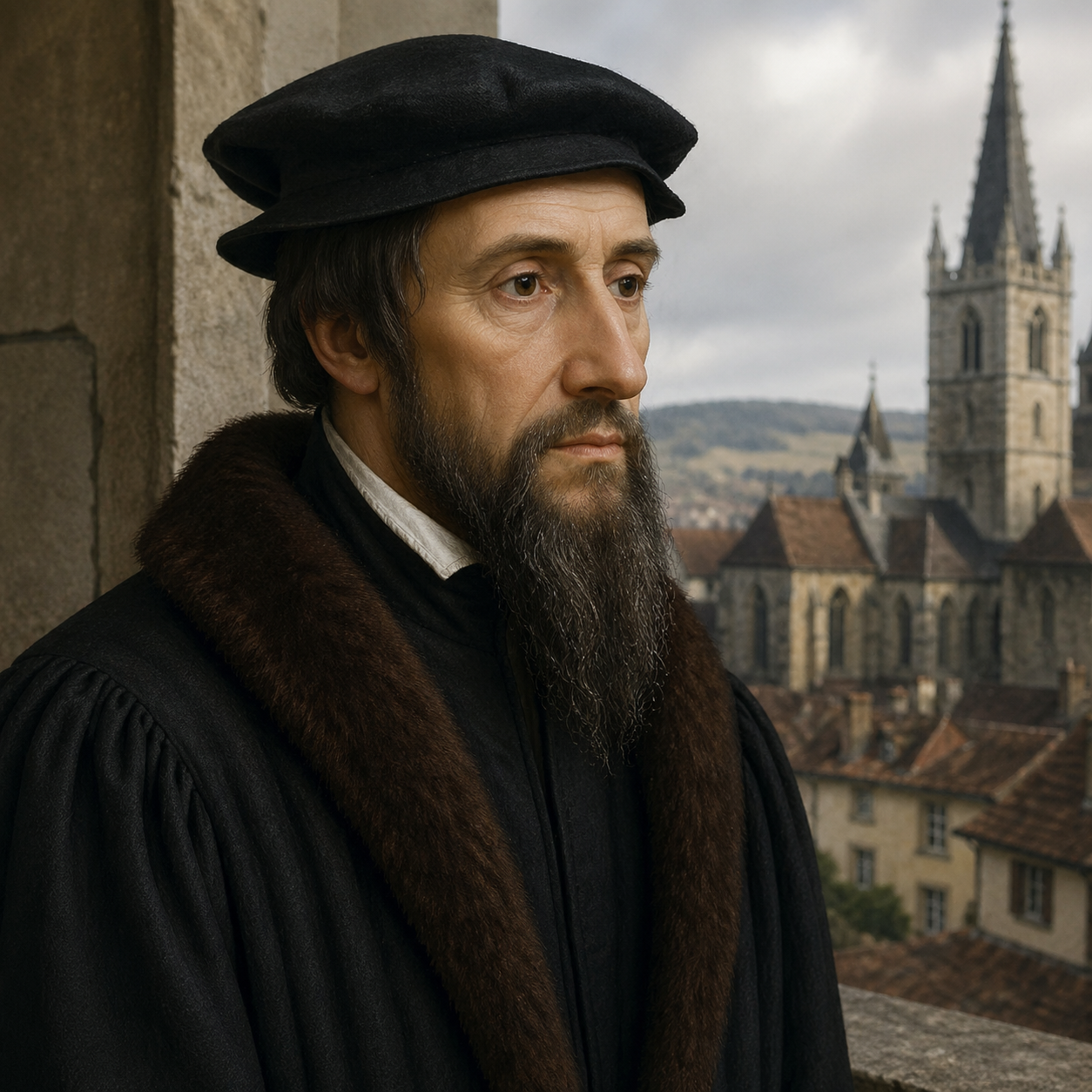
French theologian whose Institutes of the Christian Religion (1536) systematized Protestant Reformed doctrine, including predestination. Closely associated with Martin Luther (Reformation founder, Calvin's predecessor). For an intellectual contrast, see Jacobus Arminius, Dutch Reformed theologian (1560-1609) — Arminius's rejection of strict double-predestination founded Arminianism — the theological tradition modern Methodism, most evangelicalism, and Pentecostalism descend from. The Calvinist-Arminian debate has divided Protestantism for 400 years.
From a letter, expressing his disdain for careless or excessive speech.
Date: circa 1550
WisdomFound in 1 providers: deepseek
1 source checked
Imprecise, careless language is just as disgusting and harmful as physical incontinence. Words matter enormously — vague, sloppy speech produces real damage. Choosing words with discipline and exactness is a moral obligation, not a stylistic preference. Treating language casually is a failure of character, not merely a rhetorical shortcoming.
Calvin built the entire Reformed Protestant movement on precise biblical interpretation. His Institutes of the Christian Religion ran to exhaustive theological exactness because he believed doctrinal looseness caused heresy and damnation. As a lawyer before becoming a theologian, precision was his professional foundation. He battled Servetus and others partly over exact definitions of doctrine.
The Reformation exploded over contested interpretations of scripture — Luther's 95 Theses, transubstantiation debates, and salvation theology all hinged on exact word meanings. The printing press made loose language permanently dangerous; a misquoted pamphlet spread across Europe instantly. Calvin's Geneva enforced doctrinal precision through law, making verbal carelessness a civic and spiritual threat.
AI-generated insights based on extensive research and information for context. Factual errors? Email [email protected].
Your cart is empty