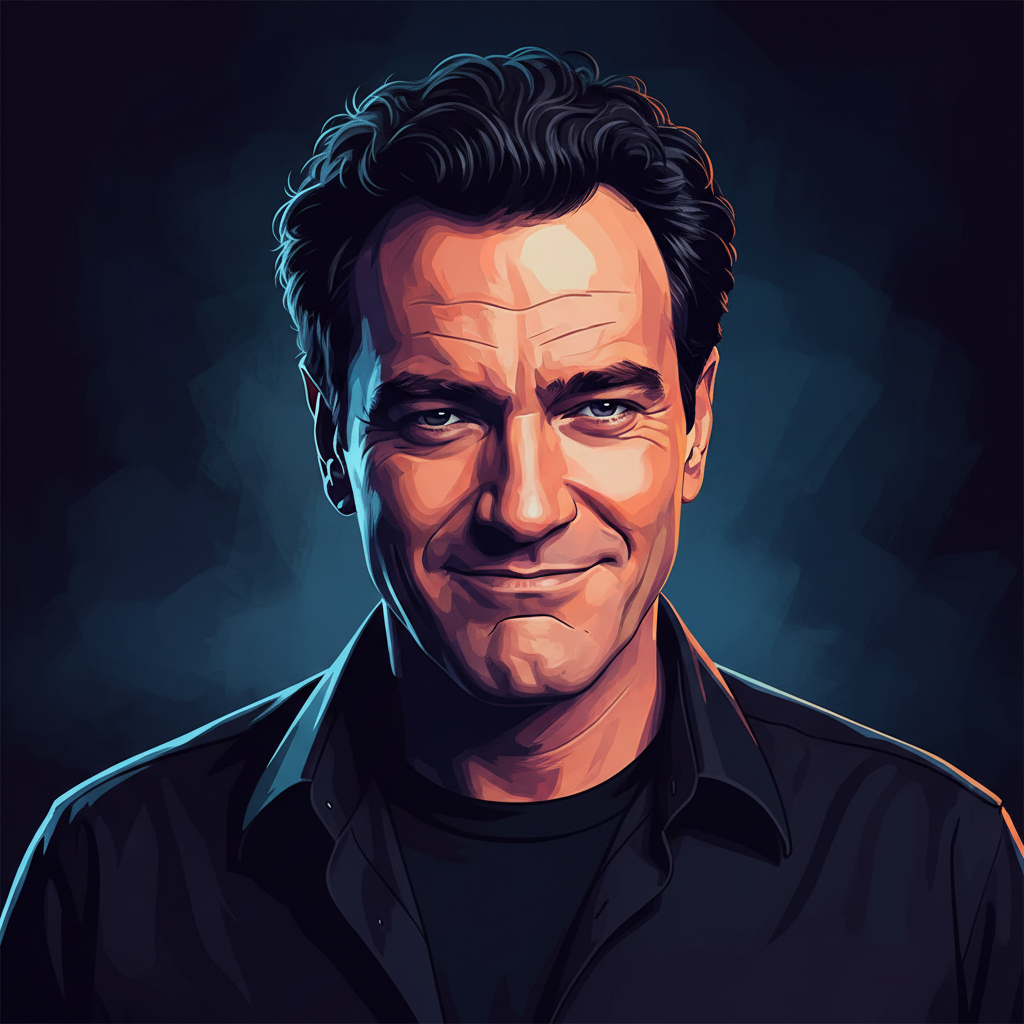
Quentin Tarantino — "I don't care if people think my movies are too violent or too this or too that."
I don't care if people think my movies are too violent or too this or too that.
I don't care if people think my movies are too violent or too this or too that.
Click any product to generate a realistic preview. Up to 3 at a time.
* Initial load can take up to 90 seconds — revising the preview in another color is nearly instant.
"I didn't force her into the car… She got into the car because she trusted me, she believed me. (Seeing that crash) it was heartbreaking, just horrible… the biggest regret of my life."
"I'm not a fan of political correctness."
"Just because I was at an anti-police brutality protest, doesn't mean I'm anti-police. We want justice, but stop shooting unarmed people."
"It was statutory rape. He had sex with a minor. That's not rape. To me, when you use the word rape, you're talking about violent, throwing them down — it's like one of the most violent crimes in the w…"
"I just realized that I need to be a director for two reasons. One, directors were already my heroes at this point. I wanted to - when I wanted to be an actor I wanted to work with this director. Not w…"
American filmmaker (Pulp Fiction, Kill Bill, Inglourious Basterds) whose intertextual genre-collage redefined 1990s independent cinema. Closely associated with Robert Rodriguez (frequent collaborator (From Dusk Till Dawn, Sin City)) and Paul Thomas Anderson (1990s indie-auteur peer). For an intellectual contrast, see Stanley Kubrick, meticulous formalist filmmaker (1928-1999) — Kubrick's films erase influences into singular monolithic vision through year-long shoots and 100-take perfectionism; Tarantino's foreground every reference as a deliberate tribute — the two opposite ways auteurist cinema can be made.
Your cart is empty