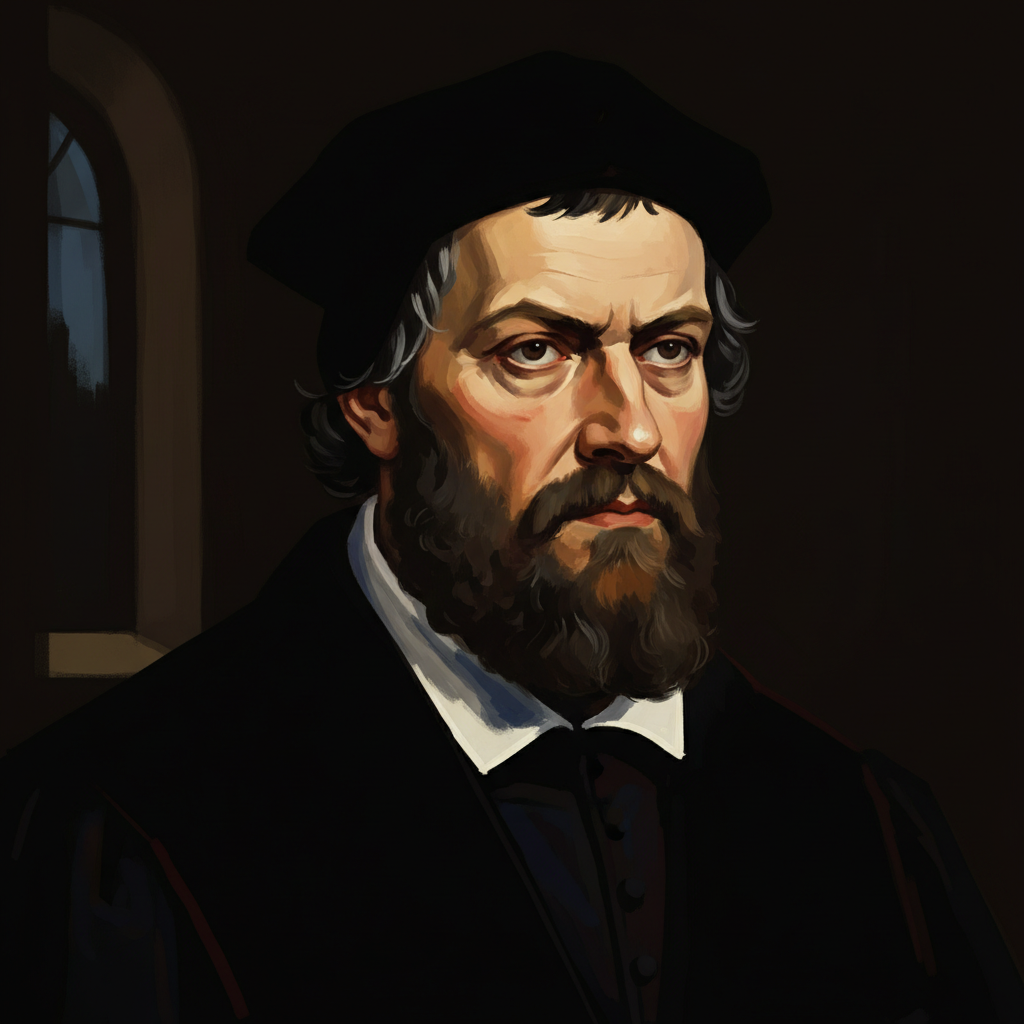
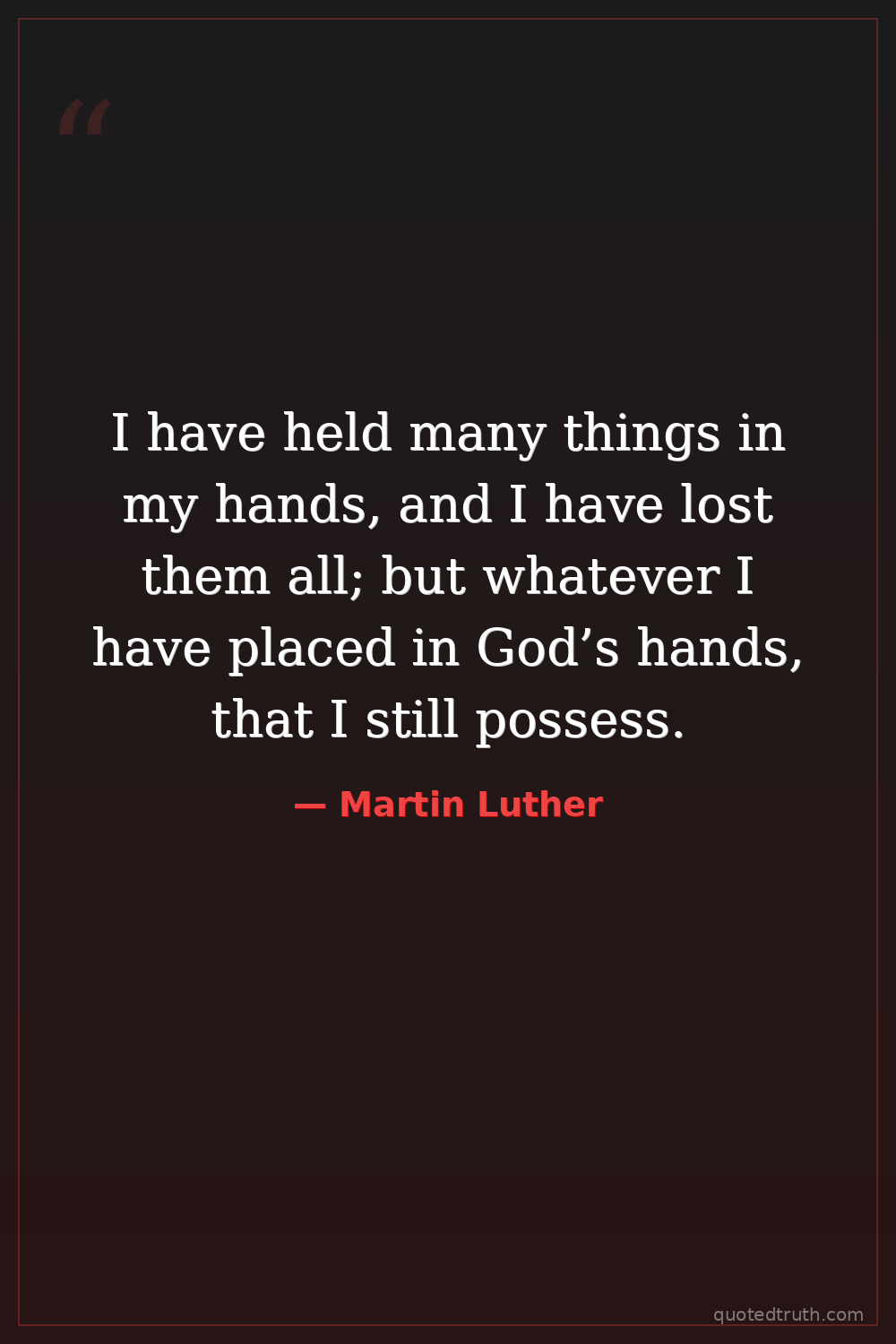
Martin Luther — "I have held many things in my hands, and I have lost them all; but whatever I ha…"
I have held many things in my hands, and I have lost them all; but whatever I have placed in God’s hands, that I still possess.
I have held many things in my hands, and I have lost them all; but whatever I have placed in God’s hands, that I still possess.
Click any product to generate a realistic preview. Up to 3 at a time.
* Initial load can take up to 90 seconds — revising the preview in another color is nearly instant.
"The mad mob does not ask how it could be better, only that it be different. And when it then becomes worse, it must change again."
"The greatest danger to the church is when it is rich."
"The best way to worship God is to do your ordinary work well."
"You have as much laughter as you have faith."
"A man must have a good mind, and a strong body, and a pure heart, to be a good preacher."
German theologian whose 95 Theses (1517) launched the Protestant Reformation and broke the Catholic Church's monopoly on Western Christianity. Closely associated with Philipp Melanchthon (Lutheran systematizer) and John Calvin (later Reformer who built on Luther's break). For an intellectual contrast, see Pope Leo X, Renaissance pope (1513-1521) — Leo X's indulgence sales triggered Luther's break and Leo excommunicated him in 1521 — Luther's entire Reformation is structured as a direct answer to the indulgence-funded Vatican Leo represented.
Found in 2 providers: deepseek,grok
2 sources checked
Anything you grip tightly, possessions, status, relationships, achievements, will eventually slip away through time, loss, or death. But what you entrust to God, surrendering control rather than clutching, remains yours in a deeper sense because it is held by something permanent. Letting go paradoxically becomes the only reliable way to keep anything that truly matters beyond this fleeting life.
Luther lost nearly everything tangible, security, Church standing, safety, and several of his children including his beloved daughter Magdalena. After excommunication in 1521 and constant threat of execution, he leaned entirely on divine providence. His core doctrine of sola fide, faith alone, meant spiritual possession was never earned or hoarded but received by trusting surrender, matching this saying exactly.
Early sixteenth-century Europe was brutally uncertain: plague outbreaks, peasant wars, Ottoman advances, and religious upheaval made lives and fortunes precarious. The medieval Church sold indulgences promising control over salvation, which Luther rejected in 1517. Amid this instability, his Reformation reframed security away from relics, works, and clerical hierarchy toward personal trust in God, making surrender of worldly holdings a radical theological and emotional anchor.
AI-generated insights based on extensive research and information for context. Factual errors? Email [email protected].
Your cart is empty