John Wesley — "I have no doubt that God will save all who are sincere, whether they believe in …"
I have no doubt that God will save all who are sincere, whether they believe in Christ or not.
I have no doubt that God will save all who are sincere, whether they believe in Christ or not.
Click any product to generate a realistic preview. Up to 3 at a time.
* Initial load can take up to 90 seconds — revising the preview in another color is nearly instant.
"What is the Lord’s Supper? It is a feast upon a sacrifice."
"What a work has God wrought in our day!"
"I continue to dream and pray about a revival of holiness in our day that moves forth in power and reaches to the ends of the earth."
"I have often thought that the difference between the Church of England and the Dissenters is not so great as some imagine."
"I have often thought, that if I were to choose a time to live, it should be in the first ages of Christianity."
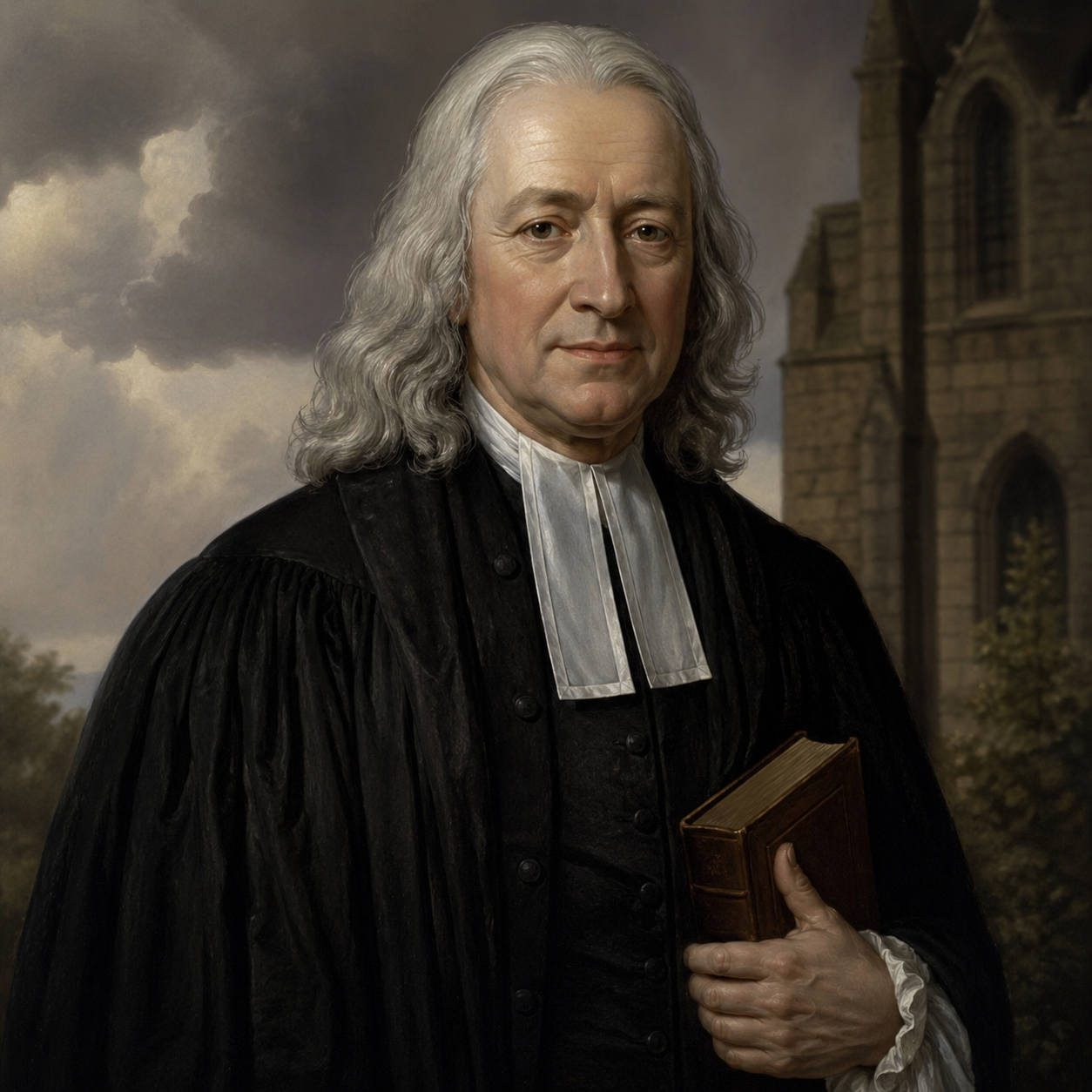
English Anglican cleric and founder of Methodism, whose open-air preaching and class-meeting structure created the largest 18th-century evangelical revival. Closely associated with Charles Wesley (his hymn-writing brother) and George Whitefield (early co-revivalist, later doctrinal opponent). For an intellectual contrast, see George Whitefield, Calvinist evangelical revivalist — Whitefield's predestinarian Calvinism vs Wesley's free-grace Arminian theology split the early Methodist movement permanently in the 1739-41 break. The founding evangelical Calvinist-Arminian schism — the two parallel evangelical traditions American Christianity descends from.
Letter to a friend (controversial interpretation, but documented)
Date: 1778
Self-DeprecatingFound in 1 providers: grok
1 source checked
This quote asserts that God's salvation depends on genuine sincerity of heart rather than adherence to specific doctrinal beliefs about Christ. It suggests divine grace transcends religious boundaries, rewarding authentic moral and spiritual integrity regardless of creed. The statement implies God judges the quality of a person's inner commitment rather than their theological correctness or explicit acceptance of Christian belief, prioritizing lived virtue over formal confession.
Wesley's Arminian theology centered on prevenient grace—God's love reaching all humanity before conscious faith develops. Though firmly Christocentric, Wesley believed God's mercy extended broadly, especially toward those never exposed to the gospel. His lifelong ministry among England's poor and marginalized reflected his conviction that sincere pursuit of righteousness mattered deeply. Wesley's rejection of strict Calvinist predestination and his emphasis on practical holiness naturally inclined him toward inclusive thinking about God's saving reach.
The 18th-century Enlightenment aggressively challenged religious exclusivism, promoting reason and universal moral standards over doctrinal conformity. Growing colonial contact with non-Christian civilizations forced theologians to confront salvation outside Christianity. Dominant Calvinist predestination theology restricted salvation to a fixed elect, making Wesley's Arminian universalism genuinely radical. Deism's rise and religious tolerance movements further pressured Protestant thinkers toward broader understandings of divine mercy beyond institutional church boundaries.
AI-generated insights based on extensive research and information for context. Factual errors? Email [email protected].
Your cart is empty