John Wesley — "I have often observed, that the more a man knows, the more he is sensible of his…"
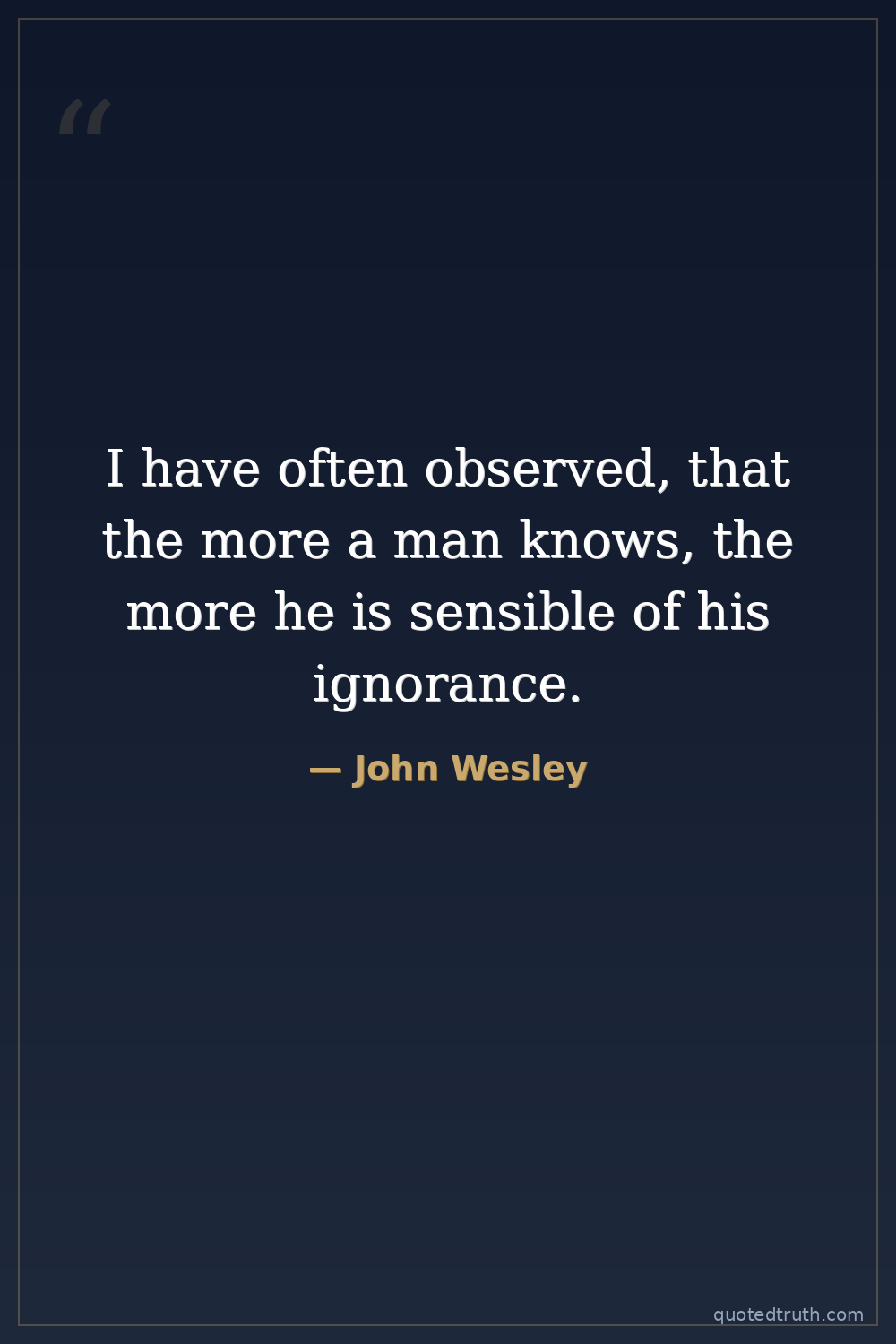
I have often observed, that the more a man knows, the more he is sensible of his ignorance.
I have often observed, that the more a man knows, the more he is sensible of his ignorance.
Click any product to generate a realistic preview. Up to 3 at a time.
* Initial load can take up to 90 seconds — revising the preview in another color is nearly instant.
"I was much surprised to find that the Bishop of London, in his late Pastoral Letter, has taken occasion to caution the Clergy of his diocese against 'enthusiasm,' and to warn them against 'the new doc…"
"It is no proof of a man's understanding that he can find fault."
"I have no doubt that God will save all who are sincere, whether they believe in Christ or not."
"The Bible knows nothing of solitary religion."
"I know no other book in the world, that contains so many strong and clear proofs of the being and perfections of God, and of the truth of our holy religion, as the Bible."
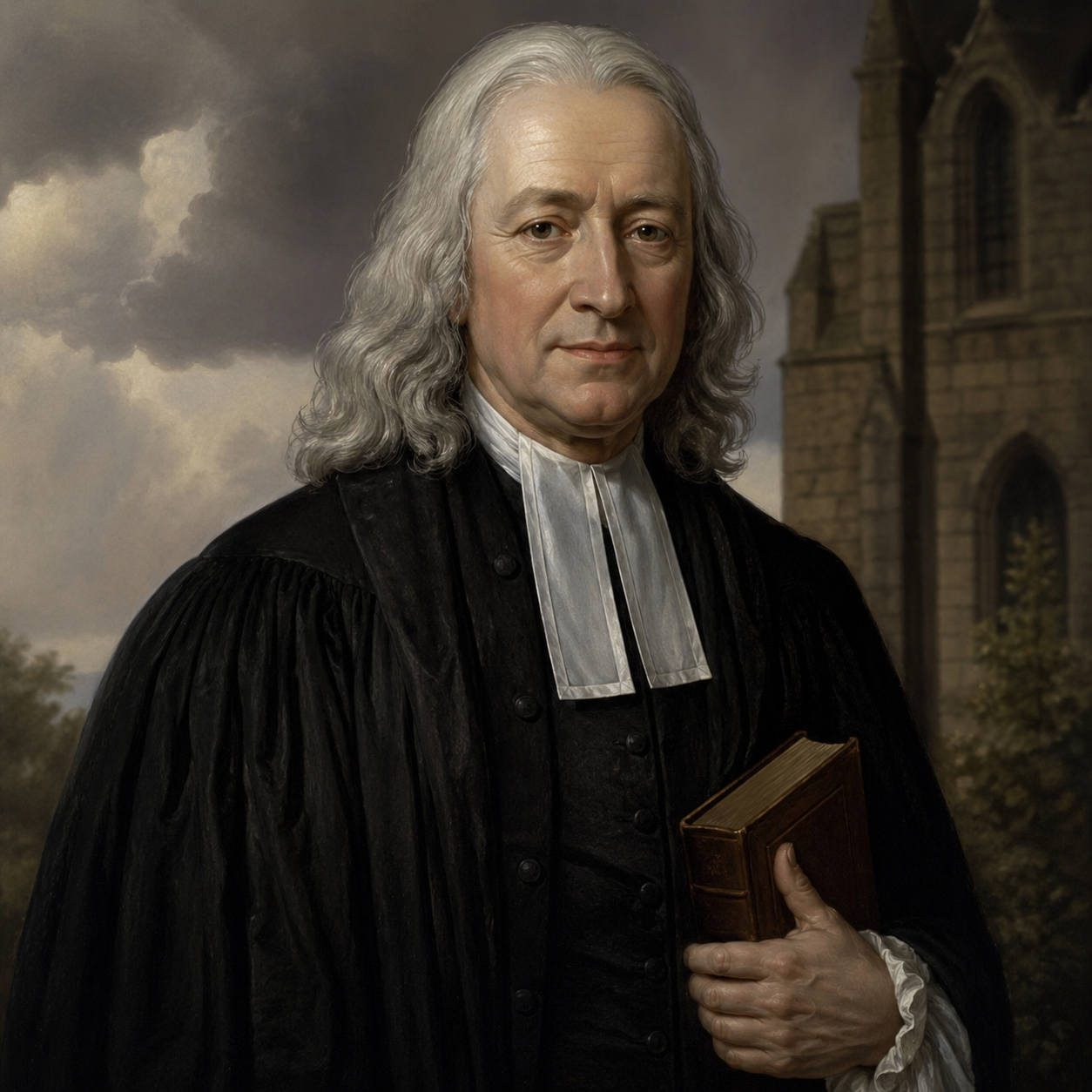
English Anglican cleric and founder of Methodism, whose open-air preaching and class-meeting structure created the largest 18th-century evangelical revival. Closely associated with Charles Wesley (his hymn-writing brother) and George Whitefield (early co-revivalist, later doctrinal opponent). For an intellectual contrast, see George Whitefield, Calvinist evangelical revivalist — Whitefield's predestinarian Calvinism vs Wesley's free-grace Arminian theology split the early Methodist movement permanently in the 1739-41 break. The founding evangelical Calvinist-Arminian schism — the two parallel evangelical traditions American Christianity descends from.
Found in 1 providers: grok
1 source checked
The more you genuinely learn, the more you realize how vast the unknown is. True knowledge reveals the edges of your understanding, while ignorance keeps you confident in your incompleteness. Real wisdom is recognizing how much you don't know — intellectual humility grows alongside actual learning, not in opposition to it.
Wesley was a voracious scholar — educated at Oxford, fluent in Greek and Hebrew, widely read in theology, philosophy, and science. Yet he rejected academic elitism, emphasizing experiential faith over intellectual pride. His Methodist movement prioritized sincere practice over doctrinal smugness, reflecting his belief that genuine understanding breeds humility rather than arrogance.
The 18th century Enlightenment exalted reason and systematic knowledge, producing overconfident rationalists who believed science and philosophy could answer everything. Wesley's era saw explosive growth in natural philosophy and skepticism challenging religion. His observation pushed back against intellectual hubris, warning that the Enlightenment's expanding knowledge should produce reverence and humility, not certainty and dismissal of faith.
AI-generated insights based on extensive research and information for context. Factual errors? Email [email protected].
Your cart is empty