Martin Luther — "I have no pleasure in any man who despises music. It is no invention of ours: it…"
I have no pleasure in any man who despises music. It is no invention of ours: it is the gift of God.
I have no pleasure in any man who despises music. It is no invention of ours: it is the gift of God.
Click any product to generate a realistic preview. Up to 3 at a time.
* Initial load can take up to 90 seconds — revising the preview in another color is nearly instant.
"Fifthly, passport and traveling privileges should be absolutely forbidden to the Jews. For they have no business in the countryside, since they are not farmers or craftsmen or merchants, but only usur…"
"The church is not a pen-house but a mouth-house."
"Our Lord has written the promise of the resurrection, not in books alone, but in every leaf in springtime."
"The pope is the Antichrist."
"The Devil is a great artist, but he has no colors."
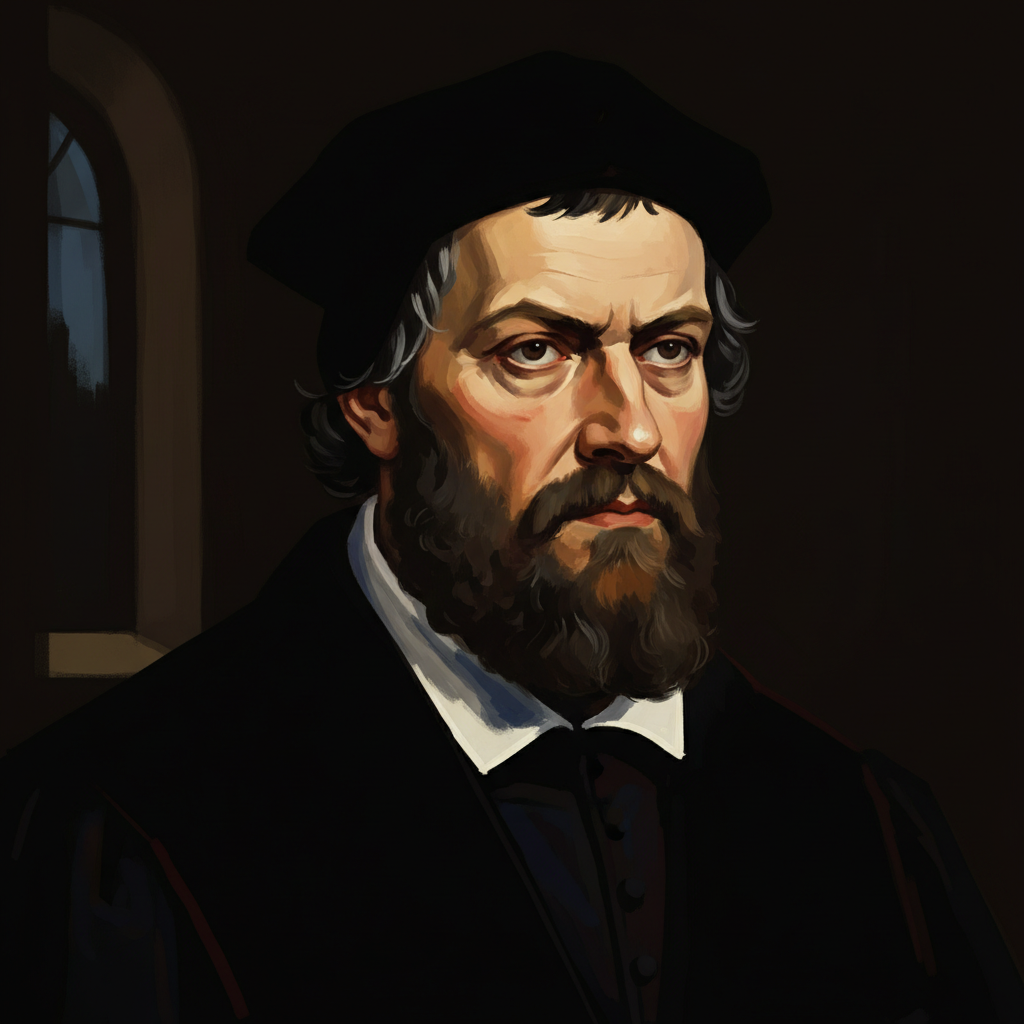
German theologian whose 95 Theses (1517) launched the Protestant Reformation and broke the Catholic Church's monopoly on Western Christianity. Closely associated with Philipp Melanchthon (Lutheran systematizer) and John Calvin (later Reformer who built on Luther's break). For an intellectual contrast, see Pope Leo X, Renaissance pope (1513-1521) — Leo X's indulgence sales triggered Luther's break and Leo excommunicated him in 1521 — Luther's entire Reformation is structured as a direct answer to the indulgence-funded Vatican Leo represented.
Found in 1 providers: deepseek
1 source checked
Luther is saying that anyone who looks down on music loses his respect. Music isn't a human trick or a trivial amusement; it comes from God himself. To scorn it is to scorn something sacred. He's elevating music to a near-spiritual status, arguing it deserves reverence rather than dismissal, and hinting that a person indifferent to its beauty is missing something essential about being human and created.
Luther was a trained lutenist, singer, and hymn composer who wrote 'A Mighty Fortress Is Our God' and dozens of other chorales. He rebuilt worship around congregational singing in the vernacular, insisting ordinary people should sing their faith, not just listen to Latin chant. Music ranked just below theology in his personal hierarchy. This quote captures his lifelong conviction that melody carried doctrine into hearts more effectively than sermons alone, making musical contempt nearly a theological failure.
In early-modern Europe of the 1500s, music was contested territory. Radical reformers like Zwingli stripped instruments and singing from churches as papist distractions, while Rome guarded elaborate polyphony for trained clergy. Luther's Reformation ruptured Christendom, and worship practices became battlegrounds. By defending music as divine gift, Luther pushed back against iconoclast Protestants and monopolizing Catholics alike, helping birth the German chorale tradition that later fed Bach and shaped Western sacred music for centuries.
AI-generated insights based on extensive research and information for context. Factual errors? Email [email protected].
Your cart is empty