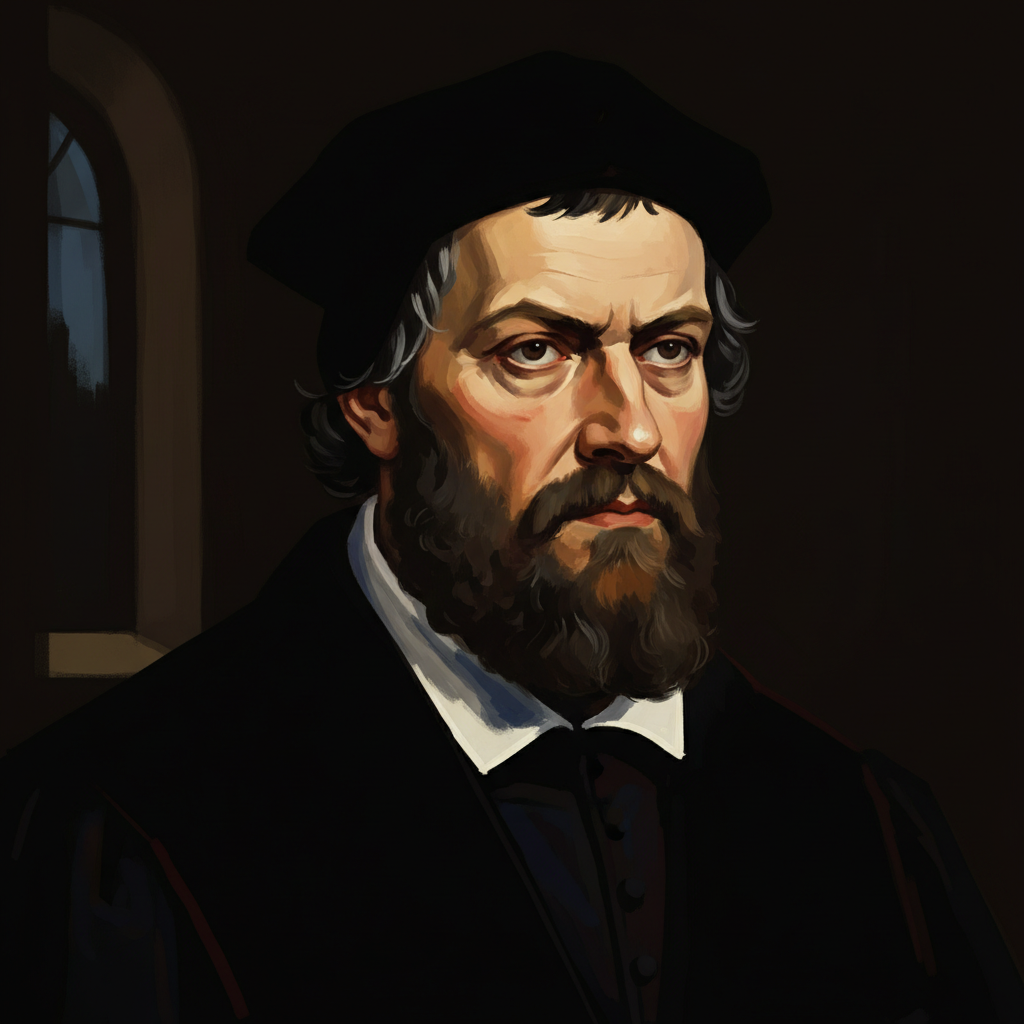
Martin Luther — "The stomach alone is not to be trusted. It is a rebel."
The stomach alone is not to be trusted. It is a rebel.
The stomach alone is not to be trusted. It is a rebel.
Click any product to generate a realistic preview. Up to 3 at a time.
* Initial load can take up to 90 seconds — revising the preview in another color is nearly instant.
"The article of justification must be sounded in our ears incessantly because the frailty of our flesh will not permit us to take hold of it perfectly and to believe it with all our heart."
"God has created men with broad chests and shoulders, not broad hips, so that men can understand wisdom. But the place where the filth flows out is small. With women it's the other way around. That's w…"
"And so, dear Christian, beware of the Jews . . . you can see how God's wrath has consigned them to the Devil, who has robbed them not only of a proper understanding of the Scriptures, but also of comm…"
"I am a worm and no man."
"I have held many things in my hands, and I have lost them all; but whatever I have placed in God’s hands, that I still possess."
German theologian whose 95 Theses (1517) launched the Protestant Reformation and broke the Catholic Church's monopoly on Western Christianity. Closely associated with Philipp Melanchthon (Lutheran systematizer) and John Calvin (later Reformer who built on Luther's break). For an intellectual contrast, see Pope Leo X, Renaissance pope (1513-1521) — Leo X's indulgence sales triggered Luther's break and Leo excommunicated him in 1521 — Luther's entire Reformation is structured as a direct answer to the indulgence-funded Vatican Leo represented.
Found in 1 providers: gemini
1 source checked
Your appetite will lie to you. Hunger, cravings, and the urge to eat more than you need operate on their own agenda, pushing you toward excess rather than what actually serves you. Treating the gut's demands as trustworthy guidance is a mistake; it constantly pulls against self-control, discipline, and better judgment. Left unchecked, it overrules reason, which is why it needs to be governed rather than obeyed.
Luther battled gluttony and heavy drinking openly, writing often about the body's pull against spiritual discipline. As a former Augustinian monk who abandoned monastic fasting yet preached vigilance over the flesh, he knew bodily appetite intimately. His table talks are packed with warnings about overeating and drunkenness dulling the mind and soul, reflecting his conviction that sin festers in unexamined physical desires, even the mundane ones rooted in the belly.
Early-modern Germany treated gluttony as a deadly sin, yet feasting, heavy beer consumption, and elaborate banquets defined daily life, especially among clergy and nobility. The Reformation era (1517 onward) pushed moral scrutiny onto ordinary bodily habits, not just formal piety. Luther's sermons and Tischreden circulated widely during a period when reformers challenged monastic excess and Catholic indulgences alike, reframing self-mastery as a personal Christian duty rather than a ritual requirement.
AI-generated insights based on extensive research and information for context. Factual errors? Email [email protected].
Your cart is empty