John Wesley — "I have often thought, that if I were to choose a text to preach from, it should …"
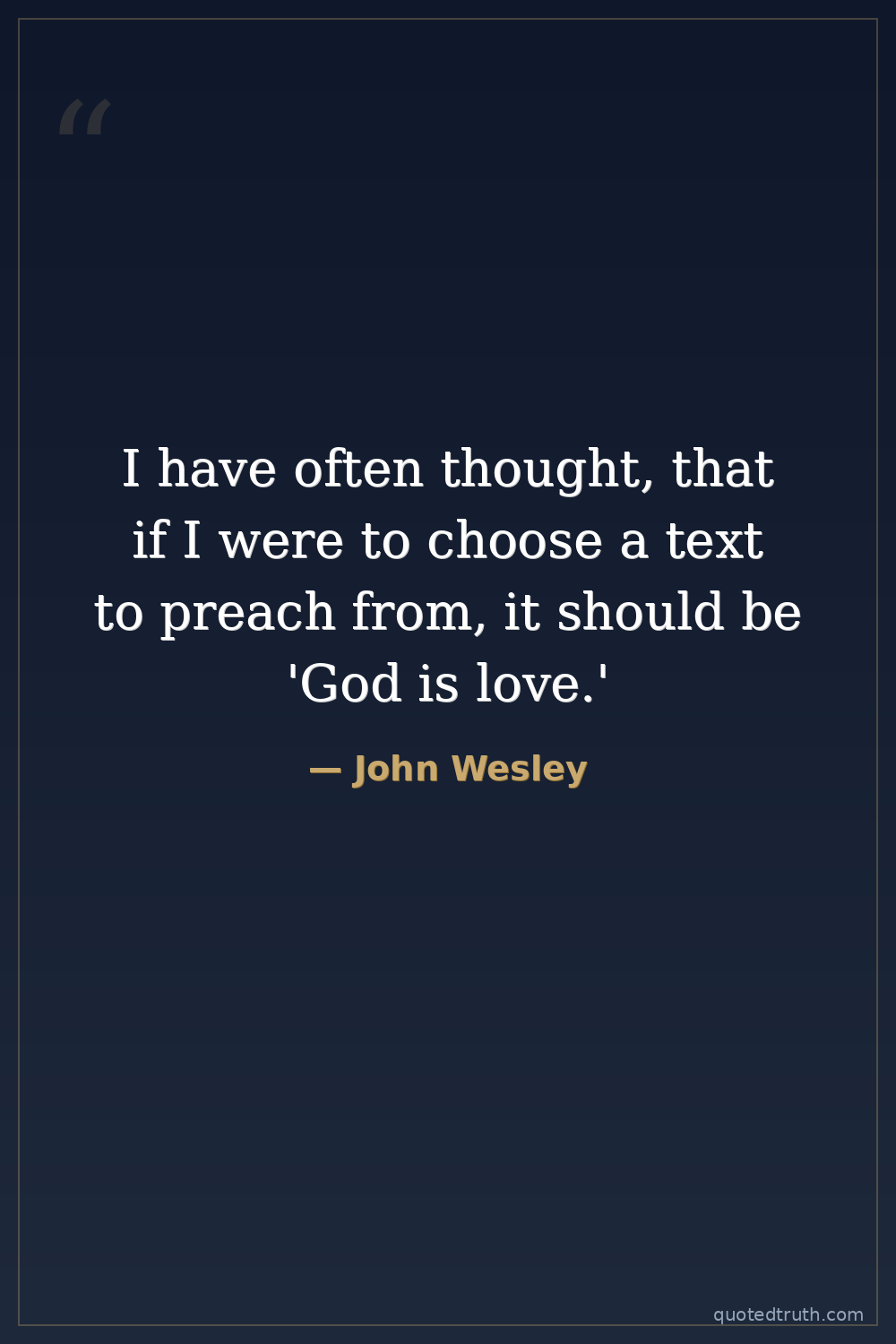
I have often thought, that if I were to choose a text to preach from, it should be 'God is love.'
I have often thought, that if I were to choose a text to preach from, it should be 'God is love.'
Click any product to generate a realistic preview. Up to 3 at a time.
* Initial load can take up to 90 seconds — revising the preview in another color is nearly instant.
"The first thing that I would advise you to do, is, to get a clear and distinct notion of the state of the world."
"Beware of judging men by their outward appearance, but judge them by their fruits."
"I have been writing a sermon on the use of money. Oh, what a flat, unprofitable subject it is!"
"We have nothing to do but to save souls."
"I have been as much as possible upon the stretch for 70 years, and I bless God, I am not tired yet."
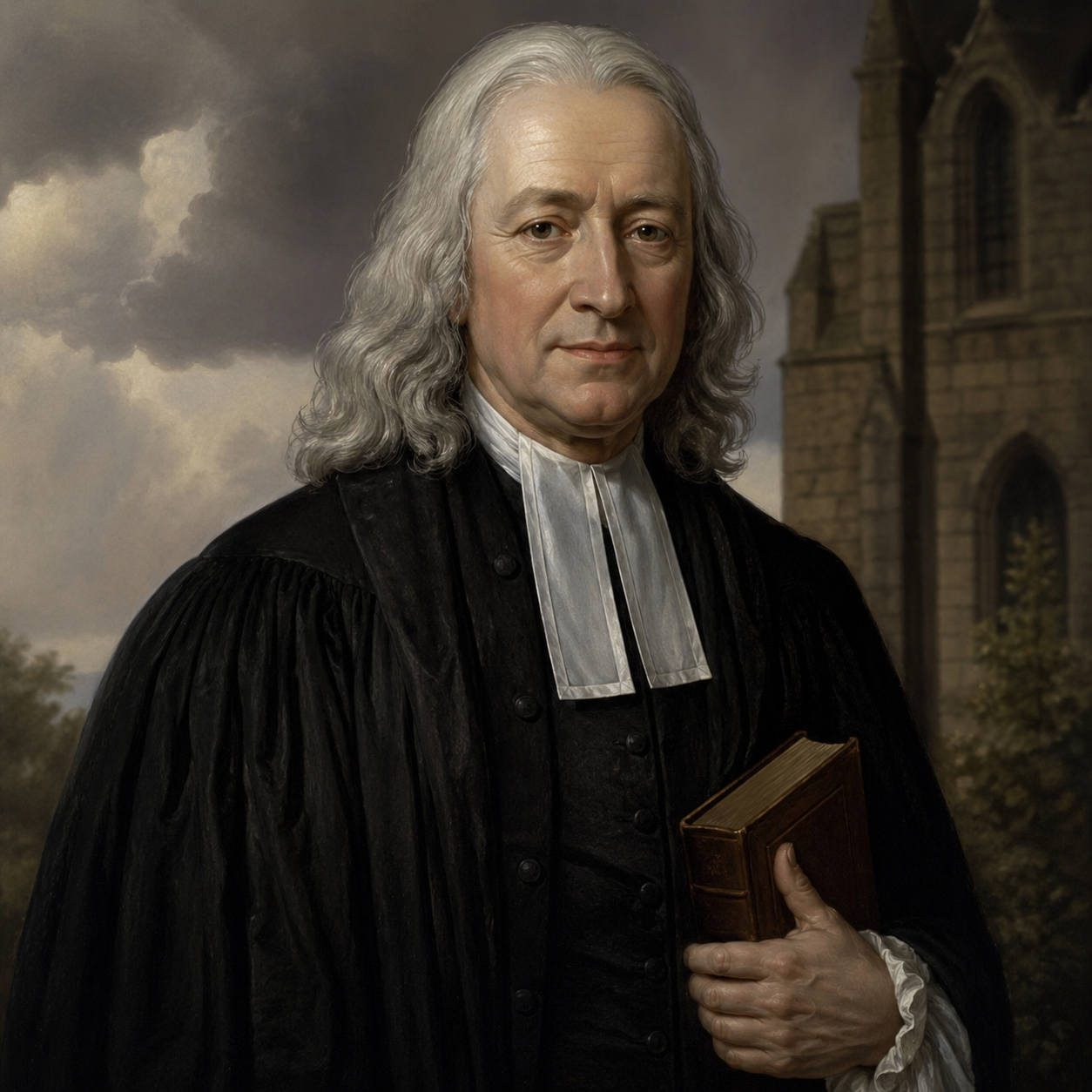
English Anglican cleric and founder of Methodism, whose open-air preaching and class-meeting structure created the largest 18th-century evangelical revival. Closely associated with Charles Wesley (his hymn-writing brother) and George Whitefield (early co-revivalist, later doctrinal opponent). For an intellectual contrast, see George Whitefield, Calvinist evangelical revivalist — Whitefield's predestinarian Calvinism vs Wesley's free-grace Arminian theology split the early Methodist movement permanently in the 1739-41 break. The founding evangelical Calvinist-Arminian schism — the two parallel evangelical traditions American Christianity descends from.
Found in 1 providers: grok
1 source checked
If forced to choose a single biblical text as the foundation of all his preaching, Wesley would pick 'God is love.' This reveals his conviction that love — not doctrine, ritual, or church hierarchy — is Christianity's irreducible core. Everything else in the faith flows from this one truth. It's a declaration that religion's highest purpose is not fear or rule-following, but recognizing and practicing divine, unconditional love.
Wesley founded Methodism partly in reaction against cold, formalistic Anglican worship, insisting faith must be felt in the heart. His doctrine of 'entire sanctification' taught that Christians could be perfected in love — transformed so love governed every thought and action. He preached over 40,000 sermons, often outdoors to the poor and working class. Selecting 'God is love' as his supreme text perfectly captures his theology: salvation is about love, not institutional membership.
Wesley preached when the Church of England was widely seen as rigid, elitist, and disconnected from ordinary people, while Enlightenment thinkers challenged religious authority with reason and science. The early Industrial Revolution created massive urban poverty and social dislocation. Emphasizing 'God is love' was Wesley's counter-argument: faith should be warm, personal, and transformative. It also grounded his famous social activism, including fierce opposition to slavery and hands-on ministry to miners and factory workers.
AI-generated insights based on extensive research and information for context. Factual errors? Email [email protected].
Your cart is empty