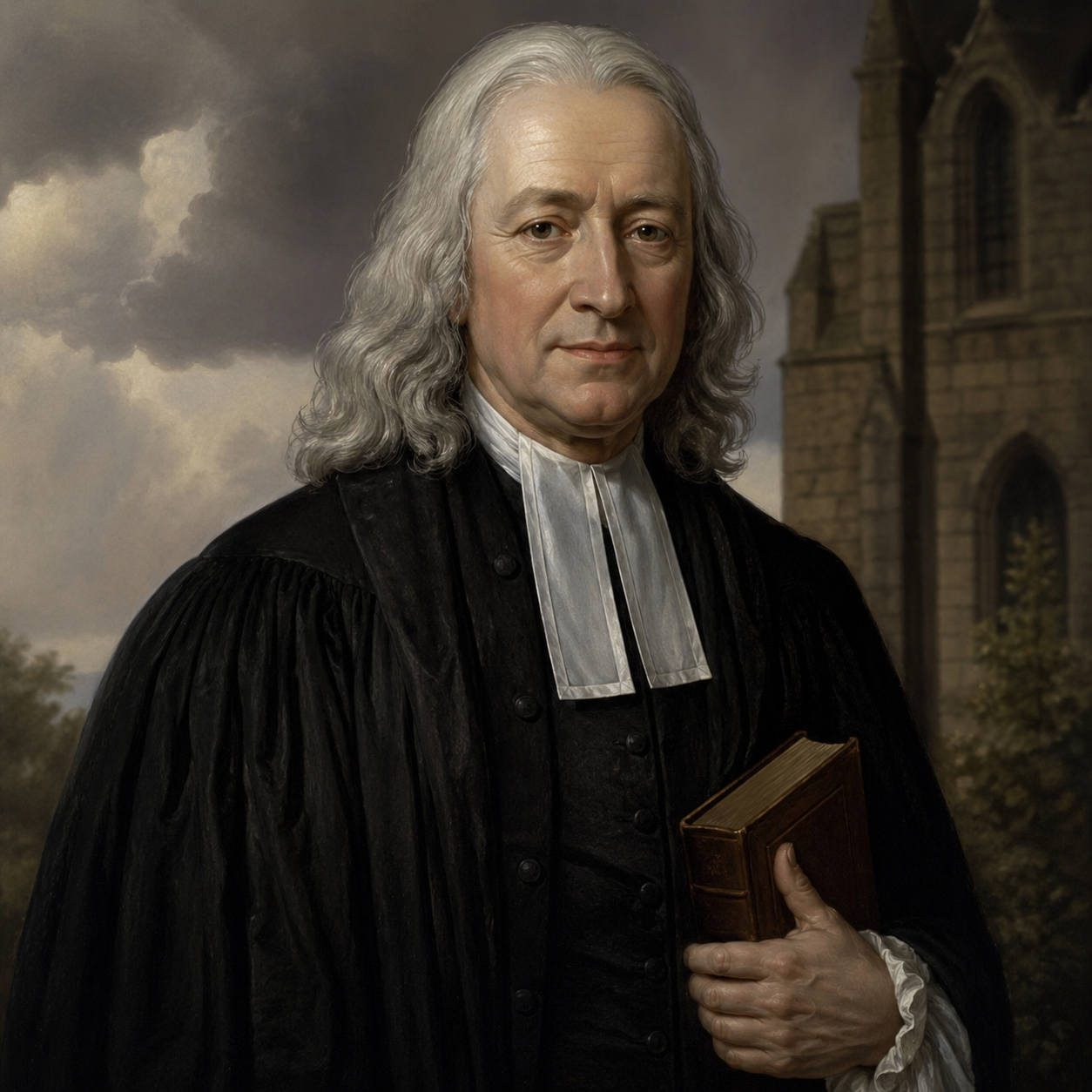
John Wesley — "I wish to have no other evidence of the truth of Christianity than the power of …"
I wish to have no other evidence of the truth of Christianity than the power of God upon my own heart.
I wish to have no other evidence of the truth of Christianity than the power of God upon my own heart.
Click any product to generate a realistic preview. Up to 3 at a time.
* Initial load can take up to 90 seconds — revising the preview in another color is nearly instant.
"I deny that I am an enthusiast in the common sense of the word. I am no visionary. I do not pretend to any new revelations, to any extraordinary gifts of the Holy Ghost, to any particular inspiration,…"
"I am not afraid of giving too much, but of giving too little."
"It is not the being in a place, but the being in a state, that makes us happy."
"I have learned to suffer in silence, and not to make my complaints known to any but God."
"Though I am an old man, I am but a little child; for I am just beginning to learn the alphabet of salvation."
English Anglican cleric and founder of Methodism, whose open-air preaching and class-meeting structure created the largest 18th-century evangelical revival. Closely associated with Charles Wesley (his hymn-writing brother) and George Whitefield (early co-revivalist, later doctrinal opponent). For an intellectual contrast, see George Whitefield, Calvinist evangelical revivalist — Whitefield's predestinarian Calvinism vs Wesley's free-grace Arminian theology split the early Methodist movement permanently in the 1739-41 break. The founding evangelical Calvinist-Arminian schism — the two parallel evangelical traditions American Christianity descends from.
Found in 1 providers: grok
1 source checked
True religious faith should be validated through direct personal experience of God's transforming power, not through intellectual arguments, doctrinal proofs, or institutional authority. The believer's changed heart is itself the most compelling evidence that Christianity is real and true.
Wesley built Methodism on experiential faith, emphasizing the 'new birth' and personal conversion. His own Aldersgate moment in 1738, where he felt his heart 'strangely warmed,' became the cornerstone of his ministry. He preached heart transformation over mere doctrinal assent, founding a movement centered on felt grace.
The 18th century saw Enlightenment rationalism challenge religious authority, demanding evidence and reason over revelation. Simultaneously, the Church of England had grown cold and formal. Wesley's emphasis on felt personal experience was a direct counter to both dry rationalism and empty liturgical religion, igniting a spiritual revival across Britain and America.
AI-generated insights based on extensive research and information for context. Factual errors? Email [email protected].
Your cart is empty