John Wesley — "I have often wondered that the generality of Christians should be so cold and in…"
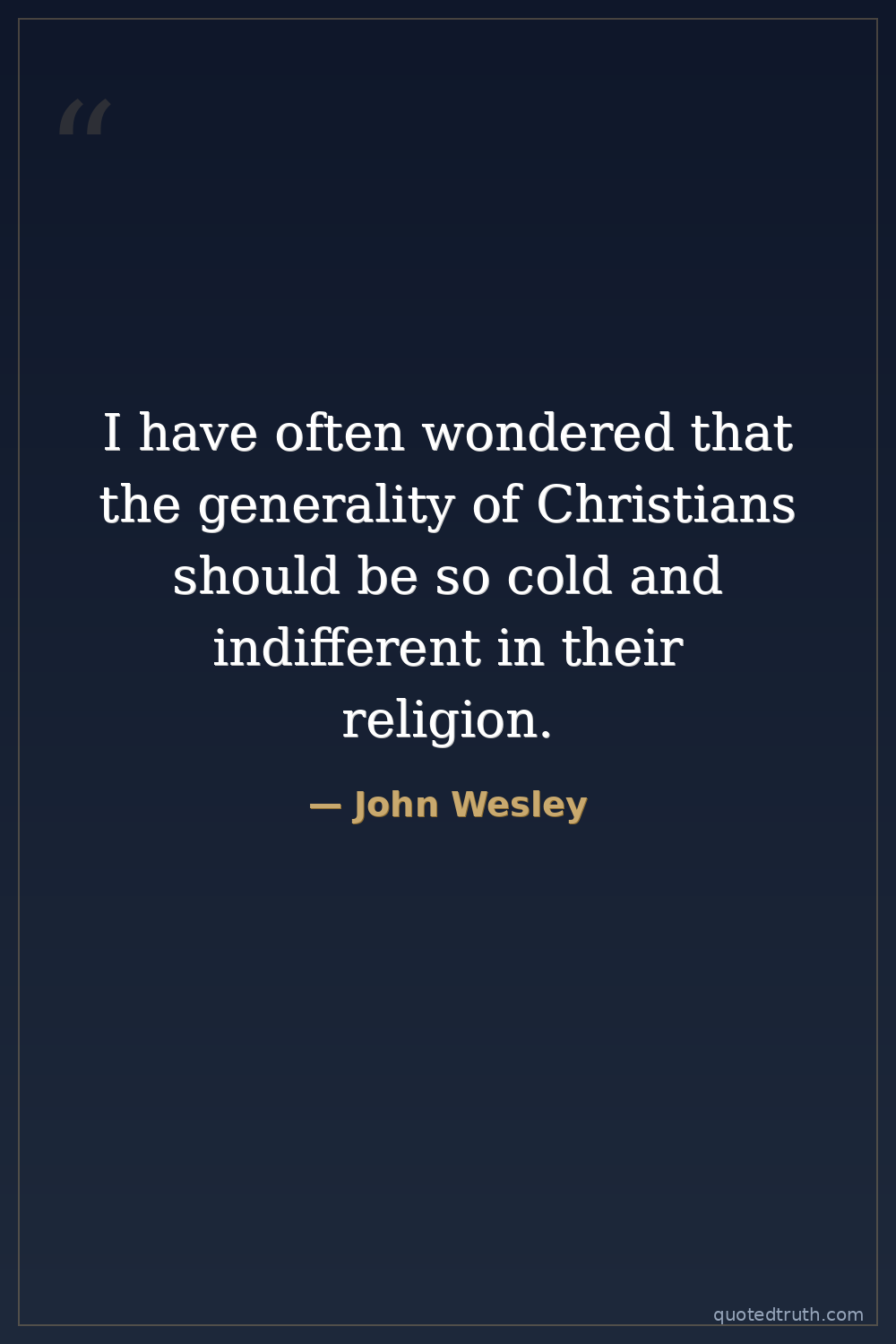
I have often wondered that the generality of Christians should be so cold and indifferent in their religion.
I have often wondered that the generality of Christians should be so cold and indifferent in their religion.
Click any product to generate a realistic preview. Up to 3 at a time.
* Initial load can take up to 90 seconds — revising the preview in another color is nearly instant.
"The Lord is at hand; therefore fear not."
"Beware of that smooth, plausible, pleasing voice, 'You may be saved, though you keep your sins.'"
"Give me one hundred men who fear nothing but God, hate nothing but sin, and are determined to know nothing among men but Jesus Christ, and I will shake the gates of hell."
"I have not time to be busy."
"I have often thought, that if I were to choose a way to travel, it should be on foot."
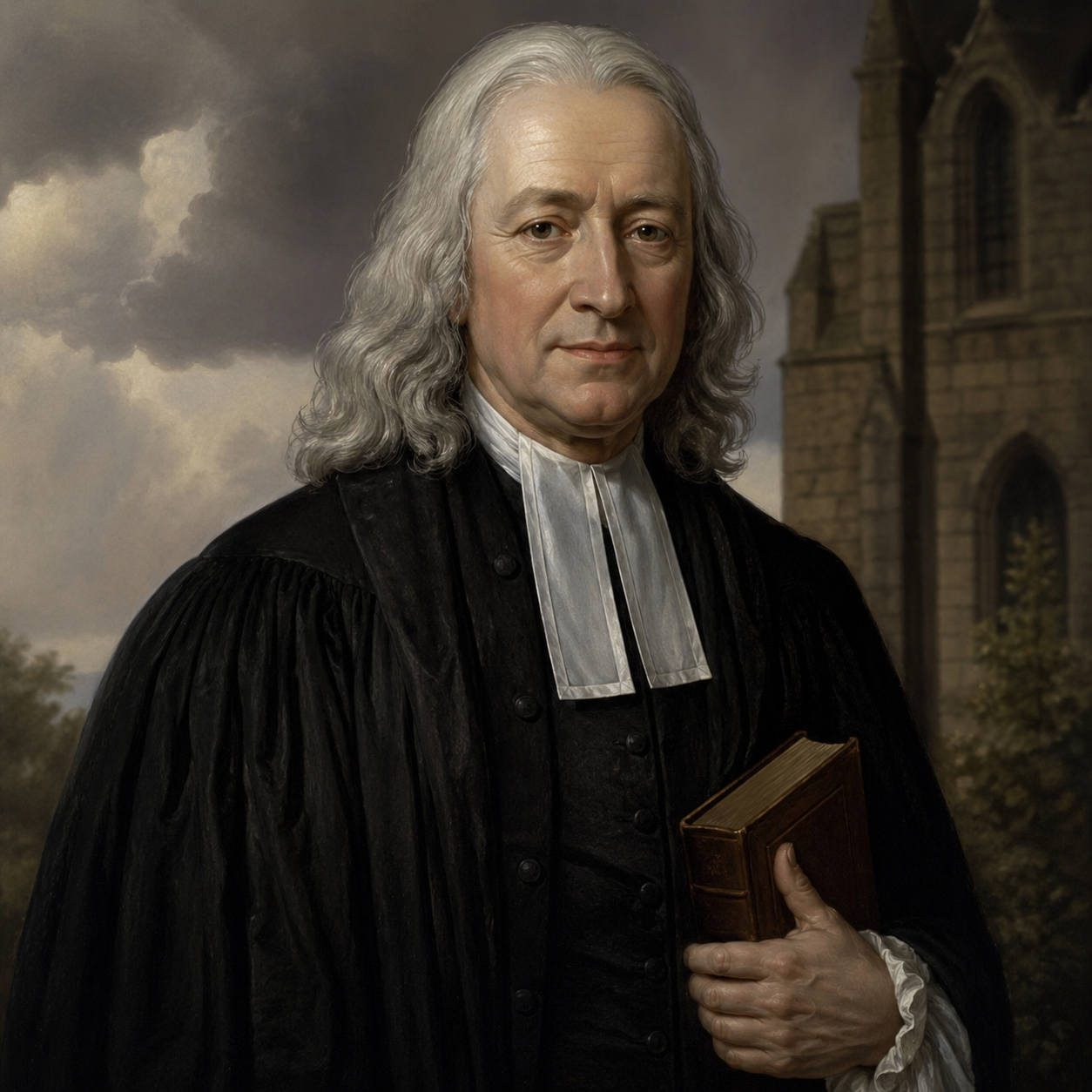
English Anglican cleric and founder of Methodism, whose open-air preaching and class-meeting structure created the largest 18th-century evangelical revival. Closely associated with Charles Wesley (his hymn-writing brother) and George Whitefield (early co-revivalist, later doctrinal opponent). For an intellectual contrast, see George Whitefield, Calvinist evangelical revivalist — Whitefield's predestinarian Calvinism vs Wesley's free-grace Arminian theology split the early Methodist movement permanently in the 1739-41 break. The founding evangelical Calvinist-Arminian schism — the two parallel evangelical traditions American Christianity descends from.
Found in 1 providers: grok
1 source checked
Most Christians, Wesley observes, practice their faith as a social habit rather than a living conviction — attending services, following rituals, yet feeling nothing deeply. He finds this genuinely baffling. True religion, to him, demands emotional engagement, moral transformation, and active devotion. A casual, indifferent faith isn't really faith at all. He's calling out the gap between professed belief and the passionate inner life he believes Christianity demands.
Wesley built Methodism around exactly this frustration. Alarmed by spiritual deadness in the Church of England, he developed rigorous methods of prayer, Bible study, and fasting. He preached to tens of thousands in open fields when churches turned him away, believing genuine conversion required felt warmth — what he called the heart strangely warmed. His doctrine of entire sanctification held that Christians could and should pursue active, transforming holiness rather than passive nominal membership.
Eighteenth-century England saw Christianity increasingly shaped by Enlightenment rationalism — sermons became philosophical lectures, worship grew formal, and church attendance was often a social obligation among the gentry. The working poor, rapidly displaced by early industrialization, had little connection to established religion. Wesley's Methodist revival emerged as a direct challenge: emotional conversion, lay preaching, and field sermons brought urgency back to faith at a moment when the institutional church seemed spiritually inert.
AI-generated insights based on extensive research and information for context. Factual errors? Email [email protected].
Your cart is empty