John Wesley — "I was much disgusted at the first sight of the people. They were as rude and ill…"
I was much disgusted at the first sight of the people. They were as rude and ill-favoured as their houses.
I was much disgusted at the first sight of the people. They were as rude and ill-favoured as their houses.
Click any product to generate a realistic preview. Up to 3 at a time.
* Initial load can take up to 90 seconds — revising the preview in another color is nearly instant.
"I have often thought, that if I were to choose a servant, it should be one that needed no wages."
"God grant that I may never live to be useless!"
"Holiness of heart and life is the one great end of all our preaching."
"What is the secret of your strength? I answer, the power of prayer."
"I have often thought, that if I were to choose a way to travel, it should be on foot."
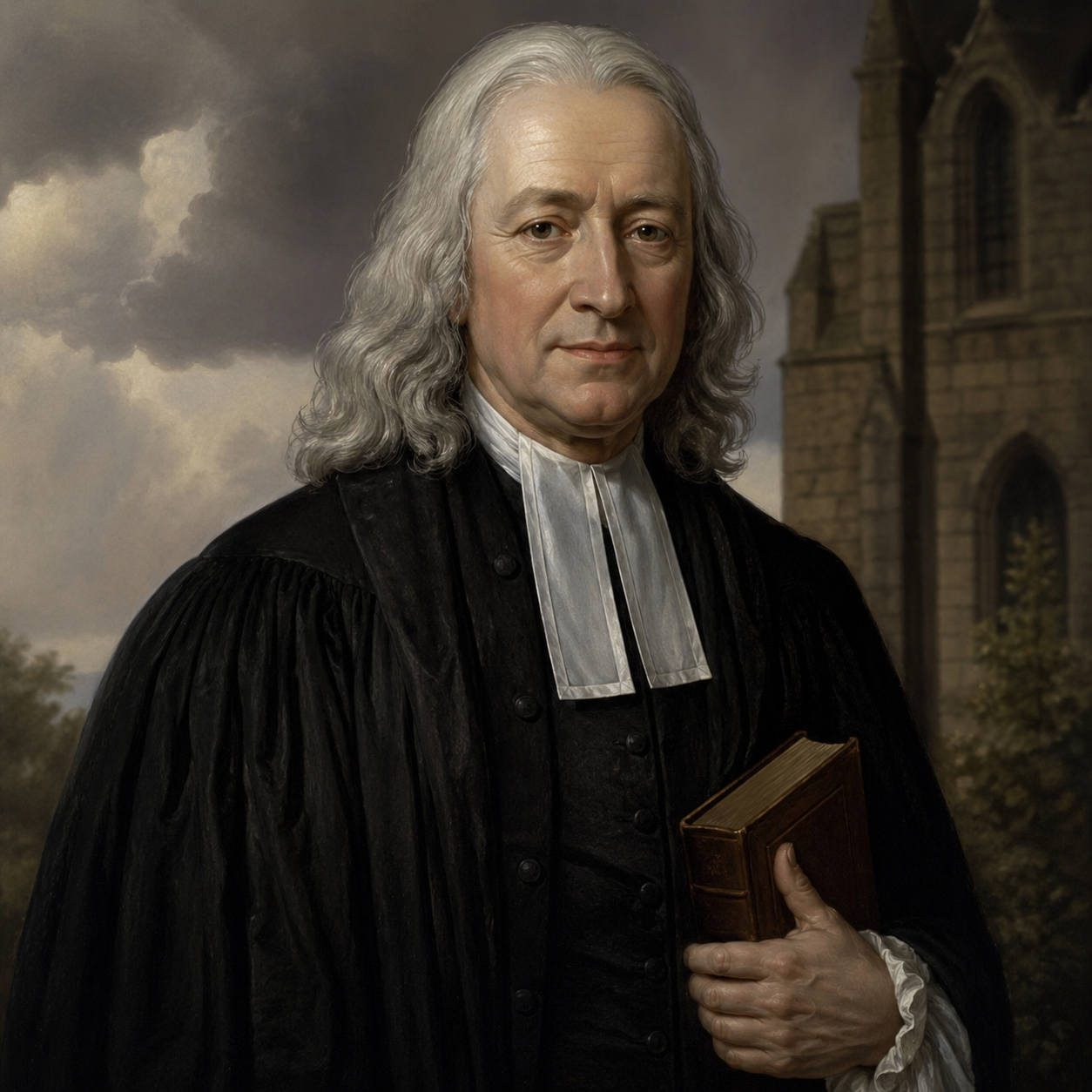
English Anglican cleric and founder of Methodism, whose open-air preaching and class-meeting structure created the largest 18th-century evangelical revival. Closely associated with Charles Wesley (his hymn-writing brother) and George Whitefield (early co-revivalist, later doctrinal opponent). For an intellectual contrast, see George Whitefield, Calvinist evangelical revivalist — Whitefield's predestinarian Calvinism vs Wesley's free-grace Arminian theology split the early Methodist movement permanently in the 1739-41 break. The founding evangelical Calvinist-Arminian schism — the two parallel evangelical traditions American Christianity descends from.
Found in 1 providers: grok
1 source checked
Wesley describes his visceral negative reaction upon encountering a group of people, finding both them and their dwellings crude and unappealing. He's being bluntly honest about his initial prejudice and revulsion toward people of lower social status or rougher circumstances — a candid admission of the kind of class-based disgust common among educated 18th-century men encountering the rural poor or working class.
This admission is striking given Wesley's lifelong ministry to Britain's poorest workers — miners, factory laborers, prisoners. He frequently preached in rough outdoor settings to audiences who repelled him initially. His journals document repeated moments of overcoming personal disgust through faith and duty, making his outreach to the marginalized more remarkable precisely because it was not natural affection but disciplined commitment that drove him.
18th-century Britain saw extreme class stratification during early industrialization. The poor lived in squalid conditions Wesley regularly witnessed while itinerant preaching through mining and mill towns. Georgian society normalized open disdain for the lower orders, and even reformers like Wesley carried such instincts. His Methodist movement challenged this by insisting on the spiritual equality and moral reclamability of people his own class considered irredeemably brutal.
AI-generated insights based on extensive research and information for context. Factual errors? Email [email protected].
Your cart is empty