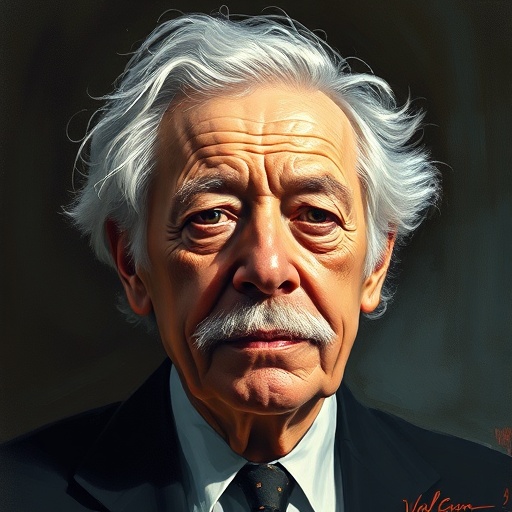
Linus Pauling — "I think that the future of medicine is in prevention, not in treatment."
I think that the future of medicine is in prevention, not in treatment.
I think that the future of medicine is in prevention, not in treatment.
Click any product to generate a realistic preview. Up to 3 at a time.
* Initial load can take up to 90 seconds — revising the preview in another color is nearly instant.
"To awaken an interest in chemistry in students we mustn't make the courses consist entirely of explanations, forgetting to mention what there is to be explained."
"I have had a good life, and I am grateful for it. I have done my best to make the world a better place."
"I think that we should make the world safe for differences."
"War is the greatest evil."
"I am a firm believer in the power of the human mind to solve problems."
Found in 1 providers: grok
1 source checked
Healthcare should focus on stopping disease before it starts rather than waiting to cure it after the fact. Building healthy bodies and environments through nutrition, lifestyle, and science is more effective and humane than managing illness after damage is done. Prevention saves lives, reduces suffering, and is ultimately more rational than treating conditions that proper knowledge could have avoided entirely.
Pauling championed orthomolecular medicine and megadose vitamin C therapy, believing optimal nutrition could prevent cancer and infections. His Nobel Prize in Chemistry gave him deep faith in molecular science applied to human health. His pivot from chemistry to medicine late in life reflected genuine conviction that biochemical precision, not pharmaceutical intervention after the fact, was civilization's best medical path forward.
Pauling made these arguments during the mid-to-late 20th century as chronic diseases like heart disease and cancer surpassed infectious disease as leading killers. The postwar era saw rising pharmaceutical dominance and treatment-focused medicine. Simultaneously, epidemiology was revealing lifestyle and diet links to disease. Pauling's preventive stance was contrarian but prescient, anticipating today's mainstream public health emphasis on prevention over reactive treatment.
AI-generated insights based on extensive research and information for context. Factual errors? Email [email protected].
Your cart is empty