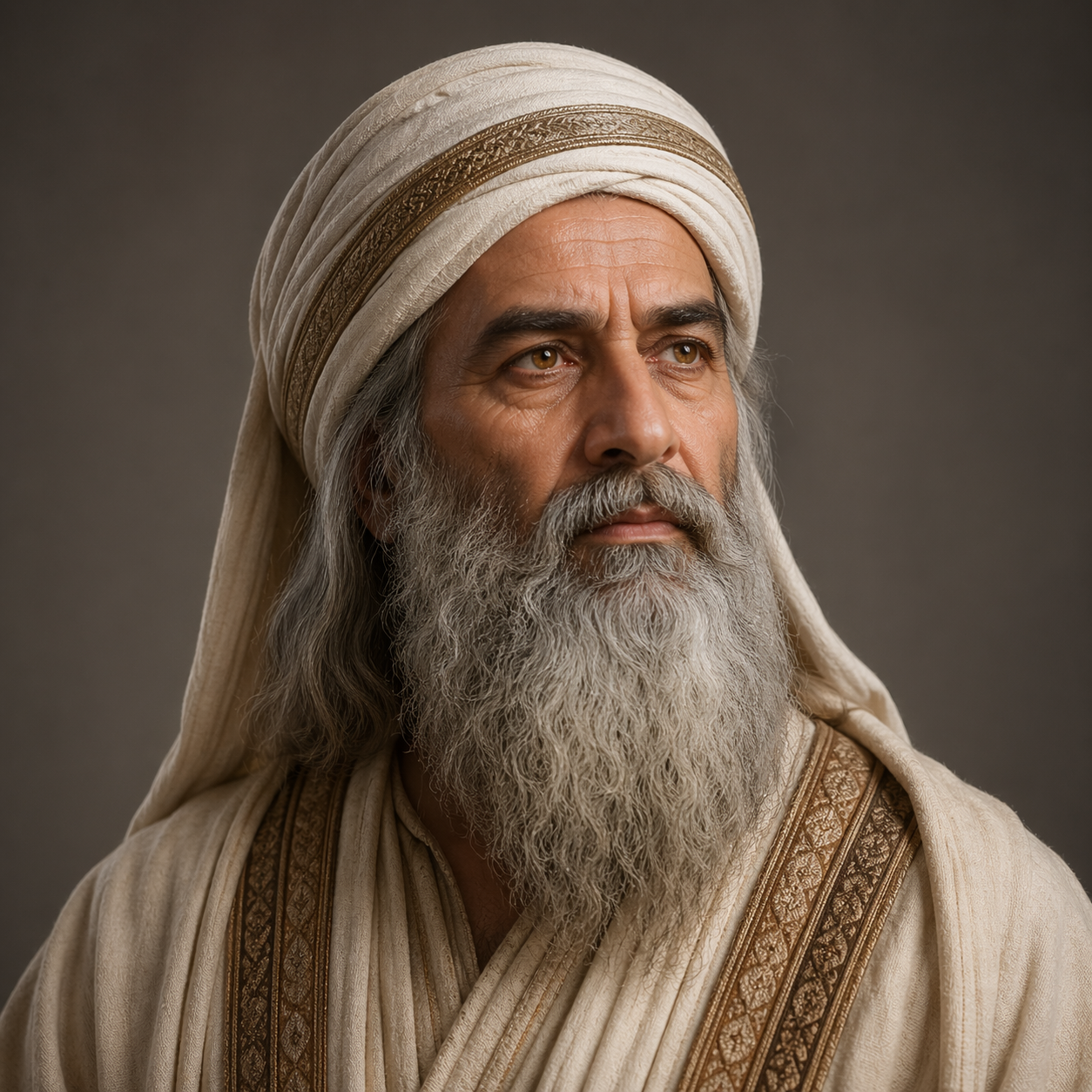
Zoroaster — "I will speak of the truth, and I will live by the truth."
I will speak of the truth, and I will live by the truth.
I will speak of the truth, and I will live by the truth.
Click any product to generate a realistic preview. Up to 3 at a time.
* Initial load can take up to 90 seconds — revising the preview in another color is nearly instant.
"The wise man chooses Righteousness, the unwise man chooses the Lie."
"The poet of Thy praise, I call myself, O Mazda!"
"For the wicked man, the end of existence shall be long darkness, ill food, and the word 'woe!'"
"I will now tell you who are assembled here the wise sayings of Mazda, the praises of Ahura and the hymns of the Good Spirit, the sublime truth which I see rising out of these flames. You shall therefo…"
"Tell me truly, O Ahura, who upholds the earth below and the heavens from falling? Who made the waters and the plants? Who yoked swiftness to the winds and clouds? Who is the creator of Good Thought, O…"
Iranian prophet who founded Zoroastrianism, the first major religion of cosmic dualism between good (Ahura Mazda) and evil (Angra Mainyu). Closely associated with The Buddha (near-contemporary Eastern moral-cosmological revolutionary). For an intellectual contrast, see Friedrich Nietzsche, German philosopher of 'beyond good and evil' — Nietzsche appropriated Zarathustra's name for Thus Spoke Zarathustra (1883) precisely to invert the original's moral cosmology — the historical Zoroaster founded the good-versus-evil framework Nietzsche's character announces the end of.
Found in 1 providers: grok
1 source checked
The speaker commits to two things at once: telling the truth in words and acting on it in daily life. It's a pledge that honesty is not just something you say when convenient, but a standard you hold yourself to in behavior, choices, and relationships. Talking about truth without living it is empty; living it without speaking up is incomplete. The two must travel together for integrity to exist.
Zoroaster built his entire religion around asha, the principle of truth and cosmic order, opposed to druj, the lie. As a priest-reformer who claimed direct revelation from Ahura Mazda, he demanded his followers align thought, word, and deed, the famous triad of good thoughts, good words, good deeds. This saying compresses that triad into a personal vow, exactly the standard he asked of himself while preaching an unpopular monotheistic reform.
Zoroaster lived in ancient Iran, likely between 1500 and 1000 BCE, among pastoral tribes worshipping many gods through blood sacrifice and ritual intoxication. Priestly classes held power through ceremony, not ethics. Into that world he introduced a radical ethical monotheism framing existence as a cosmic struggle between truth and deception, where every person's honest speech and conduct actually strengthened the good side. Personal integrity became a religious act, not just a social virtue.
AI-generated insights based on extensive research and information for context. Factual errors? Email [email protected].
Your cart is empty