Francis Crick — "I would not trust any experiment in biology unless it was confirmed by a physici…"
I would not trust any experiment in biology unless it was confirmed by a physicist.
I would not trust any experiment in biology unless it was confirmed by a physicist.
Click any product to generate a realistic preview. Up to 3 at a time.
* Initial load can take up to 90 seconds — revising the preview in another color is nearly instant.
"I enjoy being controversial."
"Free will is an illusion."
"Our minds are just a lot of neurons firing."
"The structure of DNA is a double helix."
"We are just a collection of molecules."
Found in 1 providers: deepseek
1 source checked
Biological experiments can be unreliable, prone to contamination, misinterpretation, or wishful thinking. Physics brings rigorous quantitative measurement and independent verification that cuts through biological complexity. A finding only becomes trustworthy when someone trained in hard physical measurement independently confirms it—meaning the result survives scrutiny beyond the experimenter's own discipline and assumptions.
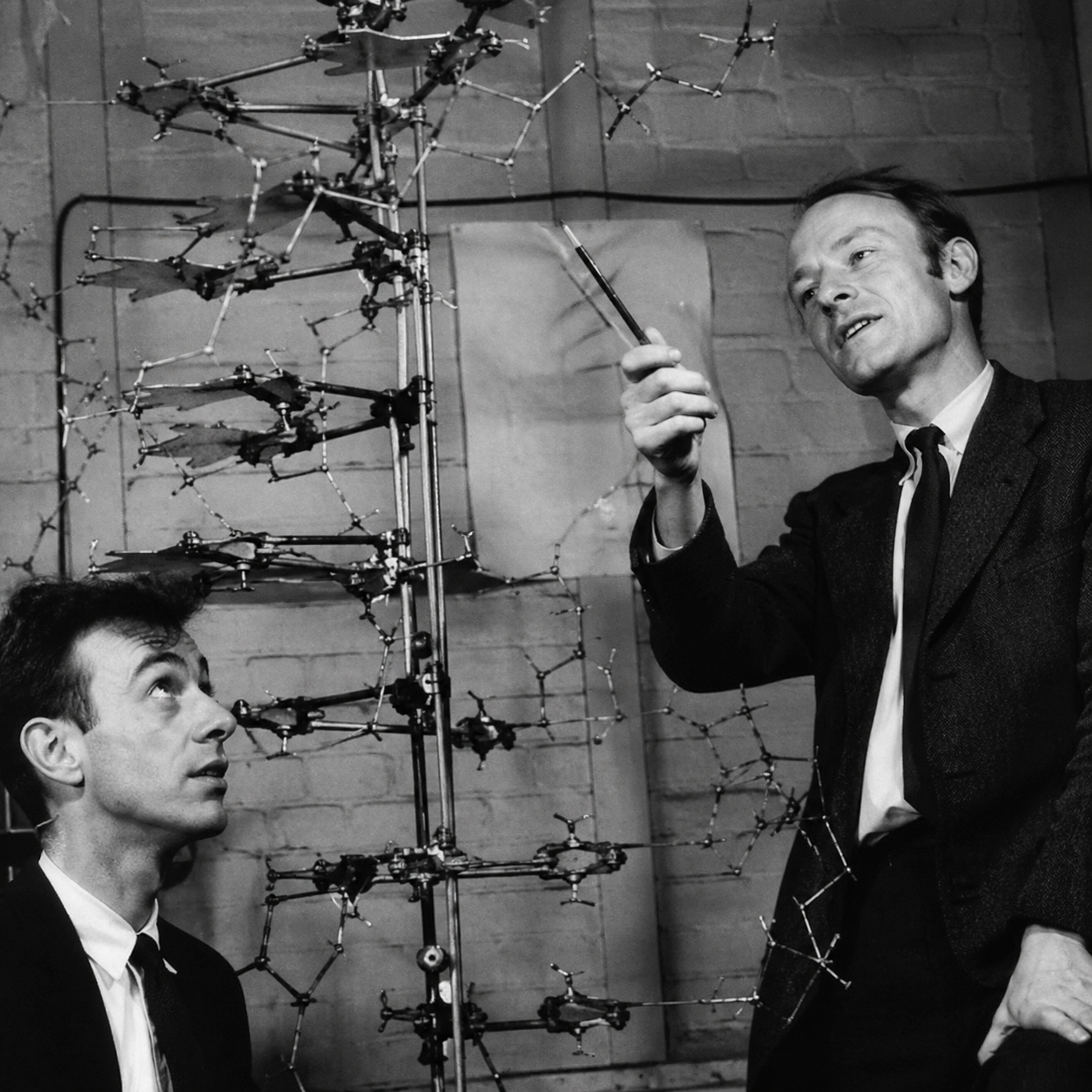
Crick trained as a physicist before pivoting to biology, and that identity never left him. His breakthrough on DNA's double helix depended heavily on X-ray crystallography data from Rosalind Franklin—physics applied to biology. He consistently believed physicists' mathematical precision and skepticism of soft interpretation were the gold standard for confirming biological truth.
Mid-20th century biology was transforming from descriptive naturalism into molecular science, but it lacked physics' mathematical rigor. Results were often unrepeatable, instruments imprecise, and confirmation bias rampant. Physics, fresh off quantum mechanics and atomic breakthroughs, embodied hard measurement. Importing that discipline into biology was the defining intellectual project of Crick's generation.
AI-generated insights based on extensive research and information for context. Factual errors? Email [email protected].
Your cart is empty